

After Pampanga and Sarangani, what’s needed to make buildings resilient?
MANILA, Philippines – In less than four weeks, the Philippines saw buildings crumble to the ground – first, in Pampanga where a nine-story building under construction collapsed, then in Mindanao where a powerful earthquake struck Sarangani.
These recent incidents have triggered questions on structural integrity of most buildings in the Philippines and the regulations that are supposed to ensure this and protect communities.
What are the lessons learned here?
Experts said there is a need to update the National Structural Code of the Philippines, close gaps between the issuance of building permits and actual construction, and ensure the strict implementation of existing regulations.
Still under probe
Authorities are still looking into the cause of the building’s collapse in Angeles City, Pampanga. Retrieval and clearing operations have tapered off since the incident on May 24.
The Association of Structural Engineers of the Philippines (ASEP) told Rappler in an email that it would be premature to conclude the cause of the collapse without a full review of approved plans, construction records, and site conditions.
However, ASEP said the collapse of a building is most likely caused by a combination of factors, including inadequate structural design—a result of non-compliance with the National Structural Code of the Philippines—unauthorized modifications, inadequate foundations, or “overloading of partially completed structural elements.”
ASEP said it has already committed “readiness to support” the local government and the Department of Public Works and Highways in the investigation.
 OPERATIONS. Disaster workers begin rescue and retrieval operations at the site of the collapsed 9-story building at Teodoro Street in Barangay Balibago, Angeles, Pampanga, on May 24, 2026.
But a key takeaway has come into view: structural safety does not end with the issuance of a building permit. Some malpractices in the field, the group said, include the use of substandard materials, changing plans without proper approval, and the lack of documentation for such changes.
“The approved design must be followed, any changes must be properly reviewed, and construction activities must be supervised by competent professionals,” ASEP said. “For buildings under construction, both the permanent structure and the temporary works must be treated as life-safety concerns.”
No quake-proof buildings
In the aftermath of the magnitude 7.8 earthquake in Mindanao, the Philippine Institute of Volcanology and Seismology (Phivolcs) found that 38% of villages in General Santos City are on unstable ground.
To make earthquake-resistant buildings one track is to update the National Structural Code with modern standards (or ASCE 7 methodologies) “to better reflect the current understanding of seismic risks,” said Rhommel Grutas, a science research specialist from Phivolcs.
But Grutas added that there is no earthquake-proof buildings, as earthquakes vary significantly.
“Modern seismic design aims instead to create earthquake-resistant or seismically resilient buildings that can protect human life and minimize damage during strong ground shaking,” Grutas said. “Updating the building code is necessary to reflect improved seismic hazard data, more accurate fault and ground motion models, and evolving construction technologies.”
Grutas had been working in General Santos City after the earthquake hit on June 8, conducting building damage inspections following the quake.
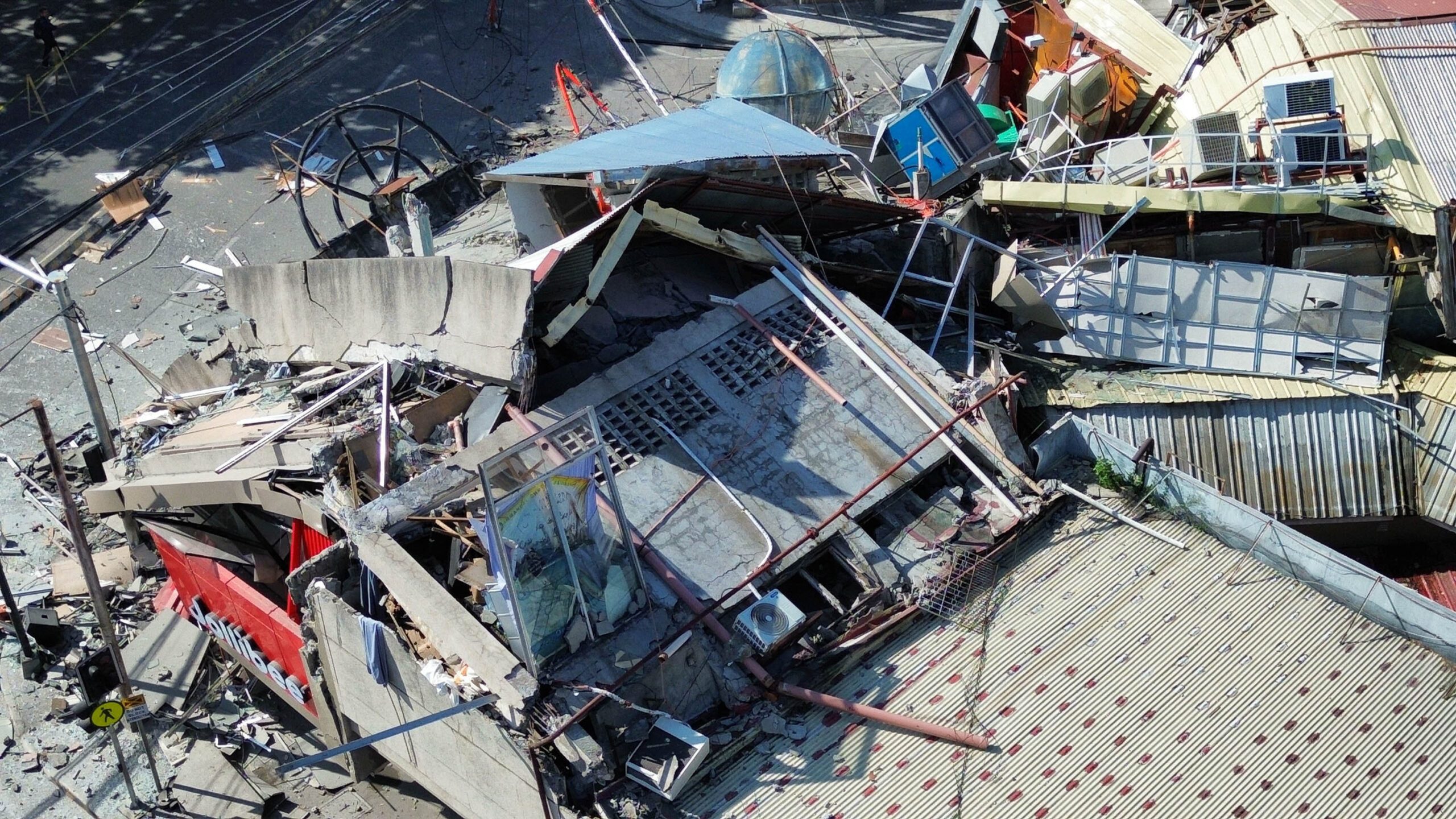 DAMAGED. A view shows a collapsed building after a magnitude 7.8 earthquake in General Santos City in Mindanao, on June 8, 2026.
According to Grutas, upgrading standards will “provide a more rigorous framework based on probabilistic seismic hazard analysis, site-specific ground motion characterization, improved treatment of near-fault effects, updated response spectra, and refined seismic force-resisting system requirements.”
Structures built using older seismic codes, meanwhile, should be retrofitted as needed. The guidelines available can enable different outcomes: protecting building occupants from serious injury while allowing damage, providing safety for continued use.
“Applying these performance objectives helps prioritize retrofit strategies based on the importance, occupancy, and functionality requirements of the structure,” said Grutas.
The biggest challenge, Grutas said, lies not in engineering knowledge or standards, but in the implementation of what is already mandated. Grutas cited gaps in the enforcement of regulations, systematic retrofitting, and the regulation of informal construction.
Cost to communities
Damaged infrastructure due to accidents and disasters ultimately cost communities lives, homes, jobs, and security.
The death toll in Angeles City, Pampanga, rose to 30 and included an infant and a Malaysian.
In Mindanao, at least 61 deaths were counted by the National Risk Reduction and Management Council as of Sunday, June 14. More than a thousand are injured and 40 are missing. The cost of infrastructure damage is pegged at P1 billion.
The Mindanao State University in General Santos City reported damage costing P870 million. According to Shidik Zen Abantas, the campus’ chancellor, the Department of Public Works and Highways will handle the immediate retrofitting and repairs the campus needs.
“It breaks our hearts to see that our buildings have suffered extensive damage,” Shidik Zen Abantas, the campus’ chancellor, wrote on June 9. “For the first time, our earthquake-tested buildings showed weakness when faced with a magnitude 7.8 earthquake.” – Rappler.com


You May Also Like

Metaplanet Stock Passes MARA to Become Third-Largest BTC Holder — Stock Slips Anyway

Robotics Automation Prototyping: Engineering Kinetic Agility into End-Effectors

Craving work-life balance is a huge red flag, says Fortune 500 Europe CEO—and like Barack Obama, he happily works through weekends



