The post Bitcoin hashrate hits record 1.2 ZH/s milestone appeared on BitcoinEthereumNews.com. Bitcoin’s network hashrate surged to a new high of 1.2 zetahashes per second and stabilized around 1.039 ZH/s, highlighting the industrial nature of the current mining. The milestone comes on the heels of a resurgence in BTC strength, whose price has regained lost ground to reach a high of $112,000 on Monday. Reaching a zetahash is years of massive investment in infrastructure. These operators have installed huge plants, negotiated power deals as large as a town, and launched chains of specialized mining rigs. Growth in hashrate translates to narrower margins. Bitcoin adjusts mining difficulty after every 2,016 blocks, keeping block time constant but squeezing the margins of miners. 1 ZH/s means, per second, the computers that safeguard the Bitcoin network are doing one sextillion (1,000,000,000,000,000,000,000) hashes per second, which is an absurdly large figure. Unprofitable and expensive business operations are under pressure, and only companies with modern hardware and affordable electricity can survive.  The increase in hashrate was also driven by the investment of large mining operations such as Marathon Digital and Riot Platforms, which invested in powerful ASICs. Bitcoin first reached 1 EH/s in 2016. Nine years later, it has increased that capacity by a thousand-fold. The record hashrate is a sign of resilience over the 2022 downturn. On-chain metrics point to a shifting Bitcoin market  According to CryptoQuant data, the 72-hour funding rate has already become negative, indicating a decrease in selling pressure. Such changes historically tend to furnish a short squeeze, which enables the momentum to turn in favor of the buyers. Meanwhile, the Spent Output Profit Ratio (SOPR) has approached 1.5. The short-term investors are taking bigger losses, though long-term holders remain stable. This trend has already been observed before the major rebounds in 2024 and indicates the same conditions as existed with the former bottom formations. The… The post Bitcoin hashrate hits record 1.2 ZH/s milestone appeared on BitcoinEthereumNews.com. Bitcoin’s network hashrate surged to a new high of 1.2 zetahashes per second and stabilized around 1.039 ZH/s, highlighting the industrial nature of the current mining. The milestone comes on the heels of a resurgence in BTC strength, whose price has regained lost ground to reach a high of $112,000 on Monday. Reaching a zetahash is years of massive investment in infrastructure. These operators have installed huge plants, negotiated power deals as large as a town, and launched chains of specialized mining rigs. Growth in hashrate translates to narrower margins. Bitcoin adjusts mining difficulty after every 2,016 blocks, keeping block time constant but squeezing the margins of miners. 1 ZH/s means, per second, the computers that safeguard the Bitcoin network are doing one sextillion (1,000,000,000,000,000,000,000) hashes per second, which is an absurdly large figure. Unprofitable and expensive business operations are under pressure, and only companies with modern hardware and affordable electricity can survive.  The increase in hashrate was also driven by the investment of large mining operations such as Marathon Digital and Riot Platforms, which invested in powerful ASICs. Bitcoin first reached 1 EH/s in 2016. Nine years later, it has increased that capacity by a thousand-fold. The record hashrate is a sign of resilience over the 2022 downturn. On-chain metrics point to a shifting Bitcoin market  According to CryptoQuant data, the 72-hour funding rate has already become negative, indicating a decrease in selling pressure. Such changes historically tend to furnish a short squeeze, which enables the momentum to turn in favor of the buyers. Meanwhile, the Spent Output Profit Ratio (SOPR) has approached 1.5. The short-term investors are taking bigger losses, though long-term holders remain stable. This trend has already been observed before the major rebounds in 2024 and indicates the same conditions as existed with the former bottom formations. The…

Bitcoin hashrate hits record 1.2 ZH/s milestone

Bitcoin’s network hashrate surged to a new high of 1.2 zetahashes per second and stabilized around 1.039 ZH/s, highlighting the industrial nature of the current mining. The milestone comes on the heels of a resurgence in BTC strength, whose price has regained lost ground to reach a high of $112,000 on Monday.

Reaching a zetahash is years of massive investment in infrastructure. These operators have installed huge plants, negotiated power deals as large as a town, and launched chains of specialized mining rigs.

Growth in hashrate translates to narrower margins. Bitcoin adjusts mining difficulty after every 2,016 blocks, keeping block time constant but squeezing the margins of miners. 1 ZH/s means, per second, the computers that safeguard the Bitcoin network are doing one sextillion (1,000,000,000,000,000,000,000) hashes per second, which is an absurdly large figure.

Unprofitable and expensive business operations are under pressure, and only companies with modern hardware and affordable electricity can survive. 

The increase in hashrate was also driven by the investment of large mining operations such as Marathon Digital and Riot Platforms, which invested in powerful ASICs. Bitcoin first reached 1 EH/s in 2016. Nine years later, it has increased that capacity by a thousand-fold. The record hashrate is a sign of resilience over the 2022 downturn.

On-chain metrics point to a shifting Bitcoin market 

According to CryptoQuant data, the 72-hour funding rate has already become negative, indicating a decrease in selling pressure. Such changes historically tend to furnish a short squeeze, which enables the momentum to turn in favor of the buyers.

Meanwhile, the Spent Output Profit Ratio (SOPR) has approached 1.5. The short-term investors are taking bigger losses, though long-term holders remain stable. This trend has already been observed before the major rebounds in 2024 and indicates the same conditions as existed with the former bottom formations.

The surge of Bitcoin above $112,000 has reversed much of the fall of last week. According to CoinGecko, the growth of 2.5% in 24 hours was facilitated by robust buying over the weekend. The recovery also led to a wider resurgence in altcoins, initiating $354 million in liquidations and taking the overall crypto market value to nearly $4 trillion.

Market analysts are still comparing the movements of Bitcoin to gold. Milk Road Macro observed that BTC/USD and gold/USD had rising wedge patterns. In January, gold went higher, and in March, Bitcoin followed suit with the “rise, pause, late-spike” pattern.

Should the correlation continue, Bitcoin may escape in October and November. Gold has increased by 10%, yet Bitcoin has, in the past, amplified actions by up to 10 times. That puts a potential upside in the range of 50% to 100%, giving targets of between $160,000 and $220,000.

Meanwhile, traders pointed out that the critical level is at $112,000. Analysts state that the breakout had cleared late shorts, and the next resistance was at $114,000. A position above $112,000 would help instill faith and position the market to gain more in October.

KEY Difference Wire: the secret tool crypto projects use to get guaranteed media coverage

Source: https://www.cryptopolitan.com/bitcoin-hashrate-hits-record-1-2-zh-s/

Market Opportunity
Bitcoin Logo
Bitcoin Price(BTC)
$70,426.05
$70,426.05$70,426.05
+2.62%
USD
Bitcoin (BTC) Live Price Chart
Disclaimer: The articles reposted on this site are sourced from public platforms and are provided for informational purposes only. They do not necessarily reflect the views of MEXC. All rights remain with the original authors. If you believe any content infringes on third-party rights, please contact service@support.mexc.com for removal. MEXC makes no guarantees regarding the accuracy, completeness, or timeliness of the content and is not responsible for any actions taken based on the information provided. The content does not constitute financial, legal, or other professional advice, nor should it be considered a recommendation or endorsement by MEXC.

You May Also Like

Cashing In On University Patents Means Giving Up On Our Innovation Future

Cashing In On University Patents Means Giving Up On Our Innovation Future

The post Cashing In On University Patents Means Giving Up On Our Innovation Future appeared on BitcoinEthereumNews.com. “It’s a raid on American innovation that would deliver pennies to the Treasury while kneecapping the very engine of our economic and medical progress,” writes Pipes. Getty Images Washington is addicted to taxing success. Now, Commerce Secretary Howard Lutnick is floating a plan to skim half the patent earnings from inventions developed at universities with federal funding. It’s being sold as a way to shore up programs like Social Security. In reality, it’s a raid on American innovation that would deliver pennies to the Treasury while kneecapping the very engine of our economic and medical progress. Yes, taxpayer dollars support early-stage research. But the real payoff comes later—in the jobs created, cures discovered, and industries launched when universities and private industry turn those discoveries into real products. By comparison, the sums at stake in patent licensing are trivial. Universities collectively earn only about $3.6 billion annually in patent income—less than the federal government spends on Social Security in a single day. Even confiscating half would barely register against a $6 trillion federal budget. And yet the damage from such a policy would be anything but trivial. The true return on taxpayer investment isn’t in licensing checks sent to Washington, but in the downstream economic activity that federally supported research unleashes. Thanks to the bipartisan Bayh-Dole Act of 1980, universities and private industry have powerful incentives to translate early-stage discoveries into real-world products. Before Bayh-Dole, the government hoarded patents from federally funded research, and fewer than 5% were ever licensed. Once universities could own and license their own inventions, innovation exploded. The result has been one of the best returns on investment in government history. Since 1996, university research has added nearly $2 trillion to U.S. industrial output, supported 6.5 million jobs, and launched more than 19,000 startups. Those companies pay…
Share
BitcoinEthereumNews2025/09/18 03:26
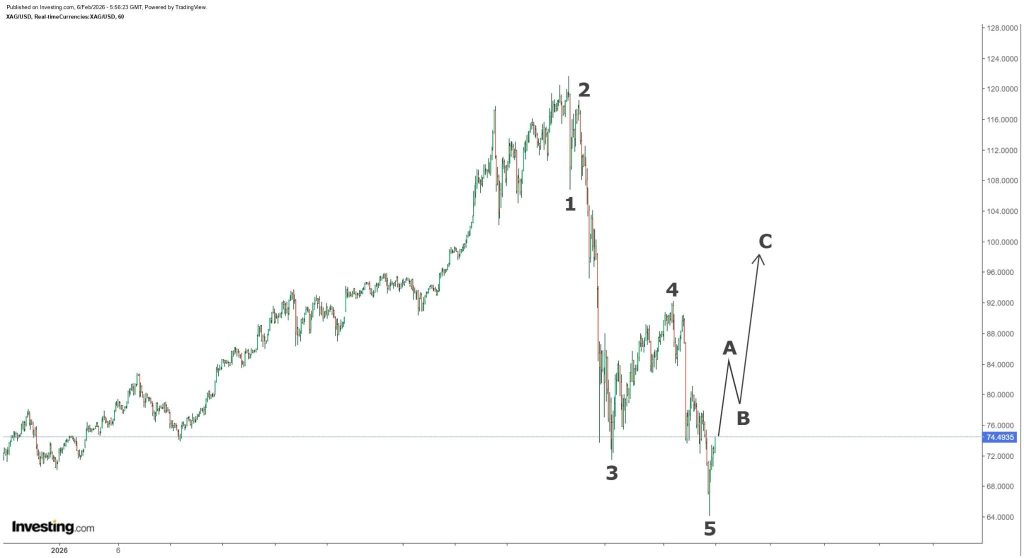
Silver Price Crash Is Over “For Real This Time,” Analyst Predicts a Surge Back Above $90

Silver Price Crash Is Over “For Real This Time,” Analyst Predicts a Surge Back Above $90

Silver has been taking a beating lately, and the Silver price hasn’t exactly been acting like a safe haven. After running up into the highs, the whole move reversed
Share
Captainaltcoin2026/02/07 03:15
Citi Caps Year-End at $4,300, But ETF outflows Challenge Outlook

Citi Caps Year-End at $4,300, But ETF outflows Challenge Outlook

The post Citi Caps Year-End at $4,300, But ETF outflows Challenge Outlook appeared on BitcoinEthereumNews.com. Ethereum Price Prediction: Citi Caps Year-End at $4,300, But ETF outflows Challenge Outlook Disclaimer: The information found on NewsBTC is for educational purposes only. It does not represent the opinions of NewsBTC on whether to buy, sell or hold any investments and naturally investing carries risks. You are advised to conduct your own research before making any investment decisions. Use information provided on this website entirely at your own risk. Related News © 2025 NewsBTC. All Rights Reserved. This website uses cookies. By continuing to use this website you are giving consent to cookies being used. Visit our Privacy Center or Cookie Policy. I Agree Source: https://www.newsbtc.com/news/ethereum/ethereum-price-prediction-citi-caps-year-end-at-4300-but-etf-outflows-challenge-outlook/
Share
BitcoinEthereumNews2025/09/18 14:30