The post Dow Jones futures show little movement following weakness in AI majors, profit-taking appeared on BitcoinEthereumNews.com. Dow Jones futures remain steady amid market caution following weakness in AI leaders and profit-taking. US index futures were little changed as traders remained cautious amid mixed signals from Fed officials. Nvidia, Oracle, and Micron Technology led losses on concerns over elevated valuations and risky sector interdependencies. Dow Jones futures hover around 46,450 during European hours on Thursday, ahead of the United States (US) session opening. Meanwhile, the S&P 500 futures remain steady near 6,700, while Nasdaq 100 futures remain close to 24,750. US index futures move little after Wall Street fell for two consecutive sessions, following weakness in AI leaders and profit-taking near record highs. Additionally, traders adopt caution due to mixed signals from US Federal Reserve (Fed) officials. Investors now await Thursday’s weekly US Initial Jobless Claims for Fed rate outlook cues, while speeches from Fed officials Schmid, Williams, Barr, and Logan will also be closely watched. Fed Chair Jerome Powell struck a cautious note, stressing that the US central bank must weigh stubborn inflation against a softening job market, calling it “a challenging situation” and reiterating comments from last week. However, the CME FedWatch tool suggests that money markets are currently pricing in nearly a 92% possibility of a Fed rate cut in October, up from 87% a week earlier. San Francisco Fed President Mary Daly said on Wednesday that further rate reductions are likely to be needed, as the central bank works to restore price stability and provide necessary support to the labor market. Chicago Fed President Austan Goolsbee broke away from the overarching narrative of consecutive Fed rate cuts heading through the end of the year. On Wednesday’s regular US session, the Dow Jones declined 0.37%, the S&P 500 slipped 0.28% and the Nasdaq Composite fell 0.33%, with all three benchmarks extending their pullback from… The post Dow Jones futures show little movement following weakness in AI majors, profit-taking appeared on BitcoinEthereumNews.com. Dow Jones futures remain steady amid market caution following weakness in AI leaders and profit-taking. US index futures were little changed as traders remained cautious amid mixed signals from Fed officials. Nvidia, Oracle, and Micron Technology led losses on concerns over elevated valuations and risky sector interdependencies. Dow Jones futures hover around 46,450 during European hours on Thursday, ahead of the United States (US) session opening. Meanwhile, the S&P 500 futures remain steady near 6,700, while Nasdaq 100 futures remain close to 24,750. US index futures move little after Wall Street fell for two consecutive sessions, following weakness in AI leaders and profit-taking near record highs. Additionally, traders adopt caution due to mixed signals from US Federal Reserve (Fed) officials. Investors now await Thursday’s weekly US Initial Jobless Claims for Fed rate outlook cues, while speeches from Fed officials Schmid, Williams, Barr, and Logan will also be closely watched. Fed Chair Jerome Powell struck a cautious note, stressing that the US central bank must weigh stubborn inflation against a softening job market, calling it “a challenging situation” and reiterating comments from last week. However, the CME FedWatch tool suggests that money markets are currently pricing in nearly a 92% possibility of a Fed rate cut in October, up from 87% a week earlier. San Francisco Fed President Mary Daly said on Wednesday that further rate reductions are likely to be needed, as the central bank works to restore price stability and provide necessary support to the labor market. Chicago Fed President Austan Goolsbee broke away from the overarching narrative of consecutive Fed rate cuts heading through the end of the year. On Wednesday’s regular US session, the Dow Jones declined 0.37%, the S&P 500 slipped 0.28% and the Nasdaq Composite fell 0.33%, with all three benchmarks extending their pullback from…

Dow Jones futures show little movement following weakness in AI majors, profit-taking

  • Dow Jones futures remain steady amid market caution following weakness in AI leaders and profit-taking.
  • US index futures were little changed as traders remained cautious amid mixed signals from Fed officials.
  • Nvidia, Oracle, and Micron Technology led losses on concerns over elevated valuations and risky sector interdependencies.

Dow Jones futures hover around 46,450 during European hours on Thursday, ahead of the United States (US) session opening. Meanwhile, the S&P 500 futures remain steady near 6,700, while Nasdaq 100 futures remain close to 24,750.

US index futures move little after Wall Street fell for two consecutive sessions, following weakness in AI leaders and profit-taking near record highs. Additionally, traders adopt caution due to mixed signals from US Federal Reserve (Fed) officials. Investors now await Thursday’s weekly US Initial Jobless Claims for Fed rate outlook cues, while speeches from Fed officials Schmid, Williams, Barr, and Logan will also be closely watched.

Fed Chair Jerome Powell struck a cautious note, stressing that the US central bank must weigh stubborn inflation against a softening job market, calling it “a challenging situation” and reiterating comments from last week. However, the CME FedWatch tool suggests that money markets are currently pricing in nearly a 92% possibility of a Fed rate cut in October, up from 87% a week earlier.

San Francisco Fed President Mary Daly said on Wednesday that further rate reductions are likely to be needed, as the central bank works to restore price stability and provide necessary support to the labor market. Chicago Fed President Austan Goolsbee broke away from the overarching narrative of consecutive Fed rate cuts heading through the end of the year.

On Wednesday’s regular US session, the Dow Jones declined 0.37%, the S&P 500 slipped 0.28% and the Nasdaq Composite fell 0.33%, with all three benchmarks extending their pullback from all-time peaks. AI giants, including Nvidia, Oracle, and Micron Technology, led declines amid concerns over high valuations and risky sector interdependencies after recent deals.

Dow Jones FAQs

The Dow Jones Industrial Average, one of the oldest stock market indices in the world, is compiled of the 30 most traded stocks in the US. The index is price-weighted rather than weighted by capitalization. It is calculated by summing the prices of the constituent stocks and dividing them by a factor, currently 0.152. The index was founded by Charles Dow, who also founded the Wall Street Journal. In later years it has been criticized for not being broadly representative enough because it only tracks 30 conglomerates, unlike broader indices such as the S&P 500.

Many different factors drive the Dow Jones Industrial Average (DJIA). The aggregate performance of the component companies revealed in quarterly company earnings reports is the main one. US and global macroeconomic data also contributes as it impacts on investor sentiment. The level of interest rates, set by the Federal Reserve (Fed), also influences the DJIA as it affects the cost of credit, on which many corporations are heavily reliant. Therefore, inflation can be a major driver as well as other metrics which impact the Fed decisions.

Dow Theory is a method for identifying the primary trend of the stock market developed by Charles Dow. A key step is to compare the direction of the Dow Jones Industrial Average (DJIA) and the Dow Jones Transportation Average (DJTA) and only follow trends where both are moving in the same direction. Volume is a confirmatory criteria. The theory uses elements of peak and trough analysis. Dow’s theory posits three trend phases: accumulation, when smart money starts buying or selling; public participation, when the wider public joins in; and distribution, when the smart money exits.

There are a number of ways to trade the DJIA. One is to use ETFs which allow investors to trade the DJIA as a single security, rather than having to buy shares in all 30 constituent companies. A leading example is the SPDR Dow Jones Industrial Average ETF (DIA). DJIA futures contracts enable traders to speculate on the future value of the index and Options provide the right, but not the obligation, to buy or sell the index at a predetermined price in the future. Mutual funds enable investors to buy a share of a diversified portfolio of DJIA stocks thus providing exposure to the overall index.

Source: https://www.fxstreet.com/news/dow-jones-futures-show-little-movement-following-weakness-in-ai-majors-profit-taking-202509250815

Market Opportunity
null Logo
null Price(null)
--
----
USD
null (null) Live Price Chart
Disclaimer: The articles reposted on this site are sourced from public platforms and are provided for informational purposes only. They do not necessarily reflect the views of MEXC. All rights remain with the original authors. If you believe any content infringes on third-party rights, please contact service@support.mexc.com for removal. MEXC makes no guarantees regarding the accuracy, completeness, or timeliness of the content and is not responsible for any actions taken based on the information provided. The content does not constitute financial, legal, or other professional advice, nor should it be considered a recommendation or endorsement by MEXC.

You May Also Like

Cashing In On University Patents Means Giving Up On Our Innovation Future

Cashing In On University Patents Means Giving Up On Our Innovation Future

The post Cashing In On University Patents Means Giving Up On Our Innovation Future appeared on BitcoinEthereumNews.com. “It’s a raid on American innovation that would deliver pennies to the Treasury while kneecapping the very engine of our economic and medical progress,” writes Pipes. Getty Images Washington is addicted to taxing success. Now, Commerce Secretary Howard Lutnick is floating a plan to skim half the patent earnings from inventions developed at universities with federal funding. It’s being sold as a way to shore up programs like Social Security. In reality, it’s a raid on American innovation that would deliver pennies to the Treasury while kneecapping the very engine of our economic and medical progress. Yes, taxpayer dollars support early-stage research. But the real payoff comes later—in the jobs created, cures discovered, and industries launched when universities and private industry turn those discoveries into real products. By comparison, the sums at stake in patent licensing are trivial. Universities collectively earn only about $3.6 billion annually in patent income—less than the federal government spends on Social Security in a single day. Even confiscating half would barely register against a $6 trillion federal budget. And yet the damage from such a policy would be anything but trivial. The true return on taxpayer investment isn’t in licensing checks sent to Washington, but in the downstream economic activity that federally supported research unleashes. Thanks to the bipartisan Bayh-Dole Act of 1980, universities and private industry have powerful incentives to translate early-stage discoveries into real-world products. Before Bayh-Dole, the government hoarded patents from federally funded research, and fewer than 5% were ever licensed. Once universities could own and license their own inventions, innovation exploded. The result has been one of the best returns on investment in government history. Since 1996, university research has added nearly $2 trillion to U.S. industrial output, supported 6.5 million jobs, and launched more than 19,000 startups. Those companies pay…
Share
BitcoinEthereumNews2025/09/18 03:26
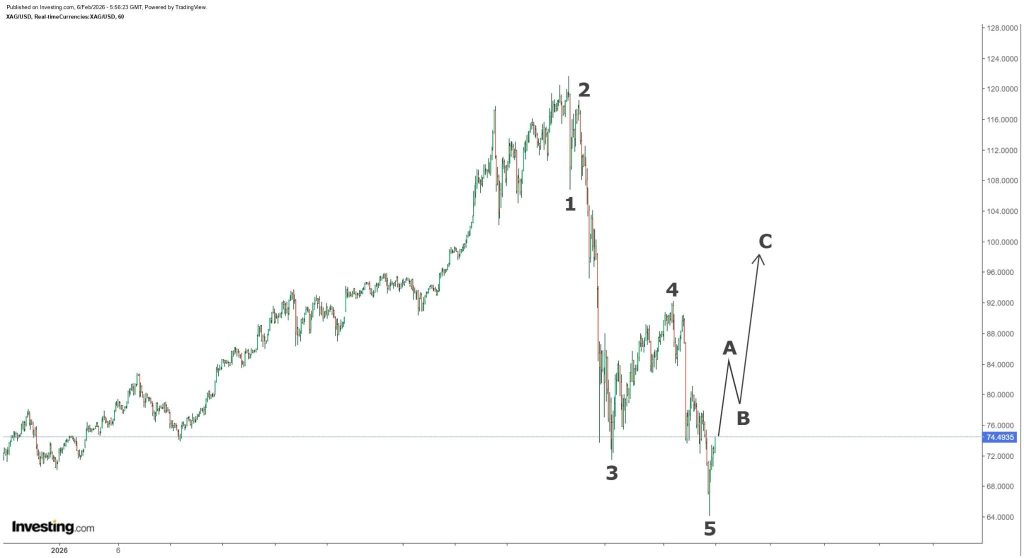
Silver Price Crash Is Over “For Real This Time,” Analyst Predicts a Surge Back Above $90

Silver Price Crash Is Over “For Real This Time,” Analyst Predicts a Surge Back Above $90

Silver has been taking a beating lately, and the Silver price hasn’t exactly been acting like a safe haven. After running up into the highs, the whole move reversed
Share
Captainaltcoin2026/02/07 03:15
Citi Caps Year-End at $4,300, But ETF outflows Challenge Outlook

Citi Caps Year-End at $4,300, But ETF outflows Challenge Outlook

The post Citi Caps Year-End at $4,300, But ETF outflows Challenge Outlook appeared on BitcoinEthereumNews.com. Ethereum Price Prediction: Citi Caps Year-End at $4,300, But ETF outflows Challenge Outlook Disclaimer: The information found on NewsBTC is for educational purposes only. It does not represent the opinions of NewsBTC on whether to buy, sell or hold any investments and naturally investing carries risks. You are advised to conduct your own research before making any investment decisions. Use information provided on this website entirely at your own risk. Related News © 2025 NewsBTC. All Rights Reserved. This website uses cookies. By continuing to use this website you are giving consent to cookies being used. Visit our Privacy Center or Cookie Policy. I Agree Source: https://www.newsbtc.com/news/ethereum/ethereum-price-prediction-citi-caps-year-end-at-4300-but-etf-outflows-challenge-outlook/
Share
BitcoinEthereumNews2025/09/18 14:30