The post Chainlink Proof of Reserve verifies ETP on BTC and ETH on Arbitrum appeared on BitcoinEthereumNews.com. Two physically backed ETPs on Bitcoin and Ethereum introduce an on-chain proof of reserve published on Arbitrum via Chainlink Proof of Reserve, as confirmed by Crypto Finance and documented by Chainlink and the related technical deep dive on the official blog. The data, public, cryptographic, and independently verifiable, allow investors and auditors to transparently verify the backing of the assets. The announcement, communicated on September 24, 2025, involved Crypto Finance (regulated custodian, part of the Deutsche Börse group), nxtAssets (issuer), and Chainlink (oracles). According to public data from Chainlink, the Proof of Reserve solution has verified over 17 billion dollars in reserves and supports more than 40 active feeds. By analyzing the public feeds available on data.chain.link and the recorded outputs on Arbitrum, it is possible to check timestamps and update history, providing concrete elements for auditability. Industry analysts observe that the adoption of PoR on layer-2 like Arbitrum facilitates scalability and on-chain writing costs, accelerating data availability for auditors and institutional investors. The on-chain update model allows for more continuous reserve monitoring compared to traditional end-of-day reports, thus offering a measurable level of transparency for investors and auditors without exposing sensitive addresses. In this context, data visibility is enhanced by automated attestation procedures. Activation: actors, products, and regulatory perimeter Parties involved: nxtAssets (issuer/manager ETP), Crypto Finance (regulated custodian and part of the Deutsche Börse group, Chainlink (oracles and Proof of Reserve). Products: two physically-backed ETPs on BTC and ETH, already operational. Data publication: the output of the Chainlink Runtime Environment (CRE) is written on Arbitrum. Regulation: Crypto Finance AG is supervised by FINMA; Crypto Finance (Deutschland) GmbH obtained the MiCAR license on January 25, 2025, as reported by Crypto Finance; custody is approved for SIX. Announcement date: September 24, 2025. ETP is the acronym for Exchange‑Traded Product, while NAV… The post Chainlink Proof of Reserve verifies ETP on BTC and ETH on Arbitrum appeared on BitcoinEthereumNews.com. Two physically backed ETPs on Bitcoin and Ethereum introduce an on-chain proof of reserve published on Arbitrum via Chainlink Proof of Reserve, as confirmed by Crypto Finance and documented by Chainlink and the related technical deep dive on the official blog. The data, public, cryptographic, and independently verifiable, allow investors and auditors to transparently verify the backing of the assets. The announcement, communicated on September 24, 2025, involved Crypto Finance (regulated custodian, part of the Deutsche Börse group), nxtAssets (issuer), and Chainlink (oracles). According to public data from Chainlink, the Proof of Reserve solution has verified over 17 billion dollars in reserves and supports more than 40 active feeds. By analyzing the public feeds available on data.chain.link and the recorded outputs on Arbitrum, it is possible to check timestamps and update history, providing concrete elements for auditability. Industry analysts observe that the adoption of PoR on layer-2 like Arbitrum facilitates scalability and on-chain writing costs, accelerating data availability for auditors and institutional investors. The on-chain update model allows for more continuous reserve monitoring compared to traditional end-of-day reports, thus offering a measurable level of transparency for investors and auditors without exposing sensitive addresses. In this context, data visibility is enhanced by automated attestation procedures. Activation: actors, products, and regulatory perimeter Parties involved: nxtAssets (issuer/manager ETP), Crypto Finance (regulated custodian and part of the Deutsche Börse group, Chainlink (oracles and Proof of Reserve). Products: two physically-backed ETPs on BTC and ETH, already operational. Data publication: the output of the Chainlink Runtime Environment (CRE) is written on Arbitrum. Regulation: Crypto Finance AG is supervised by FINMA; Crypto Finance (Deutschland) GmbH obtained the MiCAR license on January 25, 2025, as reported by Crypto Finance; custody is approved for SIX. Announcement date: September 24, 2025. ETP is the acronym for Exchange‑Traded Product, while NAV…

Chainlink Proof of Reserve verifies ETP on BTC and ETH on Arbitrum

Two physically backed ETPs on Bitcoin and Ethereum introduce an on-chain proof of reserve published on Arbitrum via Chainlink Proof of Reserve, as confirmed by Crypto Finance and documented by Chainlink and the related technical deep dive on the official blog. The data, public, cryptographic, and independently verifiable, allow investors and auditors to transparently verify the backing of the assets. The announcement, communicated on September 24, 2025, involved Crypto Finance (regulated custodian, part of the Deutsche Börse group), nxtAssets (issuer), and Chainlink (oracles).

According to public data from Chainlink, the Proof of Reserve solution has verified over 17 billion dollars in reserves and supports more than 40 active feeds. By analyzing the public feeds available on data.chain.link and the recorded outputs on Arbitrum, it is possible to check timestamps and update history, providing concrete elements for auditability. Industry analysts observe that the adoption of PoR on layer-2 like Arbitrum facilitates scalability and on-chain writing costs, accelerating data availability for auditors and institutional investors.

The on-chain update model allows for more continuous reserve monitoring compared to traditional end-of-day reports, thus offering a measurable level of transparency for investors and auditors without exposing sensitive addresses. In this context, data visibility is enhanced by automated attestation procedures.

Activation: actors, products, and regulatory perimeter

  • Parties involved: nxtAssets (issuer/manager ETP), Crypto Finance (regulated custodian and part of the Deutsche Börse group, Chainlink (oracles and Proof of Reserve).
  • Products: two physically-backed ETPs on BTC and ETH, already operational.
  • Data publication: the output of the Chainlink Runtime Environment (CRE) is written on Arbitrum.
  • Regulation: Crypto Finance AG is supervised by FINMA; Crypto Finance (Deutschland) GmbH obtained the MiCAR license on January 25, 2025, as reported by Crypto Finance; custody is approved for SIX.
  • Announcement date: September 24, 2025.

ETP is the acronym for Exchange‑Traded Product, while NAV (Net Asset Value) and AUM (Assets Under Management) respectively indicate the net asset value and the total assets under management. MiCAR is the EU regulatory framework for crypto‑asset markets, and CRE is the Chainlink runtime environment for off‑chain orchestration. It should be noted that these references define the operational and regulatory perimeter.

The solution employs decentralized oracles to publish an on‑chain aggregated indicator of reserves in custody. The Proof of Reserve, through cryptographic verifications and attestation processes, demonstrates that the balances held fully cover the ETPs, without replacing the traditional end-of-day attestations already in operation. In fact, the two systems are complementary.

The data is recorded on Arbitrum, ensuring immutability and allowing historical traceability of transactions. The output is designed to avoid the exposure of addresses or keys, thus reducing operational risks and complying with the standards imposed on regulated custodians. That said, the setup aims to balance transparency and confidentiality.

Why it matters: effects on the market, investors, and compliance

  • Transparency beyond end-of-day reporting: the on-chain ledger provides a searchable history and repeatable verifications.
  • Alignment between NAV/AUM and collateral: it reduces the risk of discrepancies between the declared value and the actual reserves.
  • Auditability for regulators, auditors, and institutional investors.
  • Efficiency of reporting for issuers and custodians.

The approach adopted does not replace the governance of the ETP or regulatory compliance, but rather adds an observable layer that facilitates controls and due diligence. In this sense, an additional and independent verification channel is created.

Proof and transparency: where to see on‑chain data

The datasets are published on Arbitrum via feeds and contracts updated by Chainlink’s CRE. To practically verify the data, access is provided through public and independent tools.

  1. Access an Arbitrum explorer, for example, arbiscan.io.
  2. Enter the Proof of Reserve feed address provided by the issuer/custodian.
  3. Check the most recent value and the transaction history for updates.
  4. Compare the data with the NAV/AUM published by the ETP administrator.

Note: the direct link to the feed/contract on Arbitrum was not included in the official material and will need to be obtained through the official channels of the issuer or the custodian. However, once the address is identified, consultation is immediate.

Technical Details and Operations

The Chainlink Runtime Environment coordinates connectors and publishing jobs. Custodial balances are aggregated and digitally signed, sent to oracles, and subsequently recorded on‑chain. This allows for the creation of a persistent and easily verifiable trail while maintaining the confidentiality of addresses and keys.

The on-chain publication aims to reduce reliance on attestations conducted only on a daily basis, although there are no official details yet on the frequency of updates. Nevertheless, the system’s design is oriented towards data continuity.

Limits: what it proves and what it doesn’t

  • Demonstrates: the existence and aggregate amount of reserves related to ETPs, with on-chain history.
  • It does not demonstrate: the possession of private keys, internal custody processes, KYC/AML controls, or any off-balance-sheet liabilities.
  • It remains necessary: direct comparison with the official NAV/AUM and third-party audits.

Frequently Asked Questions

What is the advantage of continuous reserve verification?

Continuous verification allows for independent and recurring checks, reducing the risk of discrepancies between the NAV and the reserves actually held, and supports more thorough due diligence. In this way, observability improves without burdening the processes.

How does it integrate with regulated ETPs?

The administrator continues to publish the end-of-day NAV; the Proof of Reserve adds an additional public and automated layer of transparency, without affecting operational governance. That said, regulatory responsibility remains unchanged.

Which entities cover custody and publication?

Crypto Finance manages regulated custody, confirmed by the Swiss regulatory framework and the MiCAR license obtained by Crypto Finance (Deutschland) GmbH on January 25, 2025 (Crypto Finance), while Chainlink provides the oracle infrastructure and Proof of Reserve, ensuring that on‑chain data meet high compliance standards.

Source: https://en.cryptonomist.ch/2025/09/25/etp-btc-eth-on-chain-verified-reserves-with-chainlink-proof-of-reserve-on-arbitrum/

Market Opportunity
Bitcoin Logo
Bitcoin Price(BTC)
$70,426.05
$70,426.05$70,426.05
+2.62%
USD
Bitcoin (BTC) Live Price Chart
Disclaimer: The articles reposted on this site are sourced from public platforms and are provided for informational purposes only. They do not necessarily reflect the views of MEXC. All rights remain with the original authors. If you believe any content infringes on third-party rights, please contact service@support.mexc.com for removal. MEXC makes no guarantees regarding the accuracy, completeness, or timeliness of the content and is not responsible for any actions taken based on the information provided. The content does not constitute financial, legal, or other professional advice, nor should it be considered a recommendation or endorsement by MEXC.

You May Also Like

Cashing In On University Patents Means Giving Up On Our Innovation Future

Cashing In On University Patents Means Giving Up On Our Innovation Future

The post Cashing In On University Patents Means Giving Up On Our Innovation Future appeared on BitcoinEthereumNews.com. “It’s a raid on American innovation that would deliver pennies to the Treasury while kneecapping the very engine of our economic and medical progress,” writes Pipes. Getty Images Washington is addicted to taxing success. Now, Commerce Secretary Howard Lutnick is floating a plan to skim half the patent earnings from inventions developed at universities with federal funding. It’s being sold as a way to shore up programs like Social Security. In reality, it’s a raid on American innovation that would deliver pennies to the Treasury while kneecapping the very engine of our economic and medical progress. Yes, taxpayer dollars support early-stage research. But the real payoff comes later—in the jobs created, cures discovered, and industries launched when universities and private industry turn those discoveries into real products. By comparison, the sums at stake in patent licensing are trivial. Universities collectively earn only about $3.6 billion annually in patent income—less than the federal government spends on Social Security in a single day. Even confiscating half would barely register against a $6 trillion federal budget. And yet the damage from such a policy would be anything but trivial. The true return on taxpayer investment isn’t in licensing checks sent to Washington, but in the downstream economic activity that federally supported research unleashes. Thanks to the bipartisan Bayh-Dole Act of 1980, universities and private industry have powerful incentives to translate early-stage discoveries into real-world products. Before Bayh-Dole, the government hoarded patents from federally funded research, and fewer than 5% were ever licensed. Once universities could own and license their own inventions, innovation exploded. The result has been one of the best returns on investment in government history. Since 1996, university research has added nearly $2 trillion to U.S. industrial output, supported 6.5 million jobs, and launched more than 19,000 startups. Those companies pay…
Share
BitcoinEthereumNews2025/09/18 03:26
Silver Price Crash Is Over “For Real This Time,” Analyst Predicts a Surge Back Above $90

Silver Price Crash Is Over “For Real This Time,” Analyst Predicts a Surge Back Above $90

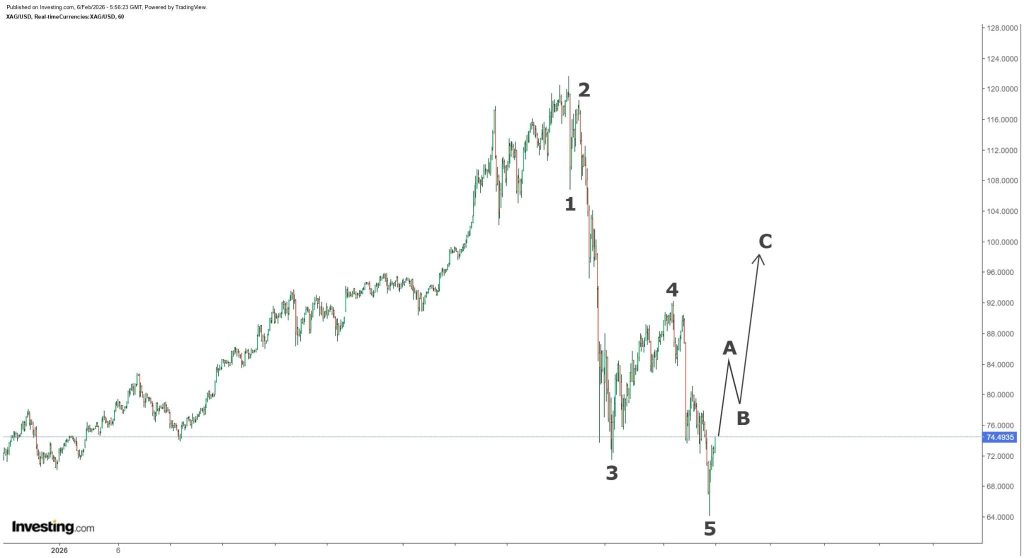
Silver has been taking a beating lately, and the Silver price hasn’t exactly been acting like a safe haven. After running up into the highs, the whole move reversed
Share
Captainaltcoin2026/02/07 03:15
Citi Caps Year-End at $4,300, But ETF outflows Challenge Outlook

Citi Caps Year-End at $4,300, But ETF outflows Challenge Outlook

The post Citi Caps Year-End at $4,300, But ETF outflows Challenge Outlook appeared on BitcoinEthereumNews.com. Ethereum Price Prediction: Citi Caps Year-End at $4,300, But ETF outflows Challenge Outlook Disclaimer: The information found on NewsBTC is for educational purposes only. It does not represent the opinions of NewsBTC on whether to buy, sell or hold any investments and naturally investing carries risks. You are advised to conduct your own research before making any investment decisions. Use information provided on this website entirely at your own risk. Related News © 2025 NewsBTC. All Rights Reserved. This website uses cookies. By continuing to use this website you are giving consent to cookies being used. Visit our Privacy Center or Cookie Policy. I Agree Source: https://www.newsbtc.com/news/ethereum/ethereum-price-prediction-citi-caps-year-end-at-4300-but-etf-outflows-challenge-outlook/
Share
BitcoinEthereumNews2025/09/18 14:30