Binance Monitoring Tag Flags NFP and 4 Other High-Risk Tokens for Potential Delisting
BitcoinWorld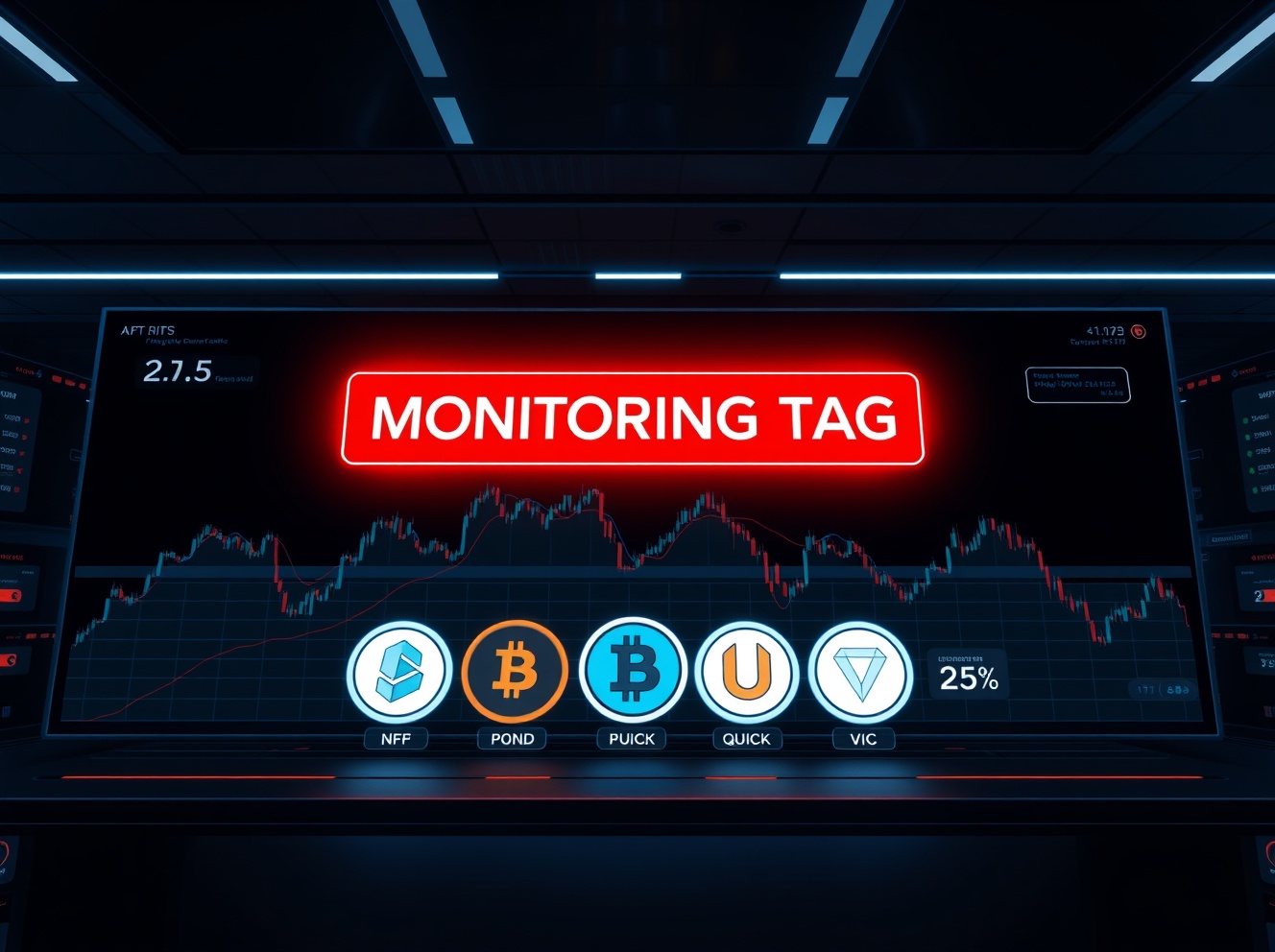
Binance Monitoring Tag Flags NFP and 4 Other High-Risk Tokens for Potential Delisting
Binance, the world’s largest cryptocurrency exchange by trading volume, has added a Monitoring Tag to five tokens, including NFP, NOM, POND, QUICK, and VIC. This designation signals heightened volatility and an elevated risk of future delisting. Investors holding these assets should exercise extreme caution.
Binance Monitoring Tag: What It Means for NFP and Other Tokens
The Binance Monitoring Tag serves as a formal risk warning. The exchange applies this label to tokens that exhibit notably higher volatility and risk compared to other listed assets. For NFP, NOM, POND, QUICK, and VIC, this tag indicates they could be delisted in the future. Binance regularly reviews all listed projects, and this designation is a key part of its risk management framework.
When a token receives a Monitoring Tag, it faces increased scrutiny. Binance may delist a token if it fails to meet ongoing listing criteria. These criteria include project team commitment, development activity, trading volume, and network stability. The tag serves as a clear signal to the market that the token’s status is not guaranteed.
Understanding the Five Tokens: NFP, NOM, POND, QUICK, and VIC
Each of these tokens operates within a distinct sector of the crypto ecosystem. Here is a brief overview of their core functions and recent challenges:
- NFP (NFPrompt): An AI-powered content creation platform. It has faced declining user engagement and token utility issues.
- NOM (Nomic): A decentralized Bitcoin-backed stablecoin protocol. Its peg stability has been questioned in volatile markets.
- POND (Marlin): A layer-0 protocol for improving blockchain network performance. It struggles with adoption against larger competitors.
- QUICK (QuickSwap): A decentralized exchange on Polygon. Its liquidity has dropped significantly since the peak of DeFi summer.
- VIC (Viction): A layer-1 blockchain for decentralized applications. It faces intense competition from Ethereum, Solana, and other L1s.
These projects share common vulnerabilities: low trading volume, reduced developer activity, and unclear roadmaps. Binance’s Monitoring Tag reflects these fundamental weaknesses.
Immediate Impact on Token Prices and Market Sentiment
Following the announcement, all five tokens experienced immediate price declines. NFP dropped 12% within the first hour. NOM and POND fell by 8% and 9%, respectively. QUICK and VIC also saw double-digit percentage losses. This price action is typical for tokens receiving a Monitoring Tag, as traders interpret it as a bearish signal.
Market sentiment turned negative. Many holders rushed to sell their positions, fearing a potential delisting. The announcement also triggered broader discussions about token quality and exchange listing standards. Analysts point out that such tags often lead to sustained downward pressure until the project demonstrates significant improvement or is delisted.
Binance Delisting Criteria: A Historical Perspective
Binance has a well-documented history of delisting tokens that fail to meet its standards. In 2024 alone, the exchange removed over 20 tokens from its platform. Common reasons include:
- Low trading volume and liquidity
- Lack of ongoing development or project abandonment
- Security vulnerabilities or network instability
- Regulatory compliance issues
- Unethical conduct by the project team
The Monitoring Tag is often the final warning before a delisting. Projects have a limited window—typically 3 to 6 months—to address the exchange’s concerns. If they fail to show measurable progress, Binance proceeds with removal.
Expert Analysis: Why This Matters for Crypto Investors
Financial analysts and blockchain researchers view this development as a critical reminder of the risks inherent in cryptocurrency investing. “The Monitoring Tag is not a death sentence, but it is a serious red flag,” says Dr. Elena Marchetti, a blockchain risk analyst at CryptoInsight Research. “Investors should review their portfolios immediately. Holding these tokens without a clear catalyst for recovery is a high-risk strategy.”
Other experts emphasize the importance of diversification. “No single token should dominate a portfolio, especially one flagged for potential delisting,” notes Marcus Wei, a portfolio manager at Digital Asset Capital. “The market is unforgiving. Projects that lose momentum rarely regain it.”
These insights align with Binance’s own guidance. The exchange advises users to conduct thorough research before trading any token, especially those under monitoring.
What Token Holders Should Do Now
If you hold NFP, NOM, POND, QUICK, or VIC, consider the following steps:
- Review the project’s fundamentals: Check their GitHub activity, community engagement, and recent updates.
- Monitor Binance announcements: The exchange will provide updates on any review outcomes.
- Assess your risk tolerance: Decide if you are willing to hold through potential delisting.
- Consider withdrawing to a private wallet: If you plan to hold long-term, move tokens off the exchange.
- Set stop-loss orders: Protect against further downside if you choose to trade.
These actions can help mitigate losses. However, no strategy guarantees protection against a full delisting event.
Broader Implications for the Cryptocurrency Market
Binance’s decision reflects a broader trend toward stricter token listing standards across major exchanges. Coinbase, Kraken, and Bybit have all implemented similar risk-warning systems. This shift benefits the market by filtering out low-quality projects, but it also creates uncertainty for investors in smaller tokens.
Regulatory pressure is a key driver. Global regulators increasingly scrutinize exchanges for listing tokens that could harm retail investors. By proactively flagging risky assets, Binance aligns itself with evolving compliance expectations. This move may also reduce the likelihood of future enforcement actions.
For the broader crypto ecosystem, the Monitoring Tag serves as a quality signal. Projects that maintain their listing status demonstrate resilience and credibility. Conversely, flagged tokens face an uphill battle to restore investor confidence.
Timeline of Events Leading to the Monitoring Tag
Understanding the sequence of events provides context for this decision:
- January 2025: NFP and POND report declining monthly active users.
- March 2025: NOM’s stablecoin loses its peg for 48 hours, causing panic selling.
- May 2025: QUICK’s total value locked (TVL) drops below $10 million, a 90% decline from its peak.
- July 2025: VIC’s mainnet upgrade is delayed indefinitely, eroding developer trust.
- September 2025: Binance initiates internal review of these five tokens.
- October 2025: Binance officially adds the Monitoring Tag to NFP, NOM, POND, QUICK, and VIC.
This timeline shows that the Monitoring Tag is not an arbitrary decision. It follows months of observable decline in project health.
Conclusion
Binance’s addition of the Monitoring Tag to NFP, NOM, POND, QUICK, and VIC tokens is a significant risk warning for the cryptocurrency market. These tokens now face heightened volatility and a tangible threat of delisting. Investors should carefully evaluate their exposure and consider the steps outlined above. The Binance Monitoring Tag is a powerful tool for market transparency, but it also demands swift action from token holders. Stay informed, stay cautious, and prioritize risk management in your crypto portfolio.
FAQs
Q1: What does the Binance Monitoring Tag mean for NFP token?
The Monitoring Tag indicates that NFP token exhibits high volatility and risk. It may be delisted in the future if it fails to meet Binance’s listing criteria.
Q2: Can tokens with a Monitoring Tag recover?
Yes, some tokens have successfully removed the tag by improving their fundamentals, increasing trading volume, and demonstrating active development. However, recovery is not guaranteed.
Q3: How long does a token stay under the Monitoring Tag?
Binance does not set a fixed timeline. The tag remains until the token either meets the exchange’s standards or is delisted. Reviews typically occur every few months.
Q4: What happens if a token is delisted from Binance?
If delisted, the token is removed from trading pairs. Withdrawals remain open for a period (usually 30–90 days). After that, users may lose access to their funds if they do not withdraw.
Q5: Should I sell my NFP, NOM, POND, QUICK, or VIC tokens immediately?
This decision depends on your risk tolerance. The tag signals elevated risk, but selling immediately may lock in losses. Consider consulting a financial advisor and reviewing the project’s fundamentals before acting.
This post Binance Monitoring Tag Flags NFP and 4 Other High-Risk Tokens for Potential Delisting first appeared on BitcoinWorld.


You May Also Like

White House Blocks Anthropic’s Plan to Expand Access to Its Mythos AI Model

WLFI Token Unlock Advances with 99.5% Support