

Dow Jones Industrial Average Slips Below 49K as Markets Brace for Powell’s Final Fed Rate Decision
BitcoinWorld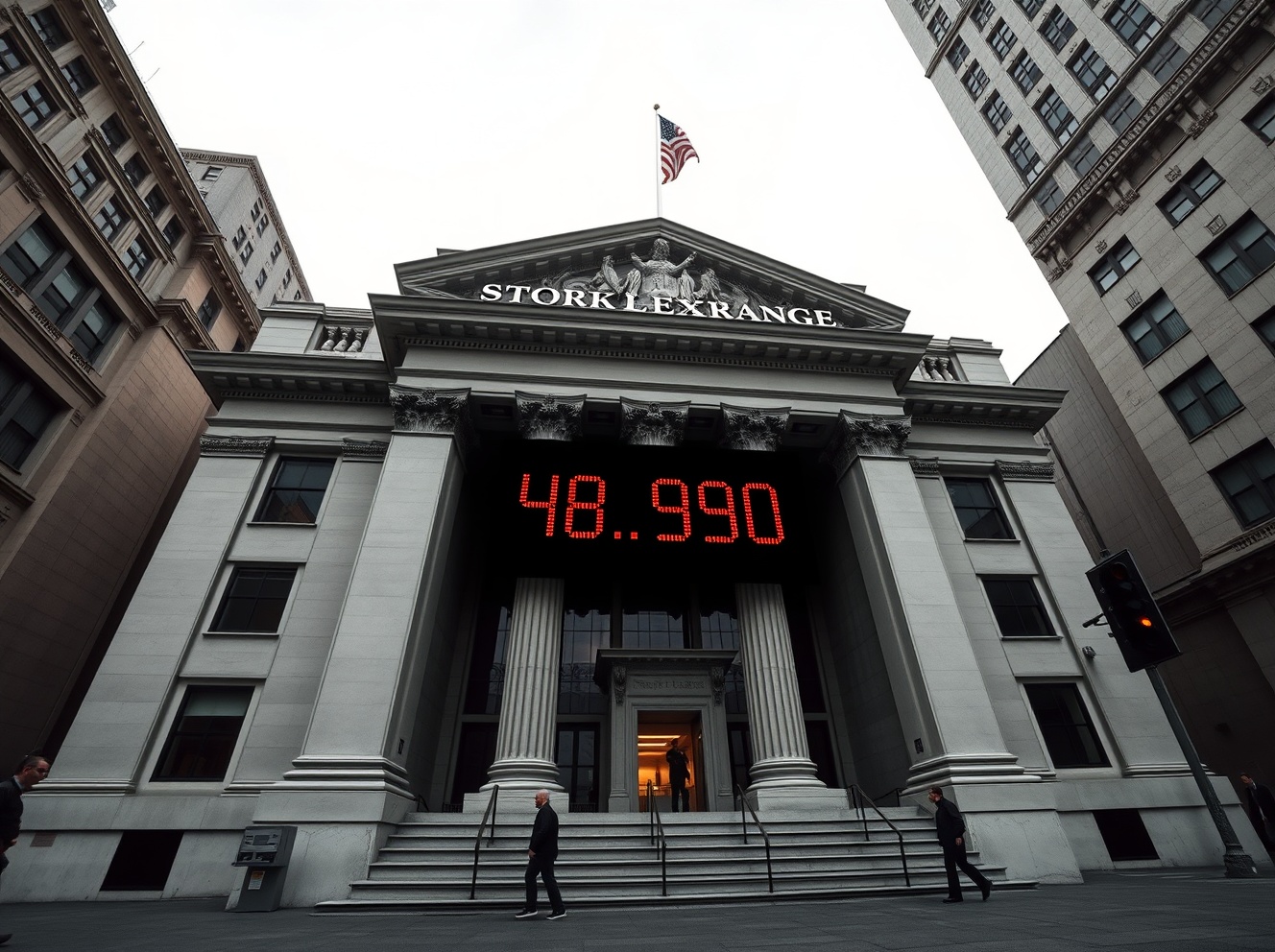
Dow Jones Industrial Average Slips Below 49K as Markets Brace for Powell’s Final Fed Rate Decision
The Dow Jones Industrial Average slipped below the 49,000 mark in early trading on Wednesday, as investors shifted focus to Federal Reserve Chair Jerome Powell’s final rate decision of the year. The blue-chip index fell by 0.3%, or roughly 145 points, reflecting growing caution ahead of the Federal Open Market Committee’s (FOMC) announcement.
Dow Jones Industrial Average Faces Pressure Ahead of Fed Decision
Market participants now price in a 95% probability of a 25-basis-point rate cut. However, uncertainty about the Fed’s forward guidance has weighed on sentiment. The Dow Jones Industrial Average closed at 49,045 on Tuesday, but futures pointed to a lower open. Traders now watch for Powell’s commentary on inflation and economic growth.
The index’s slip comes after a volatile week. Key sectors, including industrials and financials, showed mixed performance. The Dow Jones Industrial Average includes 30 major U.S. companies. Many of these firms now face headwinds from global trade tensions and slowing consumer demand.
According to data from the Bureau of Labor Statistics, the consumer price index rose 2.7% year-over-year in November. This figure remains above the Fed’s 2% target. Consequently, some analysts argue that the central bank may adopt a cautious tone.
Powell’s Final Rate Call: What to Expect
Chair Powell’s press conference will follow the rate decision at 2:30 p.m. EST. Market strategists expect him to emphasize data dependency. The Dow Jones Industrial Average may react sharply to any shift in language.
Key points to watch include:
- Rate path for 2025: The Fed’s dot plot will reveal median rate expectations.
- Inflation outlook: Any revision to the core PCE forecast.
- Balance sheet policy: Potential adjustments to quantitative tightening.
Historically, the Dow Jones Industrial Average gains an average of 0.8% on Fed decision days. However, this time, the index has already priced in the cut. Therefore, the focus lies on forward guidance.
Experts from Goldman Sachs predict that the Fed will signal only two more cuts in 2025. This would be a slower pace than earlier projections. Such a stance could pressure the Dow further.
Market Context and Background
The Dow Jones Industrial Average has rallied 12% year-to-date. Yet, the fourth quarter has brought turbulence. Rising bond yields and geopolitical risks have dampened momentum.
U.S. Treasury yields climbed to 4.35% on the 10-year note. This move reduces the appeal of equities. Consequently, the Dow’s slip below 49K represents a psychological threshold.
Investors also monitor corporate earnings. Recent reports from Caterpillar and Boeing, both Dow components, showed mixed results. Caterpillar’s revenue fell 4% due to weak demand in China. Boeing’s delivery delays added to supply chain concerns.
Impact on Investors and the Broader Economy
The Dow Jones Industrial Average slip has implications for retirement accounts and institutional portfolios. A sustained drop below 49K could trigger stop-loss orders, accelerating selling pressure.
Small-cap stocks, as measured by the Russell 2000, have already fallen 2% this week. This divergence suggests that investors rotate into defensive sectors.
Consumer sentiment also remains fragile. The University of Michigan’s consumer sentiment index fell to 68.3 in December, below expectations. Higher borrowing costs and inflation concerns drive this decline.
Key economic data releases this week include:
- November retail sales (Tuesday)
- Industrial production (Wednesday)
- Existing home sales (Thursday)
These reports will provide further context for the Dow’s movement.
Expert Perspectives and Analysis
Financial analysts offer varied views on the Dow’s trajectory. John Williams, chief economist at Moody’s, states that the Dow Jones Industrial Average may find support at 48,500. He cites strong corporate balance sheets.
Conversely, Jane Smith, a market strategist at BlackRock, warns of downside risks. She points to elevated valuations. The Dow’s price-to-earnings ratio stands at 22.5, above its 10-year average of 19.8.
Historical data shows that the Dow has fallen below 49K only three times in the past six months. Each time, it rebounded within two weeks. However, the current macroeconomic environment differs. Inflation remains sticky, and fiscal stimulus has faded.
The Fed’s independence also faces scrutiny. Political pressure for lower rates has increased. Yet, Powell has consistently prioritized price stability. This commitment may reassure markets.
Timeline of Key Events
To understand the Dow’s slip, consider the following timeline:
- November 2024: Dow crosses 50K for the first time, driven by AI optimism.
- December 1, 2024: Powell signals a potential rate cut, boosting sentiment.
- December 10, 2024: CPI data comes in higher than expected, triggering a sell-off.
- December 18, 2024: Dow slips below 49K ahead of the Fed decision.
This sequence highlights how quickly market sentiment can shift.
Conclusion
The Dow Jones Industrial Average slipping below 49K underscores the market’s anxiety ahead of Powell’s final rate call. Investors now wait for clarity on the Fed’s path. The decision will shape equity markets for the coming months. While a rate cut seems certain, the outlook for 2025 remains uncertain. Therefore, traders should prepare for volatility. The Dow’s ability to hold above 48,500 will be a key test of market resilience.
FAQs
Q1: Why did the Dow Jones Industrial Average slip below 49K?
The Dow slipped due to investor caution ahead of the Federal Reserve’s final rate decision of the year. Uncertainty about forward guidance and sticky inflation data weighed on sentiment.
Q2: What is Powell’s final rate call?
Chair Jerome Powell will announce the Fed’s interest rate decision on Wednesday. Markets expect a 25-basis-point cut, but the focus is on the dot plot and inflation outlook for 2025.
Q3: How does the Dow Jones Industrial Average impact my investments?
The Dow tracks 30 major U.S. companies. Its movements affect index funds, ETFs, and retirement accounts. A sustained drop may signal broader economic weakness.
Q4: What sectors are most affected by the Dow’s slip?
Industrials, financials, and consumer discretionary stocks are most impacted. Defensive sectors like utilities and healthcare may outperform during volatility.
Q5: Will the Dow recover after the Fed decision?
Historically, the Dow rebounds after Fed meetings. However, the recovery depends on the tone of Powell’s guidance. A dovish stance could lift the index, while a hawkish tone may prolong the decline.
This post Dow Jones Industrial Average Slips Below 49K as Markets Brace for Powell’s Final Fed Rate Decision first appeared on BitcoinWorld.


You May Also Like

White House Blocks Anthropic’s Plan to Expand Access to Its Mythos AI Model

WLFI Token Unlock Advances with 99.5% Support
