

India Denies Paying Iran for Safe Passage Through Strait of Hormuz in Critical Diplomatic Move
BitcoinWorld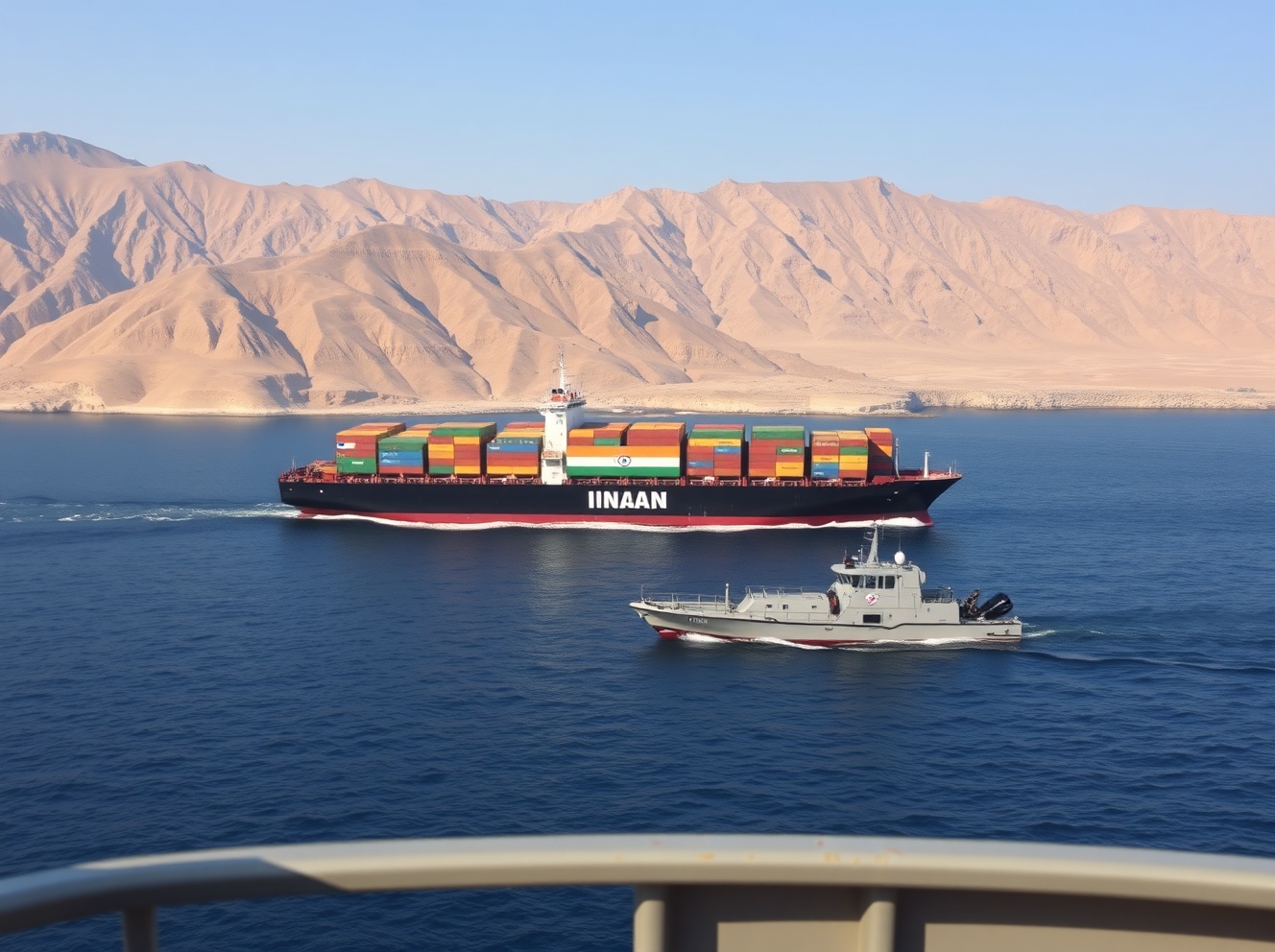
India Denies Paying Iran for Safe Passage Through Strait of Hormuz in Critical Diplomatic Move
NEW DELHI, India – April 2025: The Indian government has issued a firm denial regarding speculation it paid fees to Iran for the safe transit of its commercial vessels through the strategically vital Strait of Hormuz. This statement from India’s Ministry of Foreign Affairs directly addresses rumors that emerged following the escorted passage of several Indian-flagged ships on March 28. Consequently, the clarification underscores the complex diplomatic and security dynamics in a region critical to global energy supplies.
India Denies Paying Iran for Strait of Hormuz Passage
A spokesperson for India’s Ministry of Foreign Affairs categorically rejected claims of any financial transaction with Tehran. The official stated India maintains its right to freedom of navigation under international law. Furthermore, the denial aims to quell speculation that began after Iranian media reported the passage of Indian vessels. Reportedly, Iran’s Islamic Revolutionary Guard Corps (IRGC) provided an escort for the ships during their transit. However, the Indian government frames this as a routine diplomatic coordination, not a paid service. This incident highlights the delicate balance New Delhi strikes in its West Asia policy.
Context of Maritime Security and Geopolitical Tensions
The Strait of Hormuz serves as the world’s most important oil transit chokepoint. Approximately 21 million barrels of oil pass through daily, representing about 21% of global petroleum liquid consumption. Therefore, security in this narrow waterway is a paramount concern for energy-importing nations like India. Regional tensions, particularly between Iran and Western powers, have historically led to incidents of ship seizures and attacks. For instance, in recent years, tensions have involved tanker detentions and accusations of maritime sabotage. India, a major importer of Iranian oil historically, navigates a careful path to protect its energy interests and citizen sailors.
Expert Analysis on Naval Diplomacy
Maritime security analysts note that naval escorts or coordinated transits are not uncommon in high-risk areas. The United States and its allies also conduct patrols. However, the involvement of the IRGC Navy, a branch often at the center of regional confrontations, adds a layer of geopolitical significance. Experts suggest India’s denial of payment is crucial for maintaining its principled stance on freedom of navigation. It also prevents the perception of aligning too closely with Iranian security protocols, which could complicate relations with other partners in the region, such as Israel and Arab Gulf states. India’s diplomatic strategy emphasizes de-escalation and dialogue.
Timeline of Events and Official Communications
The sequence of events provides clarity on how the speculation arose.
- March 28, 2025: Multiple Indian-flagged commercial vessels transit the Strait of Hormuz. Iranian state-affiliated media report the passage, noting an IRGC escort.
- March 29-30: Regional and international news outlets begin reporting on the transit, with some speculating about possible security arrangements or fees.
- April 1, 2025: India’s Ministry of External Affairs holds a regular press briefing. A journalist queries the spokesperson on the rumors of payment.
- April 1, 2025 (Response): The official spokesperson issues a clear denial: “Such reports are baseless and speculative. India engages with all regional states on issues of maritime safety based on established international norms and diplomatic channels.”
Impact on India-Iran Relations and Regional Stability
This incident occurs within the broader framework of India-Iran relations, which are multifaceted. Key pillars include the development of Iran’s Chabahar Port, energy trade, and regional connectivity. A public denial of payment serves to keep these relations on a state-to-state, diplomatic footing. It avoids setting a commercial precedent that other nations might feel pressured to follow. Moreover, it reassures other regional actors of India’s independent foreign policy. For global shipping insurers and commodity markets, clarity on such arrangements is essential for risk assessment. Stable transit protocols help ensure predictable energy flows and shipping costs.
The Role of the Islamic Revolutionary Guard Corps
The IRGC’s naval forces are a dominant security actor in the Persian Gulf. Their involvement in escorting foreign vessels is notable. Typically, the IRGC conducts such operations to assert Iran’s sovereignty and security role in its territorial waters. For the international shipping community, interactions with the IRGC are often viewed through the lens of compliance with complex sanctions regimes. India’s statement, by not elaborating on the nature of coordination with the IRGC, maintains necessary diplomatic ambiguity. This allows for operational deconfliction without formalizing arrangements that could attract secondary sanctions.
Comparative Global Practices in High-Risk Waters
Nations employ various strategies to protect shipping in dangerous straits. A brief comparison illustrates different models:
| Region/Strait | Primary Security Provider | Common Practice | Funding Model |
|---|---|---|---|
| Strait of Hormuz | Iranian Forces / International Coalitions | National escort offers, coalition patrols (e.g., CMF) | State-funded, no direct user fees |
| Gulf of Aden | International Naval Task Forces (EU, NATO, CMF) | Convoy systems, group transits | Taxpayer-funded by participating nations |
| Strait of Malacca | Littoral States (Indonesia, Malaysia, Singapore) | Coordinated patrols (MALSINDO), surveillance | State-funded, regional cooperation |
As shown, direct payments to a state actor for escort services are highly unusual. They could be interpreted as a form of tribute or a security tax, undermining the principle of free navigation. India’s denial aligns with the prevailing international norm where security is a public good facilitated by diplomacy and military presence, not a direct commercial transaction.
Conclusion
India’s denial of paying Iran for safe passage through the Strait of Hormuz is a significant diplomatic communication. It reinforces India’s commitment to international maritime law and its nuanced approach to regional security. The statement effectively counters speculation that could have misrepresented the nature of India-Iran relations. Ultimately, as a major stakeholder in global maritime trade, India’s actions and clarifications in such sensitive waterways contribute to the stability and predictability of vital international shipping lanes. The focus remains on diplomatic engagement, not financial arrangements, to ensure security.
FAQs
Q1: What exactly did India deny?
India’s Ministry of External Affairs denied reports or speculation that the Indian government made any payment to Iran to ensure the safe passage of Indian commercial ships through the Strait of Hormuz.
Q2: Why was there speculation about payment in the first place?
Speculation arose after Iranian media reported that several Indian-flagged vessels transited the strait on March 28 with an escort provided by Iran’s Islamic Revolutionary Guard Corps (IRGC). This unusual detail led to questions about the nature of the arrangement.
Q3: How important is the Strait of Hormuz to India?
It is critically important. A substantial portion of India’s oil and gas imports transit through the Strait of Hormuz. Secure and uninterrupted flow is vital for India’s energy security and economy.
Q4: Does India have a security agreement with Iran for the Strait?
There is no publicly known bilateral security agreement specifically for escort services. India engages with Iran and other regional states on broader maritime security issues through diplomatic channels and discussions.
Q5: What are the international laws governing passage through straits like Hormuz?
The United Nations Convention on the Law of the Sea (UNCLOS) guarantees the right of transit passage through straits used for international navigation. This means ships and aircraft can pass freely for continuous and expeditious transit. Coastal states can regulate for safety but cannot impede passage.
This post India Denies Paying Iran for Safe Passage Through Strait of Hormuz in Critical Diplomatic Move first appeared on BitcoinWorld.


추천 콘텐츠

Circle Mints $250M USDC Amid Rising Stablecoin Demand and Market Liquidity Surge
Zcash (ZEC) Price Outlook: Why a New Cycle High Is Possible Very Soon

Crypto Market Update - 20 June 2026: Institutions File While ETF Outflows Mount


인기 뉴스
더보기
