

Must Read
By dying, Cathy Cabral escapes all earthly liability, and, by her eternal silence, her co-accused are themselves helped with their own chances with the lawBy dying, Cathy Cabral escapes all earthly liability, and, by her eternal silence, her co-accused are themselves helped with their own chances with the law
[Newspoint] A death not exactly unforetold
The death of Maria Catalina Cabral, a central figure in the corruption scandal now gripping the nation, has brought our misguided sense of priority into sharp relief.
Taking her secrets to her grave, one would have thought, would automatically fuel our outrage further. Apparently not; we’re just too nice for our own good, although we did get some help from our police. By pronouncing the death a suicide, a personal tragedy, all too soon, even before an autopsy, they hit the right sensibilities among us patsies; they provided us with an excuse to step back and allow private space for grieving.
Even when an autopsy was suggested, as an apparent afterthought, Cabral’s husband questioned it as a sort of desecration, or a denial of some natural entitlement: What more would anyone need from her now that she’s dead? And, again, the police more or less conceded.
And so, for a moment there, the order of priority was suspended. Of course, Christmas also served as a fitting season. In any case, no active investigation was undertaken as promptly as would have been the proper case.
But how may this concession of giving distance, of suspending the operation of law, even only for the moment, be justified in the context in which this all-too-obviously suspicious death occurred?
Not only was Cabral one of those named as a beneficiary from the diversion of hundreds of billions of taxpayer pesos allotted for flood-control projects into the pockets of officials (among others, apart from the likes of her, senators and members of House of Representatives, budget officers, auditors, and engineers) and government contractors; as undersecretary for planning and public-private partnership at the Department of Public Works and Highways (since 2014), she was simply too strategically positioned to avoid suspicions of complicity. In fact, she was accused as an inside facilitator, a point person for the conspiracy.
Hours before her death, she had asked to be left alone on a cliffside road, an intimation that would have been unmistakable to anyone who had known what she had been going through. Just the same, all that apparently had been lost on her driver, her lone companion at the time: he not only left her out of his sight, but left her by herself. Presently, her broken body was found lying on the rocks below.
Escaping liability
A picture of her sitting on a roadside battlement, taken by her driver before he left her alone, may inspire endless curiosity and speculation about what thoughts preoccupied her at the time. For sure, those thoughts were worth more than a lousy penny, such that those of us who only wish that everyone got their deserved justice would likely end up feeling doubly cheated probing into her antemortem contemplations.
By dying, she escapes all earthly liability, and, by her eternal silence, her co-accused are themselves helped with their own chances with the law. Thus, the recovery of the stolen taxpayer money, which makes for the concrete essence of justice especially for those condemned to perpetual privation by corruption, becomes far more difficult than it might have been if she had come clean, through voluntary restitution and testimony.
Invariably, though, coming clean is the last option. And in a culture where corruption has come to be perpetrated by cross-institutional conspiracy, yielding ever bigger easier money, the temptation to hold out, I’d imagine, is particularly difficult to resist.
Trust the perpetrators to first try to bribe their way free, or run and hide, or strike deals with the law, or, as in Cabral’s rare and extreme case, sacrifice their lives on the chance that the ill-gotten fruits of that sacrifice remain untraceable and inheritable, unrestituted. – Rappler.com
Market Opportunity
Notcoin Price(NOT)
$0.0005318
$0.0005318$0.0005318
USD
Notcoin (NOT) Live Price Chart
Disclaimer: The articles reposted on this site are sourced from public platforms and are provided for informational purposes only. They do not necessarily reflect the views of MEXC. All rights remain with the original authors. If you believe any content infringes on third-party rights, please contact service@support.mexc.com for removal. MEXC makes no guarantees regarding the accuracy, completeness, or timeliness of the content and is not responsible for any actions taken based on the information provided. The content does not constitute financial, legal, or other professional advice, nor should it be considered a recommendation or endorsement by MEXC.
You May Also Like

Summarize Any Stock’s Earnings Call in Seconds Using FMP API
Turn lengthy earnings call transcripts into one-page insights using the Financial Modeling Prep APIPhoto by Bich Tran
Earnings calls are packed with insights. They tell you how a company performed, what management expects in the future, and what analysts are worried about. The challenge is that these transcripts often stretch across dozens of pages, making it tough to separate the key takeaways from the noise.
With the right tools, you don’t need to spend hours reading every line. By combining the Financial Modeling Prep (FMP) API with Groq’s lightning-fast LLMs, you can transform any earnings call into a concise summary in seconds. The FMP API provides reliable access to complete transcripts, while Groq handles the heavy lifting of distilling them into clear, actionable highlights.
In this article, we’ll build a Python workflow that brings these two together. You’ll see how to fetch transcripts for any stock, prepare the text, and instantly generate a one-page summary. Whether you’re tracking Apple, NVIDIA, or your favorite growth stock, the process works the same — fast, accurate, and ready whenever you are.
Fetching Earnings Transcripts with FMP API
The first step is to pull the raw transcript data. FMP makes this simple with dedicated endpoints for earnings calls. If you want the latest transcripts across the market, you can use the stable endpoint /stable/earning-call-transcript-latest. For a specific stock, the v3 endpoint lets you request transcripts by symbol, quarter, and year using the pattern:
https://financialmodelingprep.com/api/v3/earning_call_transcript/{symbol}?quarter={q}&year={y}&apikey=YOUR_API_KEY
here’s how you can fetch NVIDIA’s transcript for a given quarter:
import requestsAPI_KEY = "your_api_key"symbol = "NVDA"quarter = 2year = 2024url = f"https://financialmodelingprep.com/api/v3/earning_call_transcript/{symbol}?quarter={quarter}&year={year}&apikey={API_KEY}"response = requests.get(url)data = response.json()# Inspect the keysprint(data.keys())# Access transcript contentif "content" in data[0]: transcript_text = data[0]["content"] print(transcript_text[:500]) # preview first 500 characters
The response typically includes details like the company symbol, quarter, year, and the full transcript text. If you aren’t sure which quarter to query, the “latest transcripts” endpoint is the quickest way to always stay up to date.
Cleaning and Preparing Transcript Data
Raw transcripts from the API often include long paragraphs, speaker tags, and formatting artifacts. Before sending them to an LLM, it helps to organize the text into a cleaner structure. Most transcripts follow a pattern: prepared remarks from executives first, followed by a Q&A session with analysts. Separating these sections gives better control when prompting the model.
In Python, you can parse the transcript and strip out unnecessary characters. A simple way is to split by markers such as “Operator” or “Question-and-Answer.” Once separated, you can create two blocks — Prepared Remarks and Q&A — that will later be summarized independently. This ensures the model handles each section within context and avoids missing important details.
Here’s a small example of how you might start preparing the data:
import re# Example: using the transcript_text we fetched earliertext = transcript_text# Remove extra spaces and line breaksclean_text = re.sub(r'\s+', ' ', text).strip()# Split sections (this is a heuristic; real-world transcripts vary slightly)if "Question-and-Answer" in clean_text: prepared, qna = clean_text.split("Question-and-Answer", 1)else: prepared, qna = clean_text, ""print("Prepared Remarks Preview:\n", prepared[:500])print("\nQ&A Preview:\n", qna[:500])
With the transcript cleaned and divided, you’re ready to feed it into Groq’s LLM. Chunking may be necessary if the text is very long. A good approach is to break it into segments of a few thousand tokens, summarize each part, and then merge the summaries in a final pass.
Summarizing with Groq LLM
Now that the transcript is clean and split into Prepared Remarks and Q&A, we’ll use Groq to generate a crisp one-pager. The idea is simple: summarize each section separately (for focus and accuracy), then synthesize a final brief.
Prompt design (concise and factual)
Use a short, repeatable template that pushes for neutral, investor-ready language:
You are an equity research analyst. Summarize the following earnings call sectionfor {symbol} ({quarter} {year}). Be factual and concise.Return:1) TL;DR (3–5 bullets)2) Results vs. guidance (what improved/worsened)3) Forward outlook (specific statements)4) Risks / watch-outs5) Q&A takeaways (if present)Text:<<<{section_text}>>>
Python: calling Groq and getting a clean summary
Groq provides an OpenAI-compatible API. Set your GROQ_API_KEY and pick a fast, high-quality model (e.g., a Llama-3.1 70B variant). We’ll write a helper to summarize any text block, then run it for both sections and merge.
import osimport textwrapimport requestsGROQ_API_KEY = os.environ.get("GROQ_API_KEY") or "your_groq_api_key"GROQ_BASE_URL = "https://api.groq.com/openai/v1" # OpenAI-compatibleMODEL = "llama-3.1-70b" # choose your preferred Groq modeldef call_groq(prompt, temperature=0.2, max_tokens=1200): url = f"{GROQ_BASE_URL}/chat/completions" headers = { "Authorization": f"Bearer {GROQ_API_KEY}", "Content-Type": "application/json", } payload = { "model": MODEL, "messages": [ {"role": "system", "content": "You are a precise, neutral equity research analyst."}, {"role": "user", "content": prompt}, ], "temperature": temperature, "max_tokens": max_tokens, } r = requests.post(url, headers=headers, json=payload, timeout=60) r.raise_for_status() return r.json()["choices"][0]["message"]["content"].strip()def build_prompt(section_text, symbol, quarter, year): template = """ You are an equity research analyst. Summarize the following earnings call section for {symbol} ({quarter} {year}). Be factual and concise. Return: 1) TL;DR (3–5 bullets) 2) Results vs. guidance (what improved/worsened) 3) Forward outlook (specific statements) 4) Risks / watch-outs 5) Q&A takeaways (if present) Text: <<< {section_text} >>> """ return textwrap.dedent(template).format( symbol=symbol, quarter=quarter, year=year, section_text=section_text )def summarize_section(section_text, symbol="NVDA", quarter="Q2", year="2024"): if not section_text or section_text.strip() == "": return "(No content found for this section.)" prompt = build_prompt(section_text, symbol, quarter, year) return call_groq(prompt)# Example usage with the cleaned splits from Section 3prepared_summary = summarize_section(prepared, symbol="NVDA", quarter="Q2", year="2024")qna_summary = summarize_section(qna, symbol="NVDA", quarter="Q2", year="2024")final_one_pager = f"""# {symbol} Earnings One-Pager — {quarter} {year}## Prepared Remarks — Key Points{prepared_summary}## Q&A Highlights{qna_summary}""".strip()print(final_one_pager[:1200]) # preview
Tips that keep quality high:
Keep temperature low (≈0.2) for factual tone.
If a section is extremely long, chunk at ~5–8k tokens, summarize each chunk with the same prompt, then ask the model to merge chunk summaries into one section summary before producing the final one-pager.
If you also fetched headline numbers (EPS/revenue, guidance) earlier, prepend them to the prompt as brief context to help the model anchor on the right outcomes.
Building the End-to-End Pipeline
At this point, we have all the building blocks: the FMP API to fetch transcripts, a cleaning step to structure the data, and Groq LLM to generate concise summaries. The final step is to connect everything into a single workflow that can take any ticker and return a one-page earnings call summary.
The flow looks like this:
Input a stock ticker (for example, NVDA).
Use FMP to fetch the latest transcript.
Clean and split the text into Prepared Remarks and Q&A.
Send each section to Groq for summarization.
Merge the outputs into a neatly formatted earnings one-pager.
Here’s how it comes together in Python:
def summarize_earnings_call(symbol, quarter, year, api_key, groq_key): # Step 1: Fetch transcript from FMP url = f"https://financialmodelingprep.com/api/v3/earning_call_transcript/{symbol}?quarter={quarter}&year={year}&apikey={api_key}" resp = requests.get(url) resp.raise_for_status() data = resp.json() if not data or "content" not in data[0]: return f"No transcript found for {symbol} {quarter} {year}" text = data[0]["content"] # Step 2: Clean and split clean_text = re.sub(r'\s+', ' ', text).strip() if "Question-and-Answer" in clean_text: prepared, qna = clean_text.split("Question-and-Answer", 1) else: prepared, qna = clean_text, "" # Step 3: Summarize with Groq prepared_summary = summarize_section(prepared, symbol, quarter, year) qna_summary = summarize_section(qna, symbol, quarter, year) # Step 4: Merge into final one-pager return f"""# {symbol} Earnings One-Pager — {quarter} {year}## Prepared Remarks{prepared_summary}## Q&A Highlights{qna_summary}""".strip()# Example runprint(summarize_earnings_call("NVDA", 2, 2024, API_KEY, GROQ_API_KEY))
With this setup, generating a summary becomes as simple as calling one function with a ticker and date. You can run it inside a notebook, integrate it into a research workflow, or even schedule it to trigger after each new earnings release.
Free Stock Market API and Financial Statements API...
Conclusion
Earnings calls no longer need to feel overwhelming. With the Financial Modeling Prep API, you can instantly access any company’s transcript, and with Groq LLM, you can turn that raw text into a sharp, actionable summary in seconds. This pipeline saves hours of reading and ensures you never miss the key results, guidance, or risks hidden in lengthy remarks. Whether you track tech giants like NVIDIA or smaller growth stocks, the process is the same — fast, reliable, and powered by the flexibility of FMP’s data.
Summarize Any Stock’s Earnings Call in Seconds Using FMP API was originally published in Coinmonks on Medium, where people are continuing the conversation by highlighting and responding to this story
Share
Medium2025/09/18 14:40
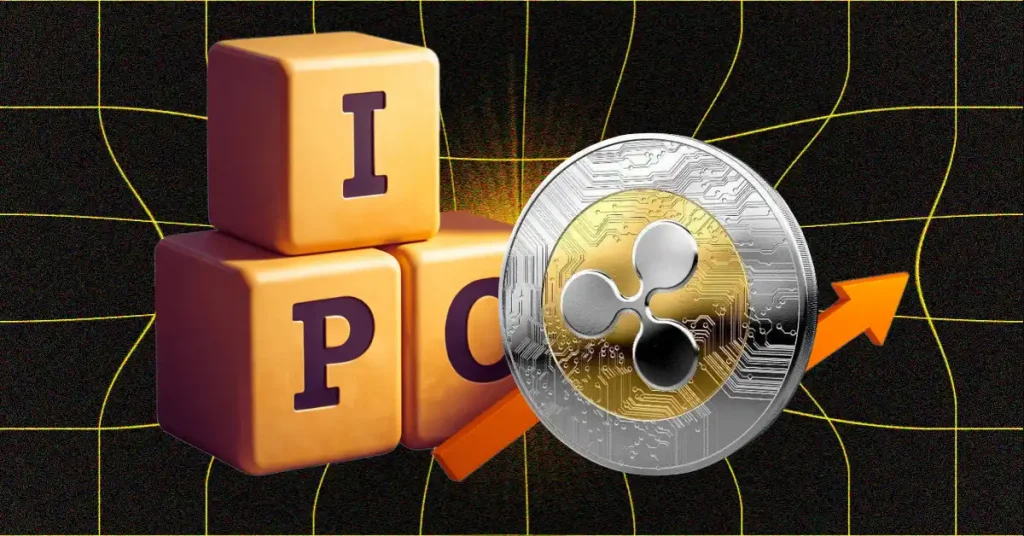
Ripple IPO Back in Spotlight as Valuation Hits $50B
The post Ripple IPO Back in Spotlight as Valuation Hits $50B appeared first on Coinpedia Fintech News Ripple, the blockchain payments company behind XRP, is once
Share
CoinPedia2025/12/27 14:24

Solana co-founder predicts that by 2026: the stablecoin market will exceed one trillion US dollars, and 100,000 humanoid robots will be shipped.
PANews reported on December 27th that Anatoly Yakovenko, co-founder of Solana, released some predictions about 2026 on X, as follows: The total size of stablecoins
Share
PANews2025/12/27 15:04