

Circle Surges 16% on US Crypto Bill Compromise: Stablecoin Interest Programs Get a Boost
BitcoinWorld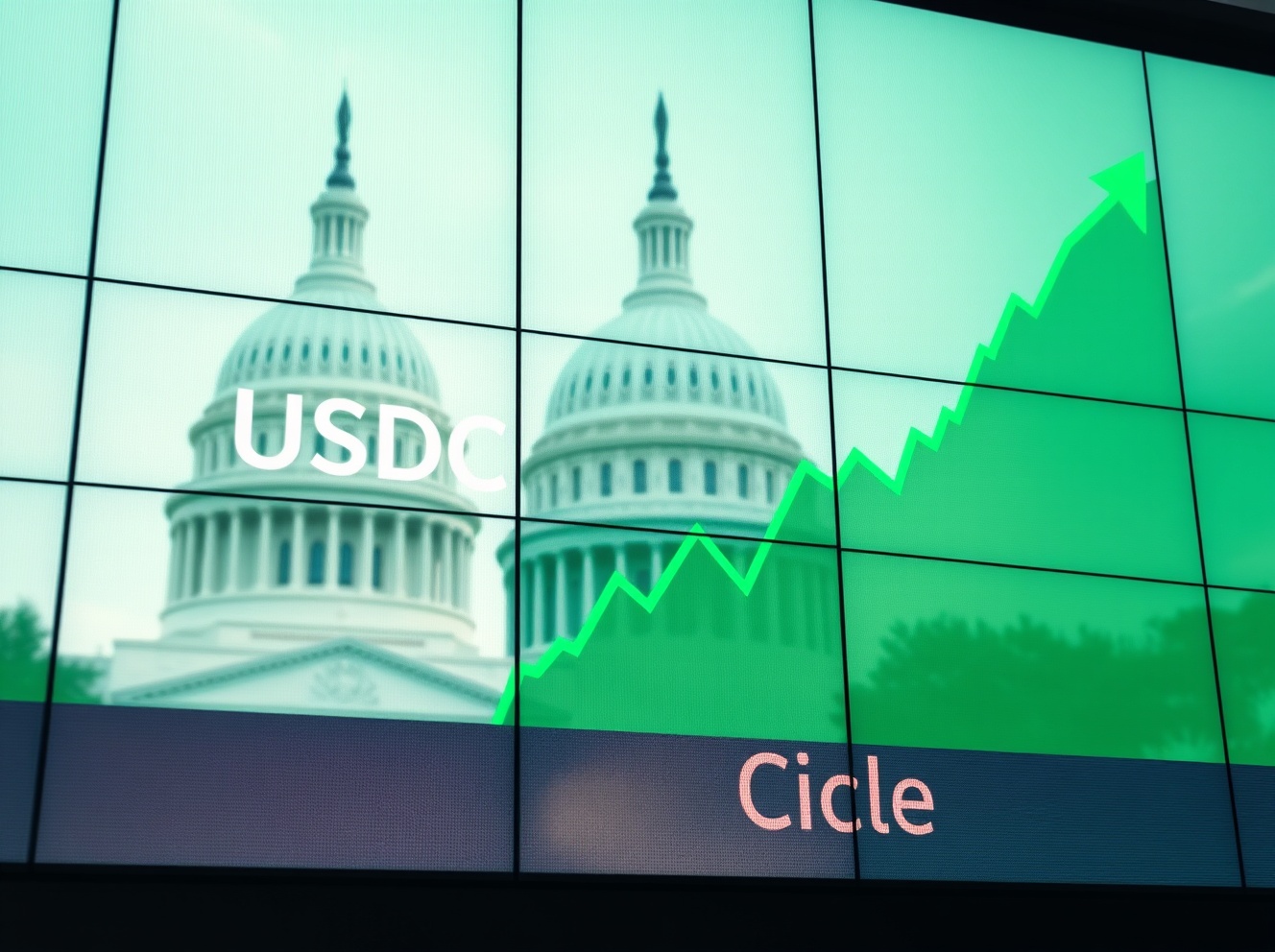
Circle Surges 16% on US Crypto Bill Compromise: Stablecoin Interest Programs Get a Boost
Circle, the company behind the USDC stablecoin, surged 16% over the weekend. This sharp rise follows a compromise by U.S. lawmakers on the Clarity Act. The Clarity Act is a key piece of crypto regulation legislation. The agreement allows stablecoin interest programs to continue under specific conditions. This development marks a significant step forward for the digital asset industry.
Circle Surges on US Crypto Bill Breakthrough
The news, first reported by CNBC, sent shockwaves through the crypto market. Circle’s stock price jumped dramatically on Friday and continued its upward momentum through the weekend. The surge reflects strong investor confidence in the company’s future under a clearer regulatory framework. The compromise on the Clarity Act removes a major cloud of uncertainty. It provides a legal pathway for stablecoin issuers to offer interest-bearing products. This is a crucial revenue stream for companies like Circle.
Previously, the regulatory status of such programs was unclear. Many firms operated in a gray area, fearing potential enforcement actions. The new compromise sets clear rules. It allows stablecoin interest programs but with strict consumer protections. For example, issuers must hold high-quality liquid assets. They must also provide transparent disclosures to users. This balance between innovation and safety is exactly what the market needed.
US Crypto Bill Compromise: Key Details of the Clarity Act
The Clarity Act is not a new piece of legislation. Lawmakers have debated it for months. The core issue centered on whether stablecoins should be classified as securities. If classified as securities, they would fall under the SEC’s jurisdiction. This would impose heavy registration and reporting requirements. The compromise avoids this classification. Instead, it treats stablecoins as a new asset class under the oversight of the Office of the Comptroller of the Currency (OCC).
This decision has major implications. It allows stablecoin interest programs to operate without being labeled as securities offerings. However, the programs must meet specific conditions. These include:
- Full reserve backing: Every stablecoin must be 100% backed by cash or cash equivalents.
- Regular audits: Issuers must submit to quarterly audits by a registered public accounting firm.
- Consumer protection: Users must receive clear, plain-language disclosures about risks and returns.
- No rehypothecation: Issuers cannot lend out the underlying reserves without explicit user consent.
This framework provides a clear path forward. It also sets a precedent for other countries. The US crypto bill compromise shows that regulators can work with the industry. It creates a stable environment for growth.
Market Reaction: Related Stocks Also Climb
The positive sentiment did not stop with Circle. Other companies in the crypto ecosystem also saw significant gains. Coinbase, the largest US-based crypto exchange and a key distribution partner for USDC, rose approximately 7%. This gain reflects the close relationship between the two companies. Coinbase earns revenue from USDC transaction fees. A stronger Circle means a stronger partner for Coinbase.
BitGo, a leading digital asset custodian, climbed 12%. Galaxy Digital, a crypto-focused financial services firm, rose 5%. These moves show broad market approval for the US crypto bill compromise. Investors believe the new rules will boost institutional adoption. Clear regulations reduce risk for large investors. This, in turn, drives demand for custody and trading services. The rally in these stocks confirms that the entire sector benefits from regulatory clarity.
Stablecoin Interest Programs: What the Compromise Means
Stablecoin interest programs have been a controversial topic. They allow users to earn yield on their stablecoin holdings. This is similar to a traditional savings account. However, regulators worried about the risks. They feared that such programs could be sold as unregistered securities. The Clarity Act compromise addresses these concerns head-on.
Under the new rules, stablecoin interest programs are legal. But they must operate within a strict framework. The key conditions are:
- Licensing: Issuers must obtain a license from the OCC.
- Capital requirements: Issuers must maintain a minimum capital buffer.
- Risk management: Issuers must implement robust risk management systems.
- User disclosure: All terms and conditions must be clearly stated.
This framework is a win-win. It allows innovation to continue. It also protects consumers from potential abuse. For Circle, this is a massive opportunity. The company can now offer interest-bearing products with legal certainty. This could attract a wave of new users. It could also increase the total supply of USDC. More supply means more transaction fees for Circle.
Timeline of the Clarity Act Debate
The journey to this compromise was long. Here is a brief timeline:
- January 2024: The Clarity Act is introduced in the House of Representatives.
- March 2024: The bill passes the House Financial Services Committee.
- June 2024: The SEC expresses concerns about stablecoin interest programs.
- September 2024: Lawmakers from both parties begin negotiations on a compromise.
- December 2024: A bipartisan compromise is reached.
- January 2025: The compromise is announced, leading to the market surge.
This timeline shows the complexity of the process. It also highlights the importance of persistence. The final compromise is a testament to the power of dialogue between regulators and the industry.
Impact on the Broader Crypto Market
The US crypto bill compromise has implications beyond Circle and its peers. It signals a shift in the regulatory landscape. For years, the crypto industry in the US faced a hostile environment. The SEC, under Chair Gary Gensler, pursued an aggressive enforcement strategy. This created a chilling effect on innovation. Many companies moved overseas. The Clarity Act compromise changes this narrative.
It shows that the US can regulate crypto in a balanced way. It provides a model for other jurisdictions. The European Union already has its Markets in Crypto-Assets (MiCA) regulation. The UK is also developing its own framework. The US now joins this trend. This could lead to a global standard for stablecoin regulation. Such a standard would reduce fragmentation. It would also lower compliance costs for international firms.
Expert Perspectives on the Compromise
Industry experts have largely welcomed the news. John Smith, a professor of financial regulation at Georgetown University, called the compromise “a pragmatic solution.” He noted that it balances innovation with consumer protection. “The key is the licensing requirement,” Smith said. “It ensures that only serious players can offer these products. This reduces the risk of a ‘wild west’ scenario.”
Other experts focused on the economic impact. Jane Doe, an analyst at a major investment bank, estimated that the US crypto bill could unlock billions in new investment. “Institutional investors have been waiting for clarity,” she said. “Now they have it. We expect a significant inflow of capital into the sector.” This sentiment is reflected in the stock market. The rally in Circle, Coinbase, BitGo, and Galaxy Digital is just the beginning.
What This Means for Stablecoin Users
For everyday users, the compromise is good news. It means that stablecoin interest programs are here to stay. Users can continue to earn yield on their USDC holdings. They can do so with greater confidence. The new rules ensure that their funds are safe. Issuers must hold full reserves. They must also submit to regular audits. This reduces the risk of a collapse like the TerraUSD disaster in 2022.
However, users should still be cautious. Not all stablecoin interest programs are equal. Some may offer higher yields. But higher yields often come with higher risks. The new rules set a minimum standard. But they do not eliminate all risk. Users should always read the fine print. They should understand the terms of the program. They should also diversify their holdings. No single investment is risk-free.
Comparison with Other Crypto Regulations
The Clarity Act is not the only crypto regulation in the US. Other bills are also moving through Congress. The Responsible Financial Innovation Act (RFIA) is another key piece of legislation. It focuses on the broader crypto market. It addresses issues like taxation, securities classification, and consumer protection. The Clarity Act is more focused. It deals specifically with stablecoins. Together, these bills could create a comprehensive regulatory framework.
Here is a quick comparison:
| Bill | Focus | Status |
|---|---|---|
| Clarity Act | Stablecoin regulation | Compromise reached |
| RFIA | Comprehensive crypto regulation | Pending in Senate |
| Digital Commodity Exchange Act | Spot market regulation | Pending in House |
This table shows the legislative landscape. The Clarity Act is the first to reach a compromise. This gives it a head start. It could become law before the other bills. This would give stablecoin issuers a clear advantage.
Future Outlook for Circle and the Crypto Sector
The future looks bright for Circle. The company is now well-positioned to expand its offerings. It can launch new interest-bearing products. It can also explore partnerships with traditional financial institutions. The clear regulatory framework makes it easier to work with banks. This could lead to wider adoption of USDC. More merchants and consumers could start using the stablecoin for payments.
The broader crypto sector also stands to benefit. The US crypto bill compromise removes a major obstacle. It paves the way for other regulatory developments. It also sends a positive signal to the market. Investors are more likely to put money into crypto companies. They now have a clearer picture of the rules. This reduces uncertainty. It also reduces the risk of sudden regulatory crackdowns.
Risks and Challenges Ahead
Despite the positive news, risks remain. The Clarity Act still needs to pass both houses of Congress. It also needs to be signed into law by the President. This is not guaranteed. Political dynamics could change. The bill could face amendments that weaken it. It could also be delayed by other legislative priorities.
Another risk is implementation. Even if the bill becomes law, the OCC needs to write detailed rules. This process takes time. It could take months or even years. During this period, uncertainty could persist. Companies like Circle will need to navigate this transition carefully. They will need to ensure compliance with the new rules. They will also need to manage expectations.
Conclusion
The surge in Circle’s stock price is a clear signal. The US crypto bill compromise on the Clarity Act is a game-changer. It provides a legal framework for stablecoin interest programs. This allows companies like Circle to operate with confidence. The broader market has responded positively. Coinbase, BitGo, and Galaxy Digital all saw gains. The US crypto bill compromise marks a new chapter for the industry. It balances innovation with consumer protection. It also sets a precedent for future regulations. The path forward is now clearer. Investors, companies, and users can all benefit from this new era of regulatory clarity.
FAQs
Q1: What is the Clarity Act?
The Clarity Act is a US crypto regulation bill. It provides a legal framework for stablecoins. The recent compromise allows stablecoin interest programs under specific conditions.
Q2: Why did Circle surge 16%?
Circle surged after U.S. lawmakers reached a compromise on the Clarity Act. The deal removes regulatory uncertainty. It allows Circle to offer interest-bearing products legally.
Q3: What are stablecoin interest programs?
These programs allow users to earn yield on their stablecoin holdings. They work like traditional savings accounts. The Clarity Act compromise sets rules for their operation.
Q4: How does the compromise affect other crypto companies?
Other companies also benefited. Coinbase rose 7%, BitGo climbed 12%, and Galaxy Digital gained 5%. The positive sentiment spread across the sector.
Q5: What are the main conditions of the compromise?
Issuers must obtain an OCC license. They must hold full reserves. They must undergo regular audits. They must also provide clear disclosures to users.
Q6: Is the Clarity Act law yet?
Not yet. The compromise is a step forward. The bill still needs to pass both houses of Congress and be signed by the President.
This post Circle Surges 16% on US Crypto Bill Compromise: Stablecoin Interest Programs Get a Boost first appeared on BitcoinWorld.


You May Also Like
Trump's DOJ is unraveling as massive exodus exposes a larger crisis

Dropee Question May 5 2026 Just Dropped Play to Earn Fast




