

Gold Price Plummets Below $5,000 as Central Bank Policy Decisions Loom
BitcoinWorld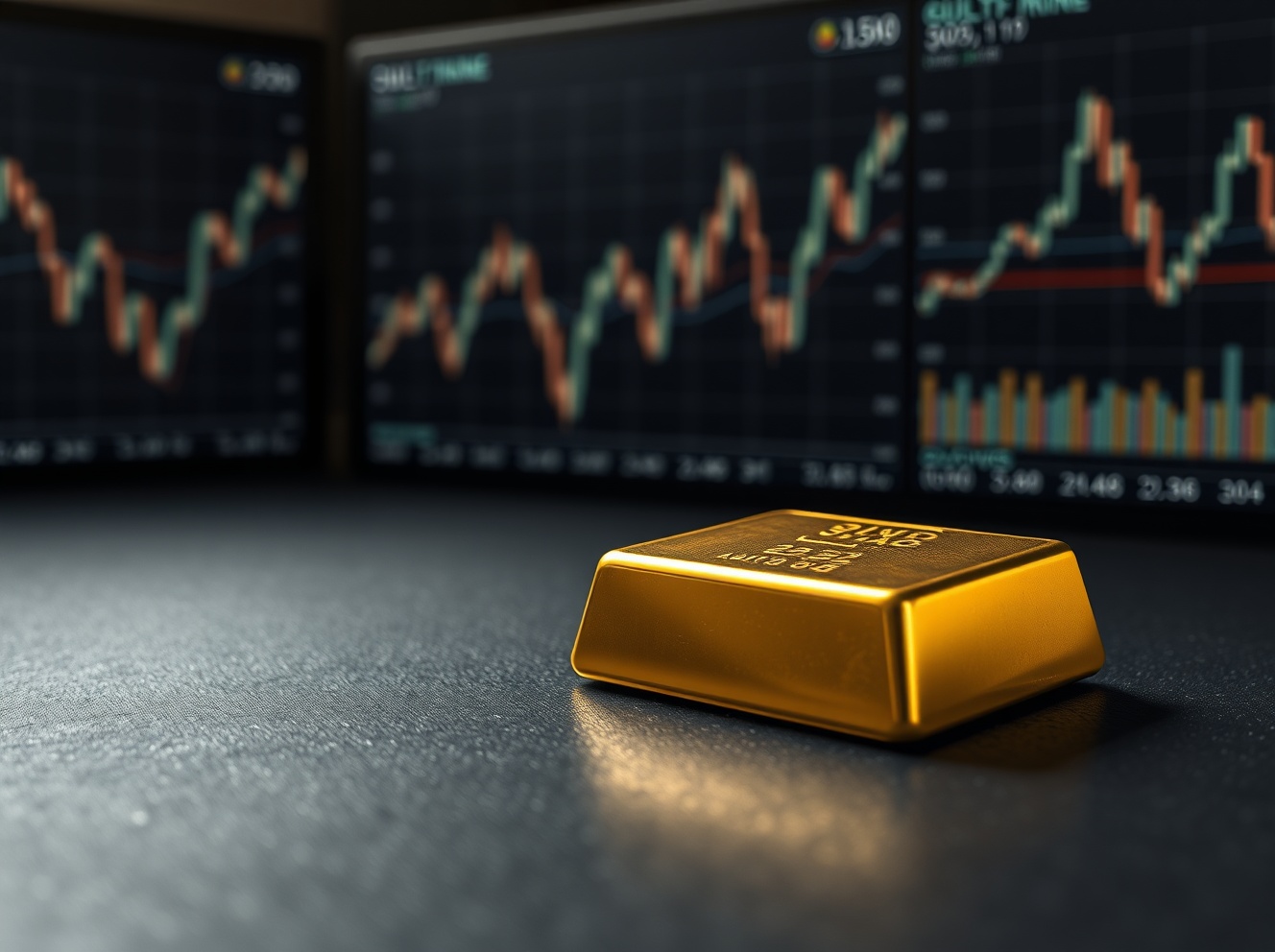
Gold Price Plummets Below $5,000 as Central Bank Policy Decisions Loom
Global gold markets experienced a sharp and significant decline at the start of a crucial week for monetary policy, with the spot price for the precious metal falling decisively below the $5,000 per ounce threshold. This dramatic gold price movement arrives as investors worldwide brace for a series of pivotal announcements from major central banks, including the U.S. Federal Reserve, the European Central Bank, and the Bank of Japan. The sell-off reflects heightened anxiety about the future path of interest rates and their impact on non-yielding assets. Consequently, market participants are rapidly reassessing their positions in traditional safe-haven assets.
Gold Price Decline and Immediate Market Reaction
The breach of the $5,000 support level sent immediate shockwaves through commodity trading desks from London to New York. Spot gold traded as low as $4,985 per ounce in early Asian trading, a level not seen in several months. This represents a decline of over 3.5% from the previous week’s close. Trading volume surged by approximately 40% above the 30-day average, indicating a broad-based and decisive move. Meanwhile, gold futures contracts on the COMEX exchange mirrored the spot market’s weakness. The most active contract for April delivery followed the downward trajectory closely.
Analysts point to several concurrent factors driving the sell-off. Firstly, a strengthening U.S. dollar index, which rose 0.8%, made dollar-denominated gold more expensive for holders of other currencies. Secondly, a notable rise in U.S. Treasury yields reduced the relative attractiveness of holding gold, which offers no interest. Finally, technical selling accelerated once key chart support levels were broken. This confluence of pressures created a perfect storm for bullion.
The Central Bank Policy Calendar Driving Volatility
This week’s economic calendar is densely packed with events that will shape global liquidity and investor sentiment. The Federal Open Market Committee (FOMC) begins its two-day meeting on Tuesday, with a policy statement and updated economic projections due Wednesday. Market consensus, as reflected in the CME FedWatch Tool, currently assigns a 68% probability of a 25-basis-point rate hike. However, the primary focus will be on the “dot plot” and Chair Jerome Powell’s press conference for signals about the peak of the rate-hiking cycle.
Subsequently, the European Central Bank (ECB) meets on Thursday. Economists widely expect another aggressive 50-basis-point increase from the ECB as it continues to combat persistent inflation in the Eurozone. Simultaneously, the Bank of Japan concludes its meeting on Friday, with markets keenly watching for any further adjustments to its Yield Curve Control policy. The collective actions of these institutions will directly influence global capital flows and risk appetite.
Historical Context and the Relationship with Interest Rates
Historically, gold has exhibited an inverse relationship with real interest rates—the nominal rate minus inflation. When real yields rise, as they have in recent months, the opportunity cost of holding gold increases. Data from the World Gold Council shows that periods of aggressive monetary tightening, like the Volcker era of the early 1980s, often coincided with prolonged bear markets for gold. The current environment echoes those dynamics. Central banks are now prioritizing inflation control over growth support, a fundamental shift from the post-2008 era.
Furthermore, central banks themselves have been significant buyers of gold in recent years, diversifying their reserves away from the U.S. dollar. According to the International Monetary Fund’s (IMF) latest data, global central bank gold purchases reached a 55-year high in 2023. However, this supportive structural demand is currently being overwhelmed by the powerful macro forces of rising yields and a strong dollar. The question for investors is whether this institutional buying will provide a durable floor for prices.
Broader Impacts on Commodities and Financial Markets
The weakness in gold has spilled over into the broader precious metals complex. Silver, often more volatile than gold, fell over 5% to trade below $22 per ounce. Platinum and palladium also registered significant losses. The Bloomberg Commodity Index, a broad basket of raw materials, declined for the third consecutive session. This suggests the move is part of a wider re-pricing of hard assets in anticipation of tighter financial conditions. Energy and industrial metals markets are also watching central bank rhetoric closely for clues about future economic demand.
Equity markets showed a mixed reaction. Shares of major gold mining companies, such as Newmont Corporation and Barrick Gold, fell sharply in pre-market trading, underperforming the broader S&P 500 index. Conversely, sectors sensitive to interest rates, like technology, showed tentative gains on hopes that a definitive peak in rates is nearing. The contrasting performance highlights the sectoral rotation underway as the macro landscape evolves.
Expert Analysis on the Path Forward for Bullion
Market strategists emphasize the critical nature of the upcoming central bank communications. “The narrative from the Fed will be paramount,” stated a senior commodities strategist at a leading investment bank. “If Powell signals a more data-dependent, flexible approach and hints at a pause after this hike, we could see a swift relief rally in gold. However, a resolutely hawkish tone affirming further hikes would likely extend the pressure.” The strategist noted that physical demand from key markets like India and China remains a supportive wildcard, especially with seasonal festivals approaching.
Technical analysts are watching several key levels. A sustained break below $4,950 could open the path toward the 200-day moving average, currently near $4,850. On the upside, resistance is now firmly established at the $5,050-$5,100 zone. The price action in the 48 hours following the Fed’s announcement is expected to set the tone for gold’s medium-term trend. Volume and volatility metrics will be crucial indicators of conviction behind any directional move.
Conclusion
The gold price falling below the psychologically important $5,000 level underscores the powerful influence of central bank policy expectations on global asset prices. This week’s decisions and guidance from the Federal Reserve, ECB, and Bank of Japan will provide critical clarity on the pace and terminal point of the global monetary tightening cycle. While structural factors like central bank buying and geopolitical uncertainty provide long-term support for gold, the short-term path remains inextricably linked to interest rate dynamics and the strength of the U.S. dollar. Investors should prepare for continued volatility as the market digests a historic shift in the macroeconomic policy regime.
FAQs
Q1: Why does the gold price fall when interest rates rise?
Gold pays no interest or dividends. When central banks raise rates, yields on competing assets like government bonds increase. This raises the “opportunity cost” of holding gold, making it less attractive to investors, which can trigger selling pressure.
Q2: What is the “dot plot” from the Federal Reserve?
The “dot plot” is part of the Fed’s quarterly Summary of Economic Projections. It anonymously charts each FOMC member’s expectation for the appropriate federal funds rate path over the coming years and longer run, providing insight into the committee’s collective policy outlook.
Q3: Are central banks still buying gold?
Yes, according to the World Gold Council, central banks were net purchasers of gold throughout 2023 and into early 2024, adding to reserves for diversification and geopolitical hedging purposes. However, this long-term demand can be overshadowed by short-term macro trading flows.
Q4: How does a stronger U.S. dollar affect gold?
Gold is globally priced in U.S. dollars. When the dollar strengthens, it takes more of other currencies (like euros or yen) to buy the same ounce of gold, which can dampen international demand and put downward pressure on the dollar-denominated price.
Q5: What other factors typically support the gold price?
Beyond interest rates, key supportive factors include high inflation (gold is seen as a store of value), periods of significant geopolitical or financial market stress (safe-haven demand), and sustained physical buying from major consumer nations like India and China.
This post Gold Price Plummets Below $5,000 as Central Bank Policy Decisions Loom first appeared on BitcoinWorld.
You May Also Like
Trump derailed as campaign of retribution hits 'profound problem': report

Venus Protocol hack triggers $3.7 million loss after THE token manipulation on BNB Chain
