

How to start trading in equity? A practical starter guide
How to start equity trading: what equity trading means and why it matters
Equity trading is the buying and selling of shares of publicly traded companies through exchanges and brokers. Prices form from buyer and seller interest on those venues, so the price you see reflects supply and demand rather than a fixed number, a point described in U.S. investor education materials Investor.gov explanation of how stocks are traded.
Begin by choosing a regulated broker, open the right account type for your goals, fund and verify the account, practice small trades to learn order entry and execution, and use basic risk controls like position sizing and stop orders.
Who trades equities and what do beginners usually want? Everyday people trade for different reasons. Some want to practice how orders work and learn execution. Others aim to build a long-term investment position. A small number try short-term strategies, but beginners usually benefit most from learning order entry and fees before increasing size.
Start small and treat early trades as experiments. For most people, the first goals are practical: confirm you can open and fund an account, place orders correctly, and read confirmations. That approach helps you focus on execution and costs rather than quick gains, which tends to reduce costly mistakes.
How to start equity trading: choose the right broker and account type
Choosing a regulated broker and the right account type is the practical first decision; see comparisons such as M1 Finance vs Robinhood. A broker that follows U.S. rules will require identity checks and disclosures, and a basic guide to opening an account explains these verification steps and regulatory requirements FINRA account opening guidance.
Compare broker features with a simple checklist
Compare fees, order entry layouts, account minimums, and whether the broker’s disclosures are clear about margin and order routing before you sign up. Use a simple checklist to compare those features.
View partnership options
Broker types vary. Some firms target active traders, others focus on long-term savers. For beginners, the deciding factors are usually clarity of fees, ease of use, and access to basic trading tools. Prioritize a broker that presents clear execution disclosures and a visible fee schedule.
Account types matter because they change taxes and risk. A cash account holds only the money you deposit and generally prevents you from borrowing to trade on margin. A margin account lets you borrow against your account to increase buying power, but borrowing creates costs and extra rules. Retirement accounts, like an IRA, can offer tax advantages but typically restrict trading choices and withdrawals.

Verification and KYC are standard. Expect to provide identification, basic financial information, and a tax identifier. Brokers do this to meet regulatory requirements and to protect both the account holder and the firm. Before you proceed, read the broker’s verification steps so there are no surprises about timing or document needs.
Key broker features to compare include whether trades are commission-free for U.S. listed stocks, margin interest rates if you plan to borrow, mobile versus desktop order entry, execution disclosures, and any account minimums or inactivity fees. These factors can change how you trade and how much trading costs over time.
Step-by-step setup: open, verify, fund, and place your first small trade
A standard, verifiable setup flow helps beginners avoid common missteps: select a regulated broker, complete identity verification and KYC, fund the account, learn the platform’s order entry, and place a small trade to confirm execution and settlement, a sequence recommended in industry checklists FINRA opening a brokerage account. For more beginner guides, visit our investing section.
Account opening typically starts online. You will answer questions about identity, employment, and investing experience. Some brokerages ask additional questions about source of funds or risk experience. Take screenshots of confirmations during the process so you have a record if anything takes longer than expected.
Funding options usually include electronic bank transfer, wire, or check. ACH transfers are common and may take a few days to clear. Understand settlement timing: when you buy and sell, the trade has a settlement date that affects when you can reuse the proceeds. Confirm whether your broker offers instant settlement features and what limits apply.
Before placing a live trade, practice order entry. Use a paper-trade simulator if available or enter very small real trades that you can afford to lose while you learn. A first trade should be small enough that execution quirks and a modest spread do not create a large loss. After a trade, check the trade confirmation for execution price, fees, and settlement date.
Always review the fee schedule and whether margin is available on your account before placing trades. Margin changes how much capital you can use and creates interest costs. Confirm how the broker reports fills and whether you can view order routing or execution reports for learning purposes.
Core market concepts every beginner should know: order types, bid/ask, and execution
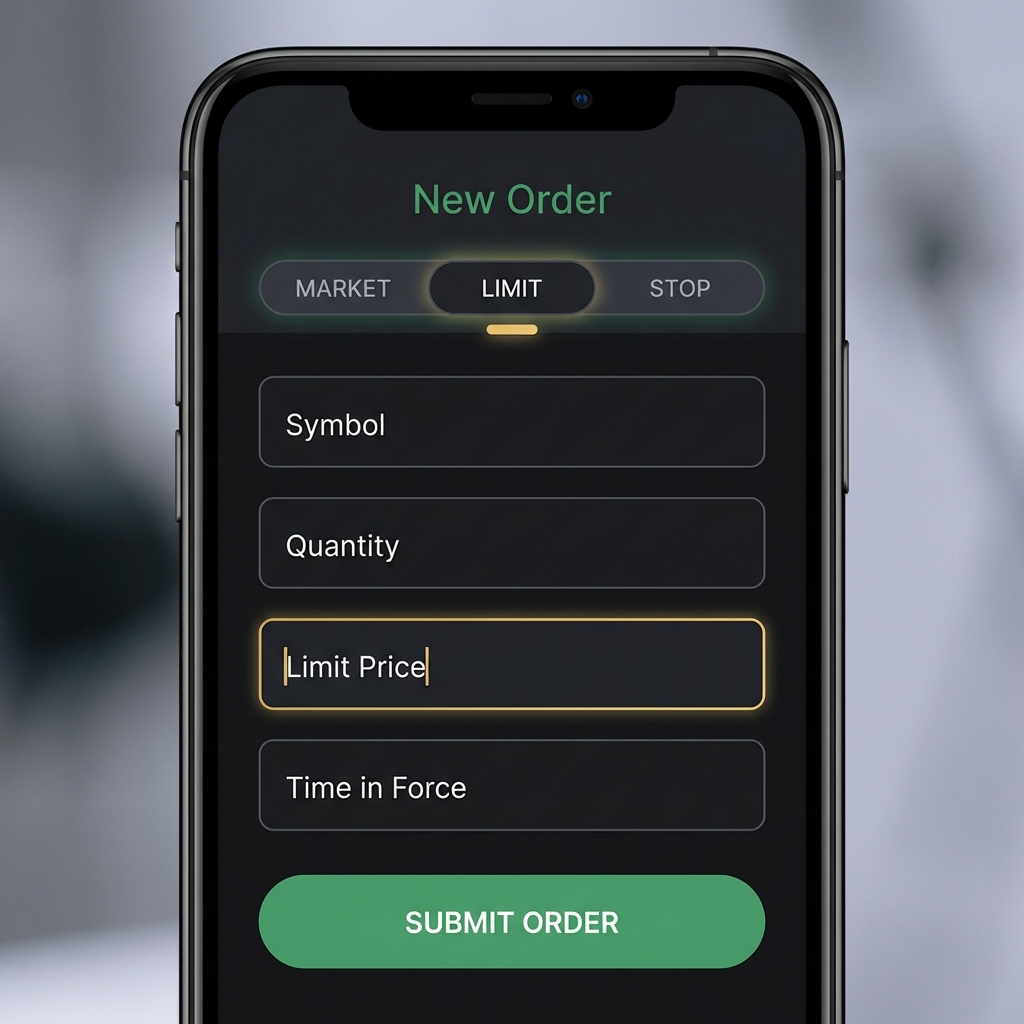
Understand order types before you trade. A market order instructs the broker to buy or sell at the best available price now. A limit order sets the price you are willing to accept. A stop order becomes a market order once a trigger price is reached. These basic definitions and examples are explained in exchange materials and are essential to using orders appropriately NYSE order types guide.
practice placing market, limit, and stop orders in a mock setup
Use small sizes for practice
Use micro-examples to see how they behave. If you place a market order in a thinly traded stock, you may receive a price far from the last quoted price because the bid/ask spread is wide. A limit order gives you price control but can leave orders unfilled if the market does not reach your limit.
Bid, ask, and spread describe how buyers and sellers interact. The bid is the highest price a buyer will pay; the ask is the lowest price a seller will accept. The spread is the difference. Wider spreads mean higher implicit cost to cross the market. For a beginner, reading the bid and ask before placing an order helps set realistic expectations about fills.
Order execution happens on exchanges or through market makers and routing networks. Brokers route orders and may receive payment for order flow or use other routing arrangements, which can affect execution quality and how close your fill is to the best displayed price. The SEC requires disclosure of order execution and routing practices SEC disclosure.
Risk controls, margin rules, and key regulations beginners must know
Margin accounts let you borrow to trade and introduce borrowing costs and greater downside risk. Margin interest accrues on borrowed amounts, and losses can exceed your initial deposit if a position moves against you. U.S. guidance on borrowing to invest outlines those risks and how margin changes account behavior Investor.gov margin guidance.
A material rule for U.S. beginners who trade frequently is the pattern day trader requirement. FINRA defines a pattern day trader as someone who executes four or more day trades within five business days and requires a minimum equity of twenty-five thousand dollars in the account to continue day trading on margin. This rule can limit the use of margin for frequent intraday trading and changes how much capital is needed FINRA pattern day trader rule.
Before using margin, consider simple risk controls. Set position-size limits so no single trade exposes you to more than a small percentage of your total capital. Use stop orders thoughtfully to limit losses and avoid leverage until you understand margin interest and maintenance requirements. Read your broker’s margin agreement carefully so you know how margin calls are handled.
Regulation T and standard margin terms commonly set an initial margin requirement around fifty percent for many positions, meaning you may need to fund roughly half the purchase price up front when borrowing. Those rules and maintenance requirements affect how quickly losses can force you to add funds or liquidate positions, so factor them into position sizing and stress tests.
Costs and execution quality: what you will actually pay and how to check it
Commission structures changed significantly by 2024 and many brokers offered commission-free trading for U.S. listed stocks. However, other costs remain, including margin interest, platform fees, inactivity or transfer fees, and implicit costs like spreads that affect the price you receive, a point noted in broker comparisons and trading guides Investopedia guide on how to buy stocks.
Execution quality and order routing can change the price you ultimately pay or receive. Some brokers disclose execution quality reports and order routing practices. Reviewing those disclosures helps you understand whether your broker tends to fill orders at or near the best quoted prices and whether payment for order flow or other arrangements affect execution. Read more about execution quality from industry resources on execution and quality execution quality and industry commentary on best execution Kitces.
A short checklist to verify a broker’s fee schedule includes checking for commissions on U.S. stock trades, margin interest rates, any platform or data fees, transfer or account closing fees, and inactivity charges. Also review how the broker reports trade executions so you can compare fill prices against quoted markets.
When comparing costs, consider both explicit fees and implicit execution differences. For a small, low-cost trade the cash cost may be minimal, but execution slippage and wide spreads in less liquid instruments can create real costs. Verify the fee schedule and any public execution reports before you trade meaningfully.
Common beginner mistakes and how to avoid them
One common mistake is using margin without understanding the cost and maintenance rules. Borrowing magnifies both gains and losses, and margin interest reduces net returns. Avoid opening margin positions until you understand how interest is calculated and how margin calls are handled.
Another frequent error is ignoring fees and execution differences. Commission-free trading does not eliminate all costs. Spreads, platform fees, and poor execution can add up. Make a habit of checking trade confirmations and execution reports to learn how fills compare with quoted prices.
Emotional trading and chasing news are typical early pitfalls. Trading on a headline without a plan can lead to outsized position sizes and losses. Instead, document your trade rationale, the size of the position, the order type you used, and what outcome you expect to learn from the trade. Reviewing these notes over time builds disciplined habits.
Simple corrective steps include using small initial trade sizes, setting position-size rules, preferring cash accounts until you understand margin, and using stop or limit orders to control execution and downside. Treat early trades as learning exercises, not profit attempts, and review fills and fees afterward to learn execution lessons.
Practical first-trade scenarios, next steps, and summary checklist
Scenario one: a small market order to confirm basic execution. Buy a single share or a small dollar amount in a liquid, well-known stock to see how quickly a market order fills and what price you receive. You can also try micro-investing apps to place very small trades as a first test. After the trade, compare the fill price to the quoted bid and ask to observe slippage and fees.
Scenario two: a small limit order to learn price control. Place a limit order a little inside the current bid or ask and wait for an execution. This shows how limit orders can avoid paying wide spreads, but also how an order can remain unfilled if the market moves away.
Scenario three: a test trade focused on fills. Use a small trade in the same ticker at different times or with different order types to learn how execution varies by liquidity and time of day. Document each trade, note the fill price and fees, and learn what order type worked best for that ticker.
After any first trade, check your trade confirmation, note the settlement date, review any fees or margin usage, and save the confirmation for learning. Keep a short trading journal with order type, size, reason for the trade, and what you learned from the execution. This practice turns small costs into valuable experience.
Final checklist before trading live: verify the broker’s fee schedule and execution disclosures, choose an appropriate account type, avoid unnecessary margin until you fully understand costs and rules, start with very small trades, document fills and fees, and review outcomes to improve your process. These steps can help you learn execution and limit avoidable losses.
Most beginners start with a cash taxable account to avoid borrowing costs and margin risk. Retirement accounts are an option for long-term saving, while margin accounts add borrowing costs and regulatory requirements. Choose based on your tax situation and risk tolerance.
There is no fixed minimum. Many brokers offer commission-free trades, but practical startup amounts should cover position sizing, possible fees, and any minimums a broker may require. Avoid margin until you understand costs and rules.
Use small initial trade sizes, set position limits, prefer cash accounts to start, and use basic stop or limit orders to control downside. Document trades and review execution to learn from each experience.
References
- https://www.investor.gov/introduction-investing/investing-basics/how-stocks-are-traded
- https://financepolice.com/m1-finance-vs-robinhood/
- https://www.finra.org/investors/learn-to-invest/basics/opening-brokerage-account
- https://financepolice.com/advertise/
- https://financepolice.com/category/investing/
- https://www.nyse.com/markets/types-of-orders
- https://www.sec.gov/rules-regulations/2001/03/disclosure-order-execution-routing-practices
- https://www.investor.gov/introduction-investing/investing-basics/investment-products/margin
- https://www.finra.org/rules-guidance/key-topics/pattern-day-trader
- https://www.investopedia.com/how-to-buy-stocks-4689743
- https://centerpointsecurities.com/stock-trading-execution-quality/
- https://www.kitces.com/blog/sec-division-enforcement-investment-adviser-regulation-fiduciary-best-execution-trading-requirement/
- https://financepolice.com/best-micro-investment-apps/
You May Also Like

NGP Token Crashes 88% After $2M Oracle Hack

CZ Defends HODL Strategy Amid Backlash, Yi He’s 94% BNB Allocation Revealed
