

Make Money Without Getting Scammed: Red Flags in Remote Jobs and Passive Income Offers
Remote work and “passive income” offers are everywhere — and so are bad actors. Complaints about job and work-from-home scams have surged, with losses climbing fast. That means even savvy applicants can get tripped up by convincing posts, polished websites, or AI-made recruiters.
Regulators say the biggest lures now start on social feeds and in unsolicited messages. Knowing the tells — and checking the fine print — can keep your money, identity, and time safe.
Below, we break down the most common red flags, how to verify offers, the schemes making the rounds, and what to do if you’ve already engaged.
| Point | What It Means |
|---|---|
| Surging losses from job scams | Complaints and losses tied to job/work-from-home scams have soared, so treat offers with healthy skepticism and verify independently. Federal Trade Commission (FTC) |
| Social media is a top scam funnel | One-third of reported-loss job/opportunity scams start on social platforms; be extra cautious with DMs and posts. FTC Consumer Alert |
| Unsolicited recruiter texts | Cold texts offering jobs are a current tactic to harvest money or data; verify via official channels. FTC Alerts |
| AI deepfakes raise the bar | With rising AI-enabled fraud, appearances, voices, and documents can be fabricated; double-check identities. FBI IC3 |
| Exaggerated earnings claims | Bold income promises are a hallmark of scams and can trigger enforcement; demand data and read terms. FTC Case |
Why scams are spiking in remote work and passive income
The fraud landscape has shifted with remote work, creator-economy hype, and rapid AI adoption. The FTC reports that complaints about job and work-from-home scams tripled from 2020 to 2024, with reported losses jumping from about $90 million to $501 million. That’s a stark growth curve for employment-adjacent fraud. Federal Trade Commission (FTC)
Social media now plays a starring role. Consumers reported losing $2.1 billion to scams that started on social platforms in 2025, and roughly one in three job or business-opportunity scams with losses began there. FTC
The FBI’s Internet Crime Complaint Center (IC3) logged over one million complaints and nearly $21 billion in losses in 2025, highlighting 22,364 AI-related complaints costing about $893 million. Translation: scammers now use convincing fake recruiters, AI voice clones, and deepfaked video to appear legitimate. FBI IC3 2025
Red flags in remote jobs and passive income offers
1) Unsolicited recruiter texts or DMs
Cold messages promising high pay with minimal screening are a major tell. The FTC recently warned about a text-message recruiter scheme that starts with a casual “Are you looking for work?” and escalates to requests for fees or personal info. Do not click through; instead, contact the employer via its official careers page. FTC Consumer Alerts
2) Pay-to-play or equipment-buy schemes
Legitimate employers don’t charge application, training, onboarding, or “software license” fees. They also don’t send you a check to “buy equipment” and ask you to forward funds — that’s a classic overpayment scam.
3) Guaranteed income or “set-and-forget” returns
Promises of fixed daily/weekly returns (crypto “bots,” mining packages, ATM routes, “done-for-you” e-commerce) are a signature red flag. Real income varies and includes costs, platform rules, and risk.
4) Off-platform moves and encrypted chat
Being pushed from a hiring site to WhatsApp/Telegram “for speed,” or asked to interview in an unofficial app, is risky. Legit teams can use video conferencing, but you should be able to verify the meeting on the company’s domain-owned calendar or email.
5) Domain and identity mismatches
Recruiter email domains that don’t match the official site (or use free mail providers), job pages hosted on lookalike URLs, or LinkedIn profiles with few connections and recent creation dates are common signs.
6) No interview, no portfolio review
Getting “hired” instantly for a high-pay remote role with no live interview, test work, or references checked is suspicious. E-commerce “automation” providers that skip a real financial and operational Q&A do the same.
7) Crypto-only or gift-card payments
Insisting on payment in crypto or gift cards — for equipment, onboarding, or to “unlock” a passive income tool — is a hallmark of fraud. Reputable firms offer traceable payment methods and formal invoices.
8) Pressure and secrecy
“Offer expires in hours,” “Don’t tell your bank,” or “Keep this opportunity confidential” are tactics to prevent independent checks.
9) Reshipping, package handling, or check-cashing tasks
So-called “quality control” or “logistics agent” gigs that require you to re-label packages or process checks often make you a money mule — exposing you to legal risk and chargebacks.
10) Vague roles with big titles
“Brand ambassador,” “regional evaluator,” or “crypto analyst” roles with unclear duties and no KPIs are often bait.
11) Income claims without evidence
If a seller flaunts “$10k/month part-time” screenshots, ask for audited data and terms. Regulators have pursued platforms over misleading claims — an important reminder that strong claims require strong proof. FTC – Care.com
12) AI-polished personas
Flawless English from a “regional HR” with a mismatched time zone, stock photos, or a voice that glitches on basic company details may indicate an AI script or deepfake. Verify independently (company directory, switch communication channels, call main line).
How to verify a remote job or income offer
Check the company directly
- Find the job on the company’s official careers page (type the domain manually). If you can’t, contact HR via a public phone number or contact form on that domain.
- Use professional directories to confirm the recruiter works there. Cross-check LinkedIn tenure, mutuals, and activity; look for a domain-matching email.
- Search “Company + scam” and “Company + reviews.” Check for unresolved complaints with reputable consumer sites.
Validate the job post and interview
- Legitimate interviews are scheduled via company systems and use company emails. Beware offers made exclusively over messaging apps.
- Ask for a written job description, reporting structure, KPIs, equipment policy, and whether it’s W-2 or 1099. Vague answers are a signal to pause.
Vet compensation and payments
- No fees for applying, onboarding, or “special software.” If there’s any payment requested, stop and verify through the company’s main switchboard.
- For independent-contractor gigs, ask for a contract that specifies rate, payment schedule, invoicing, and termination terms. Refusal to provide written terms is a red flag.
Use basic OSINT
- Reverse image search recruiter photos and logo assets. Stock art and mismatched branding are common in fakes.
- Check WHOIS for newly registered domains pretending to be well-known companies (typosquatting).
For passive-income offerings
- Request audited financials, historical performance ranges, total fees (setup, monthly, rev share), and the exact scope of work.
- Ask who owns the accounts (e.g., ad, marketplace, payment processors) and what happens if you terminate. Poor answers often precede disputes.
Common schemes to know by name
| Scheme | How it hooks you | Typical red flags |
|---|---|---|
| Reshipping/Parcel “quality control” | Get paid to inspect and forward packages | Use of your address, prepaid labels, ghost company sites; pay delayed until “probation.” Often illegal goods or fraud proceeds involved. |
| Check overpayment | Employer or “client” sends a big check and asks you to buy gear or pay a vendor | Bank shows funds then reverses; you’re left liable. Any request to forward money is a stop sign. |
| Mystery shopper kits | “Get paid to shop” with upfront certification costs | Fees, gift card purchases, or wire instructions; real shops don’t require you to buy costly kits. |
| Crypto mining/trading bots | Promised daily yields from a rented bot or “node” | Guaranteed returns, deposits via crypto only, no audited track record or third-party custodian. |
| “Done-for-you” Amazon/Shopify stores | Turnkey stores that claim passive profits | Vague supplier terms, restricted category claims, pressure to wire setup fees, no control of the ad accounts or inventory. |
| Pyramid/chain recruiting | Pay in, earn by recruiting others | Earnings mostly from enrollment fees, not real product sales; emphasis on “teams” and ranks over customers. |
| Ad posting/data entry | “Easy typing” for high pay | No real client, fee for a list or software, pay pending forever or tied to recruiting. |
Income claims and the fine print: what to read
Before paying for any course, automation service, or business-in-a-box, scrutinize the earnings claims and terms. If estimates aren’t backed by objective data, treat them as marketing, not reality. Regulators have pursued misleading earnings or job-availability claims — the FTC announced more than $8.1 million in refunds tied to Care.com in 2025, with a proposed settlement totaling about $8.5 million in relief. FTC – Care.com
Check for:
- Recurring fees, upsells, or mandatory ad spend that change the economics.
- Refund windows and requirements (e.g., “proof of effort” hurdles).
- Ownership and access to accounts, inventory, and data if you cancel.
- Arbitration and non-disparagement clauses that limit your recourse.
- Performance disclaimers that conflict with their public marketing.
Social media and messaging traps
Scammers leverage social feeds because targeting is easy and social proof is manufactured. In 2025, consumers reported $2.1 billion lost to scams that started on social media, and about a third of job/opportunity scams with losses originated there. FTC
- Be wary of viral “income hacks,” limited-time challenges, or reels featuring lavish lifestyles and vague claims.
- Avoid forms linked in bios that request SSNs, driver’s license scans, or bank logins.
- Confirm verified pages still route to a legitimate domain; even checkmarks can be spoofed in images and videos.
- If contacted by a “brand” about UGC or remote gigs, independently email the company’s published press or HR contact to confirm.
If you already paid or shared info
- Contact your bank or card issuer immediately to report suspected fraud and ask about dispute options.
- If you sent crypto or gift cards, contact the exchange or retailer ASAP; recovery is difficult but speed matters.
- Place a fraud alert or freeze with credit bureaus if your SSN or sensitive data were exposed. Consider monitoring for new accounts.
- File a report with the FTC at ReportFraud.ftc.gov and, for online crime, with the FBI’s IC3. Provide all handles, domains, and wallets used.
- Notify the platform where you found the offer so it can investigate and warn others.
- Document everything: screenshots, emails, transaction IDs, tracking numbers.
What to check before acting
- Find the role or offer on the official company domain; avoid links in DMs/texts.
- Match recruiter identity to the company via a domain email and public directory.
- Demand a written description, KPIs, contract terms, and payment schedule.
- Refuse to pay fees or buy equipment/software upfront.
- Never forward funds from a check or “reimbursement.”
- Beware crypto-only, gift card, or wire requests.
- Scrutinize earnings claims; look for data, not screenshots.
- Search reviews and complaints; check new/typosquatted domains.
- Slow down under pressure tactics; walk away if secrecy is required.
- If in doubt, ask a neutral third party to review the offer before you commit.
Frequently Asked Questions
Are unsolicited recruiter texts ever legitimate?
Most unsolicited job texts are junk or scams. The FTC issued an alert about this specific tactic in April 2026. If you get one, don’t click links. Instead, go to the company’s careers page directly and apply there, or call the main line to confirm. FTC Consumer Alerts
How can I tell if an income claim is exaggerated?
Look for audited data, ranges rather than guarantees, and a clear breakdown of costs, time, and risk. Be cautious if profits are presented as typical or guaranteed, or if proof is just screenshots and testimonials. Regulators have taken action against misleading claims. FTC – Care.com
Is it safe if my bank says a check “cleared”?
Not necessarily. Funds can show as available before a check ultimately bounces. If you spend or forward that money, you may be on the hook. Any request to buy equipment or pay a third party from an employer’s check is a red flag.
What about AI-deepfake recruiters?
With AI-enabled fraud growing, verify outside the call. Ask for a calendar invite from the company domain, call the company’s published number, or email a general HR inbox to confirm the recruiter and meeting. If the person refuses, disengage. FBI IC3
Are paid background checks or training fees normal?
Employers typically cover background checks and onboarding costs. Upfront fees for training, certifications, or software to “unlock” the job are a strong warning sign. Verify with the employer via official channels if anything feels off.
Is crypto-only pay normal for remote work?
It’s unusual. Employers generally use payroll or mainstream payment platforms and provide tax forms where applicable. Requests for crypto or gift-card payments during hiring are a red flag, especially linked to equipment or onboarding.
Can passive income be truly passive?
Most legal income streams require time, capital, know-how, or ongoing management. If someone markets set-and-forget profits with minimal effort and no risk, step back and ask for data, downside scenarios, and exact responsibilities.


You May Also Like

How On-Chain Treasury is Solving the Biggest Cross-Border Risk in Emerging Market Corridors

SoarPay’s New Payment Processing Book Reaches Amazon Bestseller Status and #1 New Release in E-Commerce
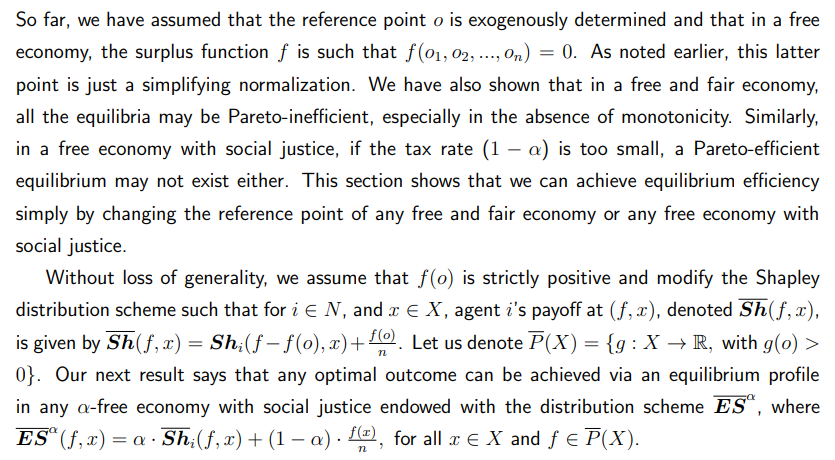
The Role of Reference Points in Achieving Equilibrium Efficiency in Fair and Socially Just Economies



