BitcoinWorld Iron Ore: Australia Weighs Policy Response to China’s Monopsony Power, Rabobank Warns Australia is facing a growing strategic challenge in its mostBitcoinWorld Iron Ore: Australia Weighs Policy Response to China’s Monopsony Power, Rabobank Warns Australia is facing a growing strategic challenge in its most

Iron Ore: Australia Weighs Policy Response to China’s Monopsony Power, Rabobank Warns

2026/06/05 17:40
4 min read
For feedback or concerns regarding this content, please contact us at crypto.news@mexc.com

BitcoinWorld

Iron Ore: Australia Weighs Policy Response to China’s Monopsony Power, Rabobank Warns

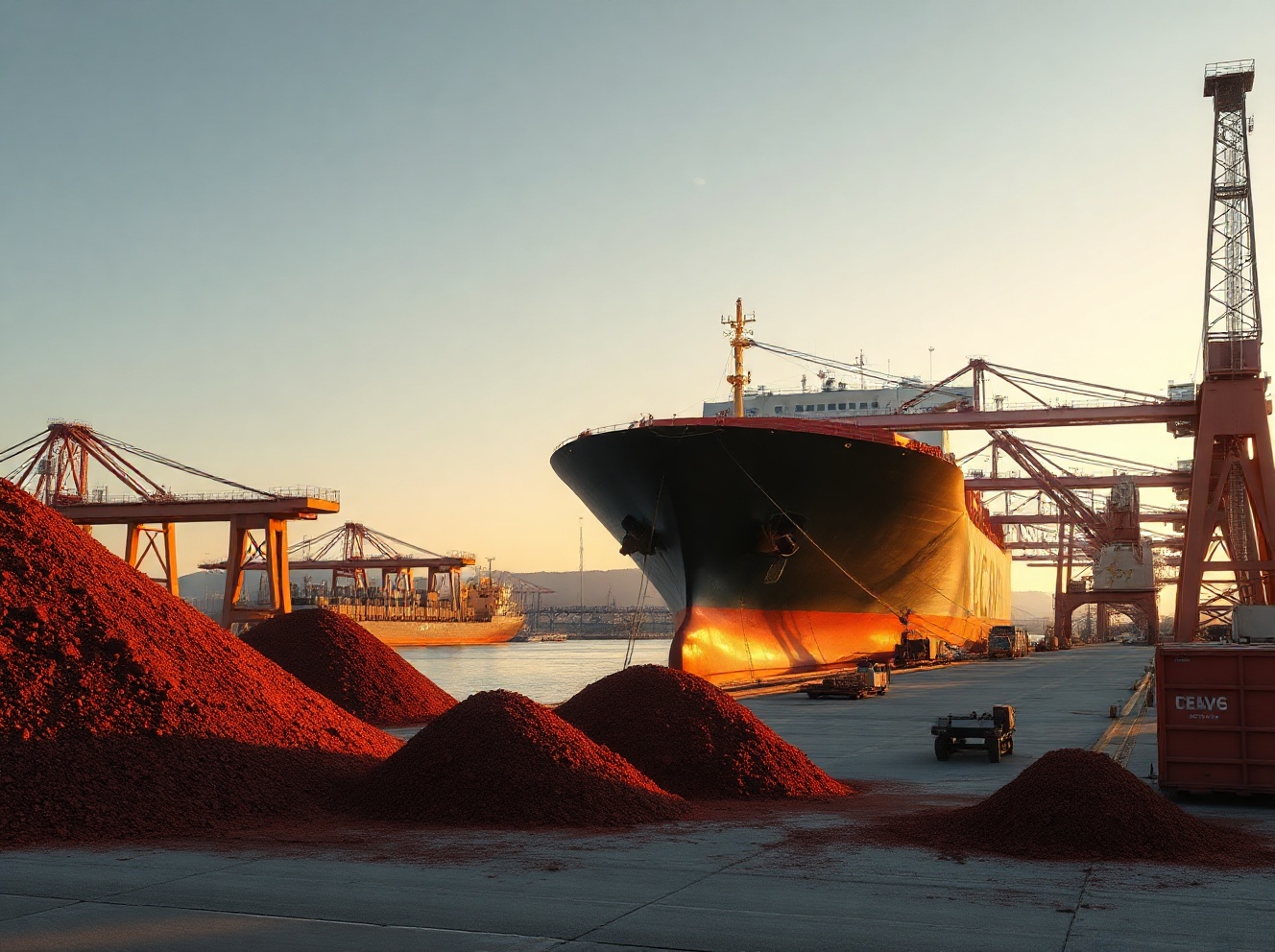
Australia is facing a growing strategic challenge in its most valuable commodity export: iron ore. According to a recent analysis from Rabobank, the nation must carefully consider its policy response to China’s dominant position as a buyer, a market structure known as a monopsony. The report underscores the risks of over-reliance on a single customer and the need for proactive economic and trade strategies.

Understanding the Monopsony Risk

A monopsony occurs when a single buyer holds significant market power, allowing it to influence prices and terms. In the global iron ore trade, China accounts for roughly 70% of seaborne demand, while Australia supplies about 60% of the global market. This concentration gives Beijing considerable leverage, potentially enabling it to drive down prices or impose unfavorable conditions on suppliers like Australia. Rabobank’s analysis highlights that this imbalance is not merely theoretical; it represents a tangible vulnerability for Australia’s economy, which relies on iron ore for a substantial portion of export revenue.

Strategic Options for Australia

The Rabobank report outlines several policy pathways Canberra could explore. These include diversifying export markets by strengthening ties with other steel-producing nations, such as India and Southeast Asian economies, which are expected to increase their iron ore consumption in the coming decades. Another option is to deepen domestic processing and value-added production, reducing the volume of raw ore exports and increasing the value captured locally. Additionally, Australia could invest in alternative commodities or critical minerals to reduce overall trade dependence on China. The report emphasizes that any response must be carefully calibrated to avoid triggering retaliatory measures that could harm Australian exporters.

Implications for Investors and Industry

For investors and industry stakeholders, the Rabobank analysis serves as a reminder that commodity markets are not purely driven by supply and demand fundamentals; geopolitical and policy risks play an increasingly central role. Companies like BHP, Rio Tinto, and Fortescue Metals Group, which dominate Australia’s iron ore sector, may face heightened scrutiny regarding their exposure to Chinese demand. The report suggests that long-term planning should account for potential policy shifts in both Beijing and Canberra, as well as structural changes in global steelmaking, including the transition to greener production methods.

Conclusion

Rabobank’s warning adds to a growing chorus of voices urging Australia to reassess its trade strategy regarding iron ore. While the current market remains profitable, the underlying structural vulnerability to a single buyer’s monopsony power demands careful policy consideration. The challenge for Australian policymakers will be to balance the immediate economic benefits of the trade relationship with the need for long-term resilience and strategic autonomy. As global trade dynamics evolve, the decisions made today will shape Australia’s economic security for decades to come.

FAQs

Q1: What is a monopsony in the context of iron ore?
A monopsony occurs when a single buyer, in this case China, holds dominant purchasing power over a commodity like iron ore. This allows the buyer to influence prices and contract terms, potentially to the disadvantage of sellers like Australia.

Q2: How dependent is Australia on China for iron ore exports?
Australia exports roughly 80% of its iron ore to China, making China by far its largest customer. This concentration creates significant economic vulnerability to shifts in Chinese demand or policy.

Q3: What are some alternatives Australia could pursue to reduce this risk?
Australia could diversify its export destinations by targeting growing steel markets in India and Southeast Asia, invest in domestic processing to export higher-value products, or develop alternative resource sectors such as critical minerals for the energy transition.

This post Iron Ore: Australia Weighs Policy Response to China’s Monopsony Power, Rabobank Warns first appeared on BitcoinWorld.


Market Opportunity
Iron Fish Logo
Iron Fish Price(IRON)
$0.09413
$0.09413$0.09413
-0.10%
USD
Iron Fish (IRON) Live Price Chart

World Cup Combo: Aim for 200x

World Cup Combo: Aim for 200xWorld Cup Combo: Aim for 200x

Combine up to 20 World Cup matches in one order

Disclaimer: The articles reposted on this site are sourced from public platforms and are provided for informational purposes only. They do not necessarily reflect the views of MEXC. All rights remain with the original authors. If you believe any content infringes on third-party rights, please contact crypto.news@mexc.com for removal. MEXC makes no guarantees regarding the accuracy, completeness, or timeliness of the content and is not responsible for any actions taken based on the information provided. The content does not constitute financial, legal, or other professional advice, nor should it be considered a recommendation or endorsement by MEXC.

You May Also Like

Vitalik Buterin Reveals Ethereum’s Bold Plan to Stay Quantum-Secure and Simple!
Vitalik Buterin Reveals Ethereum’s Bold Plan to Stay Quantum-Secure and Simple!

Buterin unveils Ethereum’s strategy to tackle quantum security challenges ahead. Ethereum focuses on simplifying architecture while boosting security for users. Ethereum’s market stability grows as Buterin’s roadmap gains investor confidence. Ethereum founder Vitalik Buterin has unveiled his long-term vision for the blockchain, focusing on making Ethereum quantum-secure while maintaining its simplicity for users. Buterin presented his roadmap at the Japanese Developer Conference, and splits the future of Ethereum into three phases: short-term, mid-term, and long-term. Buterin’s most ambitious goal for Ethereum is to safeguard the blockchain against the threats posed by quantum computing.  The danger of such future developments is that the future may call into question the cryptographic security of most blockchain systems, and Ethereum will be able to remain ahead thanks to more sophisticated mathematical techniques to ensure the safety and integrity of its protocols. Buterin is committed to ensuring that Ethereum evolves in a way that not only meets today’s security challenges but also prepares for the unknowns of tomorrow. Also Read: Ethereum Giant The Ether Machine Takes Major Step Toward Going Public! However, in spite of such high ambitions, Buterin insisted that Ethereum also needed to simplify its architecture. An important aspect of this vision is to remove unnecessary complexity and make Ethereum more accessible and maintainable without losing its strong security capabilities. Security and simplicity form the core of Buterin’s strategy, as they guarantee that the users of Ethereum experience both security and smooth processes. Focus on Speed and Efficiency in the Short-Term In the short term, Buterin aims to enhance Ethereum’s transaction efficiency, a crucial step toward improving scalability and reducing transaction costs. These advantages are attributed to the fact that, within the mid-term, Ethereum is planning to enhance the speed of transactions in layer-2 networks. According to Butterin, this is part of Ethereum’s expansion, particularly because there is still more need to use blockchain technology to date. The other important aspect of Ethereum’s development is the layer-2 solutions. Buterin supports an approach in which the layer-2 networks are dependent on layer-1 to perform some essential tasks like data security, proof, and censorship resistance. This will enable the layer-2 systems of Ethereum to be concerned with verifying and sequencing transactions, which will improve the overall speed and efficiency of the network. Ethereum’s Market Stability Reflects Confidence in Long-Term Strategy Ethereum’s market performance has remained solid, with the cryptocurrency holding steady above $4,000. Currently priced at $4,492.15, Ethereum has experienced a slight 0.93% increase over the last 24 hours, while its trading volume surged by 8.72%, reaching $34.14 billion. These figures point to growing investor confidence in Ethereum’s long-term vision. The crypto community remains optimistic about Ethereum’s future, with many predicting the price could rise to $5,500 by mid-October. Buterin’s clear, forward-thinking strategy continues to build trust in Ethereum as one of the most secure and scalable blockchain platforms in the market. Also Read: Whales Dump 200 Million XRP in Just 2 Weeks – Is XRP’s Price on the Verge of Collapse? The post Vitalik Buterin Reveals Ethereum’s Bold Plan to Stay Quantum-Secure and Simple! appeared first on 36Crypto.
Share
Coinstats2025/09/18 01:22
Drift Sends On-Chain Message to $280M Exploit Wallets

Drift Sends On-Chain Message to $280M Exploit Wallets

Drift Protocol has taken a new step after its recent major exploit. The team has sent on-chain messages to wallets holding the stolen funds. This comes just days
Share
Coinfomania2026/04/03 15:41
Hamster Cipher June 15, 2026 Secret Code Drops Win Coins Fast

Hamster Cipher June 15, 2026 Secret Code Drops Win Coins Fast

Hamster Kombat Daily Cipher for June 15, 2026: Today’s Secret Code, How It Works, and Why Players Keep Participating
Share
Hokanews2026/06/15 12:40

Score Your Share of 50K USDT

Score Your Share of 50K USDTScore Your Share of 50K USDT

Complete DEX+ tasks to unlock the Champion Wheel