

Crude Markets Soar to Four-Year Peak Amid Escalating Iran-U.S. Tensions
Key Highlights
- Brent crude jumped past $123 per barrel, marking the highest level witnessed since early 2022
- Pentagon officials presented Trump with multiple military scenarios targeting Iran, from airstrikes to naval operations
- Diplomatic negotiations between Washington and Tehran have reached an impasse following Iran’s recent counterproposal
- Iran continues controlling the Strait of Hormuz, charging fees for vessel passage through the critical waterway
- Market experts at ING caution that price-driven demand reduction may become inevitable to restore equilibrium
Global crude markets experienced a dramatic surge Thursday, propelling prices to their strongest position in four years as speculation mounted regarding potential U.S. military intervention against Iran amid worsening supply constraints.
Brent crude futures for June delivery momentarily reached $123 per barrel during early European market hours, representing the strongest pricing since March 2022. Meanwhile, West Texas Intermediate contracts similarly advanced, touching approximately $108 per barrel before moderating as trading progressed.
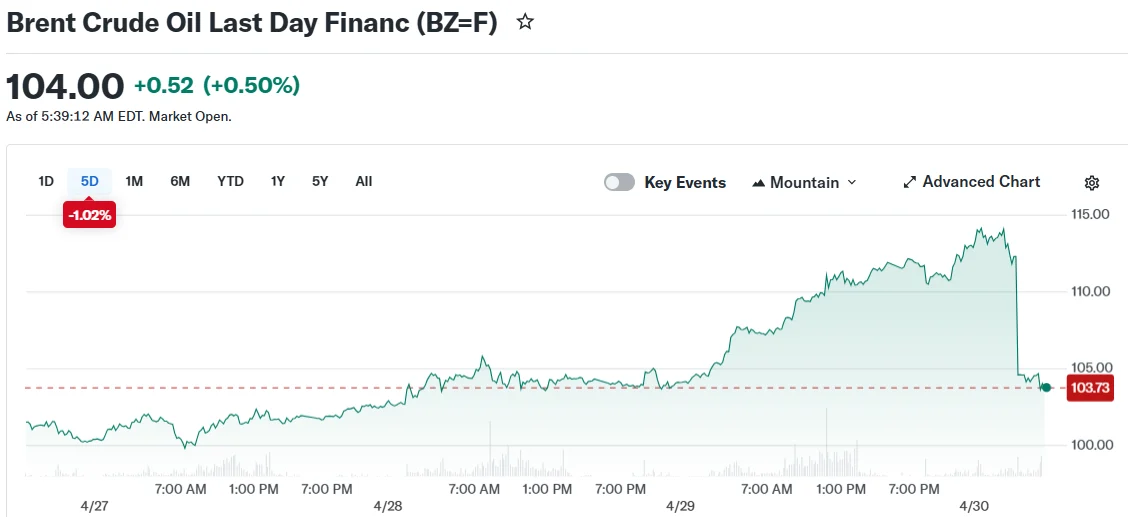 Brent Crude Oil Last Day Financ (BZ=F)
The dramatic price movement followed an Axios disclosure revealing President Trump’s scheduled consultation with Admiral Brad Cooper, commander of U.S. Central Command, regarding potential military responses.
According to reports, the proposed strategies encompassed comprehensive strikes against Iranian infrastructure, special operations missions targeting Iran’s enriched uranium reserves, and initiatives designed to restore commercial navigation through the Strait of Hormuz.
This briefing emerges after several weeks of unsuccessful diplomatic engagement between the two nations. Sources indicate Trump expressed frustration to senior advisors regarding Tehran’s most recent offer — which proposed reopening the strategic waterway while postponing nuclear discussions — viewing it as evidence of duplicitous negotiation tactics.
Reporting from The Wall Street Journal additionally revealed that Trump has directed his team to develop contingency plans for a sustained naval quarantine of Iran while simultaneously pursuing international partners to establish a multinational force aimed at securing passage through the strait.
Key American allies have predominantly refused participation. Trump has previously voiced criticism toward NATO countries for their reluctance to provide military assistance to Washington and Israel during the conflict’s initial phases.
Strategic Waterway Closure Continues Into Third Month
The confrontation with Iran reached its third full month on Thursday. Tehran established control over the Strait of Hormuz as hostilities commenced and has progressively strengthened its grip on the passage, implementing mandatory charges for commercial vessels transiting the channel.
The U.S. Navy has simultaneously enacted limitations on maritime traffic associated with Iranian harbors, creating a tense standoff at one of the planet’s most strategically vital petroleum transit points.
The United Arab Emirates disclosed earlier this week its intention to withdraw from OPEC, potentially indicating future production increases from the Gulf nation. Nonetheless, market observers emphasized that the UAE appears unlikely to boost output immediately given conflict-related complications.
Available Reserves Diminishing Rapidly
ING’s current assessment places daily supply losses at approximately 1.6 million barrels. The financial institution cautioned that prolonged disruption will increasingly force markets to depend on consumption reduction rather than stockpile drawdowns to maintain balance.
Brent crude reversed course during Thursday’s later trading, declining 0.9% to settle at $117 per barrel by mid-morning. The June Brent futures contract reaches expiration on Thursday.
U.S. Central Command has allegedly finalized blueprints for a “short and powerful” series of strikes targeting Iranian assets, although no official announcement regarding implementation has been released.
The post Crude Markets Soar to Four-Year Peak Amid Escalating Iran-U.S. Tensions appeared first on Blockonomi.


You May Also Like

Eurozone ECB Rate On Deposit Facility meets forecasts (2%)

PayPal Crypto Merger Reshapes Digital Payments Landscape: A Bold Strategic Shift
