

Bhutan Sold 58% of Its Bitcoin Treasury Since Late 2024
The Himalayan kingdom that quietly built one of the world’s most unusual sovereign Bitcoin reserves through hydroelectric mining has been systematically drawing it down, with total holdings falling from 13,000 BTC at peak to approximately 5,400 BTC today.
The Scale of the Drawdown
Bhutan’s Bitcoin treasury peaked at roughly 13,000 BTC in late 2024, valued at approximately $1.5 billion when Bitcoin was trading near $119,000. The current holding of 5,400 BTC is worth approximately $374 million at today’s prices around $69,000. The decline in dollar value reflects two compounding factors: 7,600 fewer coins and a Bitcoin price roughly 42% below the peak. The reserve has lost approximately $1.1 billion in dollar value from its high.
Outflows in 2026 alone total $42.5 million. February was the heaviest single month, with approximately $30.7 million moved through a series of structured transactions ranging from $5 million to $10 million each.
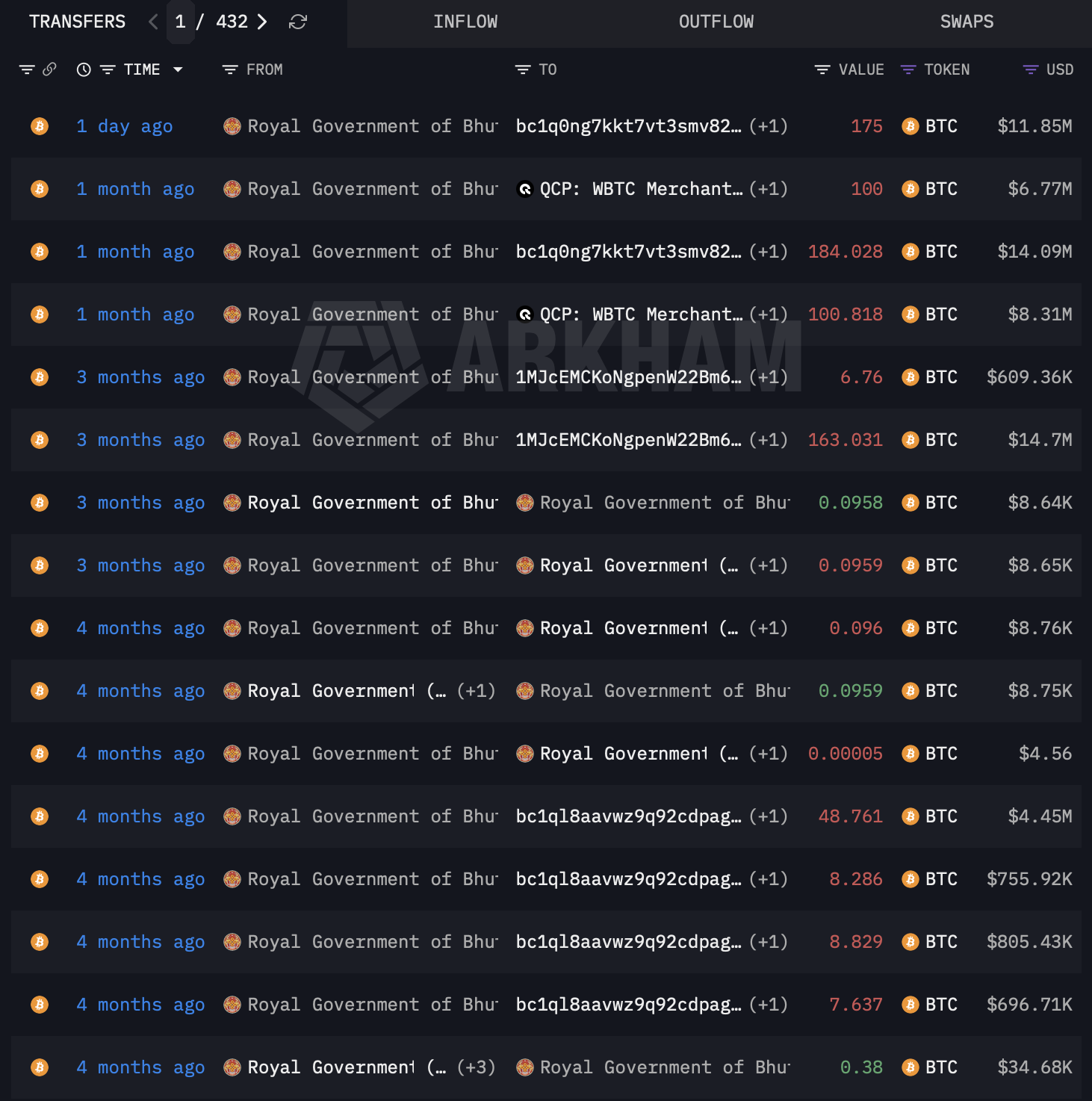 Source: https://intel.arkm.com/explorer/entity/druk-holding-investments
On March 9, Bhutan moved another 175 BTC worth $11.85 million to a recurring counterparty address. The pattern of consistent clip sizes sent to the same addresses associated with QCP Capital and Binance indicates structured OTC sales rather than open market liquidations. Selling through OTC desks minimizes price impact and allows a sovereign seller to execute at negotiated prices without moving spot markets.
The Zero Cost Basis That Changes Everything
The detail that makes Bhutan’s selling fundamentally different from any other Bitcoin treasury drawdown is the cost basis. Bhutan built its entire reserve through state-backed hydroelectric mining using surplus power that would otherwise go unused. The electricity cost is effectively zero relative to what the power would earn elsewhere. Every Bitcoin Bhutan has ever sold represents pure realized profit for Druk Holding and Investments, the state-owned entity managing the reserve.
A sovereign wealth fund selling Bitcoin at $69,000 with a zero cost basis is not distressed selling. It is profit-taking at prices that remain extraordinarily high relative to acquisition cost regardless of where Bitcoin trades relative to its own peak. Bhutan does not need Bitcoin to recover to $119,000 to have made an exceptional return. It needed Bitcoin to be worth more than the marginal cost of the electricity used to mine it. That condition has been met at every price above roughly a few thousand dollars.
The Gelephu Commitment Complicates the Picture
In late 2025, Bhutan committed up to 10,000 BTC to fund the Gelephu Mindfulness City, a special economic zone designed to use digital assets as financial reserves. That commitment implied holding significant Bitcoin through the development phase of an ambitious national infrastructure project.
The current holding of 5,400 BTC sits well below the 10,000 BTC Gelephu commitment. Either the project’s funding structure has changed, the commitment was aspirational rather than binding, or Bhutan intends to continue mining to rebuild the reserve while simultaneously drawing it down for other purposes. The available data does not resolve which explanation is correct.
What the data does show is a sovereign entity that pioneered state-level Bitcoin accumulation through mining now systematically converting that accumulation into liquidity through institutional OTC channels. The experiment in hydroelectric Bitcoin mining as sovereign wealth generation is not ending. It is monetizing.
The post Bhutan Sold 58% of Its Bitcoin Treasury Since Late 2024 appeared first on ETHNews.
You May Also Like

ZCash surges on funding news, but ZEC traders shouldn’t buy yet – Here’s why!

Nasdaq-listed Solmate Builds Pivotal Solana Hub In UAE
