

MoneySense is an award-winning magazine, helping Canadians navigate money matters since 1999. Our editorial team of trained journalists works closely with leading personal finance experts in Canada. To help you find the best financial products, we compare the offerings from over 12 major institutions, including banks, credit unions and card issuers. Learn more about our advertising and trusted partners.
Canada’s banking sector is undergoing major changes, with open finance, fintechs, and policy reforms creating more competition and choice for consumers. The postCanada’s banking sector is undergoing major changes, with open finance, fintechs, and policy reforms creating more competition and choice for consumers. The post
Generational shift brings competition to Canada’s banks
Canadians who watched the World Series this year might have caught a second high-stakes clash going on between plays. RBC, the country’s most valuable bank, ran ads that had actor Will Arnett touting trust and real people over fads, while scrappy EQ Bank and crypto giant Coinbase Inc. had spots pushing the need for a financial refresh, including one with a dazed younger customer asking a rigid bank teller “what’s a ‘fee’ fee?”
The ads come as Canadian banking is going through generational shifts, including a wave of smaller players being bought up, the emergence of tech-based players as potential threats to the establishment, and a federal government that has made both big promises and moves to create more competition.
While it’s not clear how it will all play out, change is clearly underway in Canadian banking.
“This is dramatically different from what we’ve seen before,” said Adriana Vega, executive director of Fintechs Canada. Vega welcomed the fact that not only had the government made strong overtures in the fall budget to bolster competition, but it soon after started delivering with an implementation bill that included key details on moving open banking forward.
Open finance could reshape Canada’s financial landscape
The system, also called consumer-driven banking, has been hailed by many on the challenger side as the best way to shake up the sector. By giving consumers control of their financial data, open banking breaks down the silos between financial firms. It makes it easier to centrally manage multiple accounts, shop around and add on products from newer players, and switch accounts over entirely.
Not only has the government already moved forward with legislation to make it a reality, it also explicitly said that fostering competition was part of the mandate. “That was a big ask for industry,” said Vega.
And while Canada is late to the table on open banking, the government is looking to make up for lost time by including a wide range of financial products such as investments and mortgages in the mandate.
Rankings
The best online banks and credit unions in Canada
see the ranking
“This really isn’t open banking; it’s open finance,” said Steve Boms, executive director of the Financial Data and Technology Association. “It’s not just about Canada catching up to the rest of the world, it’s now about Canada actually going farther than many other countries.”
While Boms remembers first talking with former finance minister Bill Morneau about open banking in 2016, he senses it could now become reality as the macropolitical winds align. “There’s such a determined effort to make the Canadian economy more independent, more competitive, both globally and within Canada, that it just feels like this time is different, and there’s a real desire to get this done.”
The changes are being led by Prime Minister Mark Carney, who would already be well aware of the benefits of open banking as he was governor of the Bank of England when the country’s program went live all the way back in 2018. “He had a front-row seat,” said Andrew Spence, who wrote a book in which he argues the banks gouge customers after working in the industry, and who now works as a consultant.
The changes also align with evidence from the OECD that open banking and fintech access to the system have been the best routes to effective competition, he said. “The budget signalled for the first time some significant political commitment to introducing competition into the sector,” said Spence.
Consolidation shifts focus to consumer empowerment
The new avenues of competition, however, come as other trends risk reducing choice. A wave of consolidation in recent years has seen RBC buy HSBC Canada, while National Bank has acquired Canadian Western Bank, and, as of early December, is in the process of getting Laurentian Bank’s retail portfolio.
It doesn’t necessarily mean less competition though, said Claire Celerier, Canada Research Chair in household finance at the University of Toronto’s Rotman School of Management. “There is no evidence of an ideal number of institutions to have competition … you could have a very competitive market with only four banks,” she said.
The biggest factors are how informed consumers are, and how empowered they are, said Celerier. “If fees are totally transparent, and if people can switch banks very easily, it can be extremely powerful.” The government has at least made promises on both.
The government said in the budget it will move to ban charges for switching investment and registered accounts, which currently often costs $150 a pop, while it has committed more vaguely to work with banks to make switching accounts easier.
Featured TFSA Accounts
featured
EQ Bank TFSA Savings Account
Earn 1.50% tax-free on your cash savings.
Go to site
featured
TFSA GIC rate (1 year)
Earn a guaranteed 3.50% in your TFSA when you lock in for 1 year.
go to site
Best online brokers
Open your TFSA with one of the best online brokers in Canada. See our ranking.
Read now
The feds also tasked the Financial Consumer Agency of Canada with looking into the structure, level, and transparency of fees charged by Canadian banks, and said they would explore improving the transparency of cross-border transfer fees.
The promises to make switching accounts easier also comes as recent developments could deliver new choices.
Fintechs and credit unions also expand offerings
Wealthsimple Inc. has been expanding its banking offerings, including the launch of its first credit card this year, while in November, Questrade Financial Group secured the banking license it applied for back in 2019. And in early December, EQ Bank, the only remaining publicly traded bank outside of the Big Six, announced a tie-up with Loblaw that will see it take over the grocer’s PC Financial portfolio and add it as a major investor.
There’s also the potential for more competition on the credit union side, as the budget also promised to make consolidations and the jump to national credit union status easier.
While the Canadian Bankers Association maintains that there’s already plenty of competition in Canada, the measures underway could help add more, and reveal what’s possible in a more dynamic system.
Michael Hatch, vice-president of government relations at the Canadian Credit Union Association, said members are excited for what’s ahead. “To the extent that we can have policies … that encourage more institutions to compete from coast to coast to coast for Canadians’ business, then obviously we’ll have a more competitive sector, and better services and lower prices for consumers.”
Newsletter
Get free MoneySense financial tips, news & advice in your inbox.
subscribe now
Read more about banking:
- Best online banks and credit unions in Canada for 2025
- Cut unnecessary costs with one simple change to your banking
- Questrade secures approval to launch Canada’s newest bank
- Complacency, competition, and Canada’s productivity crisis
The post Generational shift brings competition to Canada’s banks appeared first on MoneySense.
Market Opportunity
Major Price(MAJOR)
$0.12935
$0.12935$0.12935
USD
Major (MAJOR) Live Price Chart
Disclaimer: The articles reposted on this site are sourced from public platforms and are provided for informational purposes only. They do not necessarily reflect the views of MEXC. All rights remain with the original authors. If you believe any content infringes on third-party rights, please contact service@support.mexc.com for removal. MEXC makes no guarantees regarding the accuracy, completeness, or timeliness of the content and is not responsible for any actions taken based on the information provided. The content does not constitute financial, legal, or other professional advice, nor should it be considered a recommendation or endorsement by MEXC.
You May Also Like

Trump Administration Aligned Regulators To Reduce Crypto Uncertainty and Enable Growth
The Trump administration aligned U.S. crypto regulators in 2025 to reduce uncertainty and integrate digital assets with the financial system. The United States
Share
LiveBitcoinNews2025/12/28 16:30

Top 3 Trusted Platforms for Betting with BTC and USDT
Cryptocurrency betting has moved far beyond being a niche option for tech enthusiasts. Today, betting with BTC and USDT is a mainstream choice for players who value
Share
Coinstats2025/12/28 16:00
Jerome Powell’s Press Conference: Crucial Insights Unveiled for the Market’s Future
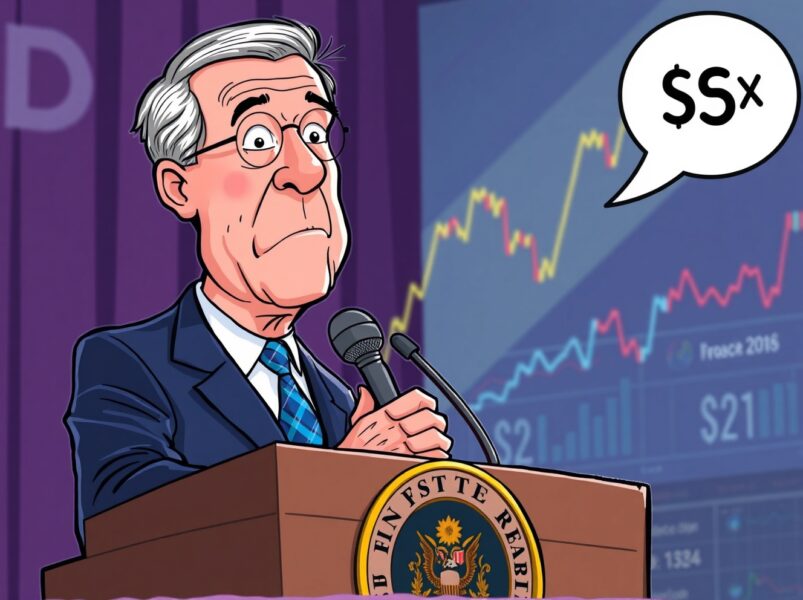
BitcoinWorld Jerome Powell’s Press Conference: Crucial Insights Unveiled for the Market’s Future The financial world, including the dynamic cryptocurrency market, often hangs on every word from the Federal Reserve. Recently, Jerome Powell’s press conference following the Federal Open Market Committee (FOMC) meeting concluded, leaving investors and analysts dissecting his remarks for clues about the future economic direction. This event is always a pivotal moment, shaping expectations for inflation, interest rates, and the overall stability of global markets. What Were the Key Takeaways from Jerome Powell’s Press Conference? During Jerome Powell’s press conference, the Fed Chair provided an update on the central bank’s monetary policy decisions and its economic outlook. His statements often reiterate the Fed’s dual mandate: achieving maximum employment and stable prices. This time was no different, with a strong emphasis on managing persistent inflation. Key points from the recent discussion included: Inflation Control: Powell emphasized the Fed’s unwavering commitment to bringing inflation back down to its 2% target. He reiterated that the fight against rising prices remains the top priority, even if it entails some economic slowdown. Interest Rate Policy: While the Fed’s stance on future interest rate adjustments was discussed, the path remains data-dependent. Powell indicated that decisions would continue to be made meeting-by-meeting, based on incoming economic data. Economic Projections: The updated Summary of Economic Projections (SEP) offered insights into the Fed’s forecasts for GDP growth, unemployment, and inflation. These projections help market participants gauge the central bank’s expectations for the economy’s trajectory. Quantitative Tightening (QT): The ongoing process of reducing the Fed’s balance sheet, known as quantitative tightening, was also a topic. This reduction in liquidity in the financial system has broad implications for asset prices. How Did Jerome Powell’s Remarks Impact Cryptocurrency Markets? The conclusion of Jerome Powell’s press conference often sends ripples through traditional financial markets, and cryptocurrencies are increasingly sensitive to these macroeconomic shifts. Digital assets, once thought to be uncorrelated, now frequently react to the Fed’s monetary policy signals. Higher interest rates, for instance, tend to make riskier assets like cryptocurrencies less attractive. This is because investors might prefer safer, interest-bearing investments. Consequently, we often see increased volatility in Bitcoin (BTC) and Ethereum (ETH) prices immediately following such announcements. The tightening of financial conditions, driven by the Fed, reduces overall liquidity in the system, which can put downward pressure on asset valuations across the board. However, some argue that this growing correlation signifies crypto’s increasing integration into the broader financial ecosystem. It suggests that institutional investors and mainstream finance are now paying closer attention to digital assets, treating them more like other risk-on investments. Navigating the Economic Landscape After Jerome Powell’s Press Conference For cryptocurrency investors, understanding the implications of Jerome Powell’s press conference is crucial for making informed decisions. The Fed’s policy trajectory directly influences the availability of capital and investor sentiment, which are key drivers for crypto valuations. Here are some actionable insights for navigating this environment: Stay Informed: Regularly monitor Fed announcements and economic data releases. Understanding the macroeconomic backdrop is as important as analyzing individual crypto projects. Assess Risk Tolerance: In periods of economic uncertainty and tighter monetary policy, a reassessment of personal risk tolerance is wise. Diversification within your crypto portfolio and across different asset classes can mitigate potential downsides. Focus on Fundamentals: While market sentiment can be swayed by macro news, projects with strong fundamentals, clear use cases, and robust development teams tend to perform better in the long run. Long-Term Perspective: Cryptocurrency markets are known for their volatility. Adopting a long-term investment horizon can help weather short-term fluctuations driven by macro events like Fed meetings. The challenges include potential continued volatility and reduced liquidity. However, opportunities may arise from market corrections, allowing strategic investors to accumulate assets at lower prices. In summary, Jerome Powell’s press conference provides essential guidance on the Fed’s economic strategy. Its conclusions have a profound impact on financial markets, including the dynamic world of cryptocurrencies. Staying informed, understanding the nuances of monetary policy, and maintaining a strategic investment approach are paramount for navigating the evolving economic landscape. The Fed’s actions underscore the interconnectedness of traditional finance and the burgeoning digital asset space. Frequently Asked Questions (FAQs) Q1: What is the Federal Open Market Committee (FOMC)? A1: The FOMC is the monetary policy-making body of the Federal Reserve System. It sets the federal funds rate target and directs open market operations, influencing the availability of money and credit in the U.S. economy. Q2: How do the Fed’s interest rate decisions typically affect cryptocurrency markets? A2: Generally, when the Fed raises interest rates, it makes borrowing more expensive and reduces liquidity in the financial system. This often leads investors to shy away from riskier assets like cryptocurrencies, potentially causing prices to decline. Conversely, lower rates can stimulate investment in riskier assets. Q3: What does “data-dependent” mean in the context of Fed policy? A3: “Data-dependent” means that the Federal Reserve’s future monetary policy decisions, such as interest rate adjustments, will primarily be based on the latest economic data. This includes inflation reports, employment figures, and GDP growth, rather than a predetermined schedule. Q4: Should I change my cryptocurrency investment strategy based on Jerome Powell’s press conference? A4: While it’s crucial to be aware of the macroeconomic environment shaped by Jerome Powell’s press conference, drastic changes to a well-researched investment strategy may not always be necessary. It’s recommended to review your portfolio, assess your risk tolerance, and consider if your strategy aligns with the current economic outlook, focusing on long-term fundamentals. If you found this analysis helpful, please consider sharing it with your network! Your insights and shares help us reach more readers interested in the intersection of traditional finance and the exciting world of cryptocurrencies. Spread the word! To learn more about the latest crypto market trends, explore our article on key developments shaping Bitcoin price action. This post Jerome Powell’s Press Conference: Crucial Insights Unveiled for the Market’s Future first appeared on BitcoinWorld.
Share
Coinstats2025/09/18 16:25