Revolutionary model represents a transformative step toward AI-powered virtual tissues, patient digital twins, and a new era of data-driven biomedical innovationRevolutionary model represents a transformative step toward AI-powered virtual tissues, patient digital twins, and a new era of data-driven biomedical innovation

Bioptimus Unveils M-Optimus, a World Model for Biology

Revolutionary model represents a transformative step toward AI-powered virtual tissues, patient digital twins, and a new era of data-driven biomedical innovation

  • The Unveiling of M-Optimus: Bioptimus has trained its inaugural World Model for biology – a foundation model that learns interactions across multiple languages of biology – marking a revolutionary first step in simulating the full complexity of human life.
  • Early Access to a Limited Number of Pioneer Clients: Bioptimus is now inviting a select number of partners to join this exclusive early-access phase.
  • Accelerating Access to its World-Leading Pathology Model, H-Optimus-1: Bioptimus is also expanding access to its world-leading pathology model, H-Optimus-1, through a limited-time offer via Amazon SageMaker AI.

PARIS, Dec. 17, 2025 /PRNewswire/ — Bioptimus, the leader in AI models for biology, today announced a major leap forward with the unveiling of M-Optimus, the first model that combines multiple biological modalities, designed to simulate biology in its full complexity. The company is offering early access to a limited number of pioneer clients, while simultaneously enhancing access to its world-leading pathology model, H-Optimus-1, through a partnership and limited-time offer with Amazon SageMaker AI.

M-Optimus: A World Model for Biology

Until now, traditional biological research and AI models have been siloed and fragmented, focusing on a single type of data, such as a genetic sequence or a medical image. This approach has similarly fractured the way healthcare is delivered.

Bioptimus’s vision is that M-Optimus will underpin every stage of biological discovery, development, and patient healthcare. It provides a universal framework for understanding and simulating biology, capable of modeling robust representations of cells, tissues, and patients across diseases and populations. This creates a new paradigm in healthcare by representing and simulating biology in all its multi-faceted, interdependent complexity.

This first version of M-Optimus integrates several biological modalities, including hematoxylin and eosin (H&E) stained histology images, bulk RNA sequencing, spatial transcriptomics, and clinical data, into a unified model. This is the first AI model in the world to combine multiple biological modalities at this scale. M-Optimus was trained on one of the world’s largest proprietary datasets encompassing millions of patients, over 50 organ types, and hundreds of medical centers.

What M-Optimus Enables

The applications of M-Optimus span across the entire biomedical domain, each representing a ground-breaking step forward in its respective field, from diagnostics to drug discovery and clinical practice.

  • Accelerating drug discovery and clinical trial design through predictive and prognostic modeling of patient response. This enables pharmaceutical companies to quickly identify the right drug candidates and determine which patients are most likely to respond, potentially eliminating years and millions of dollars in trial costs.
  • Predicting gene expression, treatment responses, and clinical outcomes directly from histology or multimodal data. Optimizing the use of precious clinical samples and providing rich biological context from routine lab tests.
  • Building bespoke models by fine-tuning M-optimus with proprietary data, while preserving universality and ensuring user data privacy. Companies and hospitals can customize this massive AI model with their own private data to build tailored models that answer unique questions while protecting their sensitive information.
  • Generating digital twins and synthetic clinical trials drastically reducing time and costs for clinical trials. The AI can create accurate virtual cells, tissues, and patients, known as “digital twins,” to run clinical trials in silico, thereby increasing trial efficiency, optimizing patient enrollment, and better modeling responses to therapies and drug combinations.

Limited Early Access for Pioneer Partners

Bioptimus currently offers M-Optimus to a select group of early-access clients. Top pharmaceutical companies have already joined as pioneer partners, accessing the power of this world model for their core research workflows.

Today, Bioptimus is extending an invitation to a limited group of visionary organizations to join these leaders and gain an early competitive advantage in AI-driven biological discovery.

Jean-Philippe Vert, CEO and co-founder of Bioptimus, stated: “With M-Optimus, we have successfully assembled the first critical components of our journey to crack the code of biology by combining multiple modalities at scale. This early access program is designed to partner with first-mover companies who share our vision: to translate this raw scientific power into tangible breakthroughs that ultimately improve patient outcomes and revolutionize the delivery of healthcare.”

H-Optimus-1: SOTA Pathology Model on Amazon SageMaker AI

While M-Optimus represents the next frontier, Bioptimus continues to lead the field in AI models for histopathology with H-Optimus-1. Recognized as the industry’s state-of-the-art model, H-Optimus-1 is trained on millions of whole-slide images to deliver best-in-class performance in cancer grading and biomarker detection.

As the H-Optimus family of models approaches one million downloads, Bioptimus has partnered with Amazon SageMaker AI to accelerate access to H-Optimus-1. This enables industry players, researchers, and labs to broadly deploy the world’s most powerful pathology model directly into their secure cloud infrastructure with full data privacy, simplified billing and easy procurement.

Powered by Global Partnerships and a World-Class Team

Bioptimus leverages strategic collaborations with AWS, HuggingFace, NVIDIA, Owkin, and Proscia to utilize its models. Bioptimus’s world-class team, comprising over 50% PhDs from top institutions such as MIT, ETH, ENS, and TUM, and leadership hailing from Google Brain, DeepMind, Owkin, and Tempus, continues to advance the frontier of AI-powered biological understanding.

About Bioptimus

Bioptimus is a global AI biotech company pioneering the world’s first universal foundation model for biology. By combining cutting-edge AI with massive, multimodal, proprietary data generation, Bioptimus is building a unifying framework that connects all scales of biology, from molecules to patients, delivering interpretable, dynamic, and actionable insights. The first foundation model released by Bioptimus, H-Optimus, is an industry-leading model being adopted across research, drug discovery, and clinical pipelines. H-Optimus models are in use by 12 of the top 20 pharmaceutical companies.

For more information about Bioptimus, visit: www.bioptimus.com

Additional Resources

  • M-Optimus Model Overview – https://www.bioptimus.com/m-optimus
  • H-Optimus Model Overview – https://www.bioptimus.com/h-optimus-1
  • Read Bioptimus Manifesto – https://www.bioptimus.com/manifesto
  • Other Bioptimus News – https://www.bioptimus.com/news
  • Leadership Bios – https://www.bioptimus.com/team
  • PathBench benchmark: https://birkhoffkiki.github.io/PathBench/
  • HEST benchmark: https://github.com/mahmoodlab/HEST

Media Contact:
press@bioptimus.com 

Cision View original content to download multimedia:https://www.prnewswire.com/news-releases/bioptimus-unveils-m-optimus-a-world-model-for-biology-302644092.html

SOURCE Bioptimus

Market Opportunity
MemeCore Logo
MemeCore Price(M)
$1.43519
$1.43519$1.43519
+1.79%
USD
MemeCore (M) Live Price Chart
Disclaimer: The articles reposted on this site are sourced from public platforms and are provided for informational purposes only. They do not necessarily reflect the views of MEXC. All rights remain with the original authors. If you believe any content infringes on third-party rights, please contact service@support.mexc.com for removal. MEXC makes no guarantees regarding the accuracy, completeness, or timeliness of the content and is not responsible for any actions taken based on the information provided. The content does not constitute financial, legal, or other professional advice, nor should it be considered a recommendation or endorsement by MEXC.

You May Also Like

Summarize Any Stock’s Earnings Call in Seconds Using FMP API
Summarize Any Stock’s Earnings Call in Seconds Using FMP API

Turn lengthy earnings call transcripts into one-page insights using the Financial Modeling Prep APIPhoto by Bich Tran Earnings calls are packed with insights. They tell you how a company performed, what management expects in the future, and what analysts are worried about. The challenge is that these transcripts often stretch across dozens of pages, making it tough to separate the key takeaways from the noise. With the right tools, you don’t need to spend hours reading every line. By combining the Financial Modeling Prep (FMP) API with Groq’s lightning-fast LLMs, you can transform any earnings call into a concise summary in seconds. The FMP API provides reliable access to complete transcripts, while Groq handles the heavy lifting of distilling them into clear, actionable highlights. In this article, we’ll build a Python workflow that brings these two together. You’ll see how to fetch transcripts for any stock, prepare the text, and instantly generate a one-page summary. Whether you’re tracking Apple, NVIDIA, or your favorite growth stock, the process works the same — fast, accurate, and ready whenever you are. Fetching Earnings Transcripts with FMP API The first step is to pull the raw transcript data. FMP makes this simple with dedicated endpoints for earnings calls. If you want the latest transcripts across the market, you can use the stable endpoint /stable/earning-call-transcript-latest. For a specific stock, the v3 endpoint lets you request transcripts by symbol, quarter, and year using the pattern: https://financialmodelingprep.com/api/v3/earning_call_transcript/{symbol}?quarter={q}&year={y}&apikey=YOUR_API_KEY here’s how you can fetch NVIDIA’s transcript for a given quarter: import requestsAPI_KEY = "your_api_key"symbol = "NVDA"quarter = 2year = 2024url = f"https://financialmodelingprep.com/api/v3/earning_call_transcript/{symbol}?quarter={quarter}&year={year}&apikey={API_KEY}"response = requests.get(url)data = response.json()# Inspect the keysprint(data.keys())# Access transcript contentif "content" in data[0]: transcript_text = data[0]["content"] print(transcript_text[:500]) # preview first 500 characters The response typically includes details like the company symbol, quarter, year, and the full transcript text. If you aren’t sure which quarter to query, the “latest transcripts” endpoint is the quickest way to always stay up to date. Cleaning and Preparing Transcript Data Raw transcripts from the API often include long paragraphs, speaker tags, and formatting artifacts. Before sending them to an LLM, it helps to organize the text into a cleaner structure. Most transcripts follow a pattern: prepared remarks from executives first, followed by a Q&A session with analysts. Separating these sections gives better control when prompting the model. In Python, you can parse the transcript and strip out unnecessary characters. A simple way is to split by markers such as “Operator” or “Question-and-Answer.” Once separated, you can create two blocks — Prepared Remarks and Q&A — that will later be summarized independently. This ensures the model handles each section within context and avoids missing important details. Here’s a small example of how you might start preparing the data: import re# Example: using the transcript_text we fetched earliertext = transcript_text# Remove extra spaces and line breaksclean_text = re.sub(r'\s+', ' ', text).strip()# Split sections (this is a heuristic; real-world transcripts vary slightly)if "Question-and-Answer" in clean_text: prepared, qna = clean_text.split("Question-and-Answer", 1)else: prepared, qna = clean_text, ""print("Prepared Remarks Preview:\n", prepared[:500])print("\nQ&A Preview:\n", qna[:500]) With the transcript cleaned and divided, you’re ready to feed it into Groq’s LLM. Chunking may be necessary if the text is very long. A good approach is to break it into segments of a few thousand tokens, summarize each part, and then merge the summaries in a final pass. Summarizing with Groq LLM Now that the transcript is clean and split into Prepared Remarks and Q&A, we’ll use Groq to generate a crisp one-pager. The idea is simple: summarize each section separately (for focus and accuracy), then synthesize a final brief. Prompt design (concise and factual) Use a short, repeatable template that pushes for neutral, investor-ready language: You are an equity research analyst. Summarize the following earnings call sectionfor {symbol} ({quarter} {year}). Be factual and concise.Return:1) TL;DR (3–5 bullets)2) Results vs. guidance (what improved/worsened)3) Forward outlook (specific statements)4) Risks / watch-outs5) Q&A takeaways (if present)Text:<<<{section_text}>>> Python: calling Groq and getting a clean summary Groq provides an OpenAI-compatible API. Set your GROQ_API_KEY and pick a fast, high-quality model (e.g., a Llama-3.1 70B variant). We’ll write a helper to summarize any text block, then run it for both sections and merge. import osimport textwrapimport requestsGROQ_API_KEY = os.environ.get("GROQ_API_KEY") or "your_groq_api_key"GROQ_BASE_URL = "https://api.groq.com/openai/v1" # OpenAI-compatibleMODEL = "llama-3.1-70b" # choose your preferred Groq modeldef call_groq(prompt, temperature=0.2, max_tokens=1200): url = f"{GROQ_BASE_URL}/chat/completions" headers = { "Authorization": f"Bearer {GROQ_API_KEY}", "Content-Type": "application/json", } payload = { "model": MODEL, "messages": [ {"role": "system", "content": "You are a precise, neutral equity research analyst."}, {"role": "user", "content": prompt}, ], "temperature": temperature, "max_tokens": max_tokens, } r = requests.post(url, headers=headers, json=payload, timeout=60) r.raise_for_status() return r.json()["choices"][0]["message"]["content"].strip()def build_prompt(section_text, symbol, quarter, year): template = """ You are an equity research analyst. Summarize the following earnings call section for {symbol} ({quarter} {year}). Be factual and concise. Return: 1) TL;DR (3–5 bullets) 2) Results vs. guidance (what improved/worsened) 3) Forward outlook (specific statements) 4) Risks / watch-outs 5) Q&A takeaways (if present) Text: <<< {section_text} >>> """ return textwrap.dedent(template).format( symbol=symbol, quarter=quarter, year=year, section_text=section_text )def summarize_section(section_text, symbol="NVDA", quarter="Q2", year="2024"): if not section_text or section_text.strip() == "": return "(No content found for this section.)" prompt = build_prompt(section_text, symbol, quarter, year) return call_groq(prompt)# Example usage with the cleaned splits from Section 3prepared_summary = summarize_section(prepared, symbol="NVDA", quarter="Q2", year="2024")qna_summary = summarize_section(qna, symbol="NVDA", quarter="Q2", year="2024")final_one_pager = f"""# {symbol} Earnings One-Pager — {quarter} {year}## Prepared Remarks — Key Points{prepared_summary}## Q&A Highlights{qna_summary}""".strip()print(final_one_pager[:1200]) # preview Tips that keep quality high: Keep temperature low (≈0.2) for factual tone. If a section is extremely long, chunk at ~5–8k tokens, summarize each chunk with the same prompt, then ask the model to merge chunk summaries into one section summary before producing the final one-pager. If you also fetched headline numbers (EPS/revenue, guidance) earlier, prepend them to the prompt as brief context to help the model anchor on the right outcomes. Building the End-to-End Pipeline At this point, we have all the building blocks: the FMP API to fetch transcripts, a cleaning step to structure the data, and Groq LLM to generate concise summaries. The final step is to connect everything into a single workflow that can take any ticker and return a one-page earnings call summary. The flow looks like this: Input a stock ticker (for example, NVDA). Use FMP to fetch the latest transcript. Clean and split the text into Prepared Remarks and Q&A. Send each section to Groq for summarization. Merge the outputs into a neatly formatted earnings one-pager. Here’s how it comes together in Python: def summarize_earnings_call(symbol, quarter, year, api_key, groq_key): # Step 1: Fetch transcript from FMP url = f"https://financialmodelingprep.com/api/v3/earning_call_transcript/{symbol}?quarter={quarter}&year={year}&apikey={api_key}" resp = requests.get(url) resp.raise_for_status() data = resp.json() if not data or "content" not in data[0]: return f"No transcript found for {symbol} {quarter} {year}" text = data[0]["content"] # Step 2: Clean and split clean_text = re.sub(r'\s+', ' ', text).strip() if "Question-and-Answer" in clean_text: prepared, qna = clean_text.split("Question-and-Answer", 1) else: prepared, qna = clean_text, "" # Step 3: Summarize with Groq prepared_summary = summarize_section(prepared, symbol, quarter, year) qna_summary = summarize_section(qna, symbol, quarter, year) # Step 4: Merge into final one-pager return f"""# {symbol} Earnings One-Pager — {quarter} {year}## Prepared Remarks{prepared_summary}## Q&A Highlights{qna_summary}""".strip()# Example runprint(summarize_earnings_call("NVDA", 2, 2024, API_KEY, GROQ_API_KEY)) With this setup, generating a summary becomes as simple as calling one function with a ticker and date. You can run it inside a notebook, integrate it into a research workflow, or even schedule it to trigger after each new earnings release. Free Stock Market API and Financial Statements API... Conclusion Earnings calls no longer need to feel overwhelming. With the Financial Modeling Prep API, you can instantly access any company’s transcript, and with Groq LLM, you can turn that raw text into a sharp, actionable summary in seconds. This pipeline saves hours of reading and ensures you never miss the key results, guidance, or risks hidden in lengthy remarks. Whether you track tech giants like NVIDIA or smaller growth stocks, the process is the same — fast, reliable, and powered by the flexibility of FMP’s data. Summarize Any Stock’s Earnings Call in Seconds Using FMP API was originally published in Coinmonks on Medium, where people are continuing the conversation by highlighting and responding to this story
Share
Medium2025/09/18 14:40
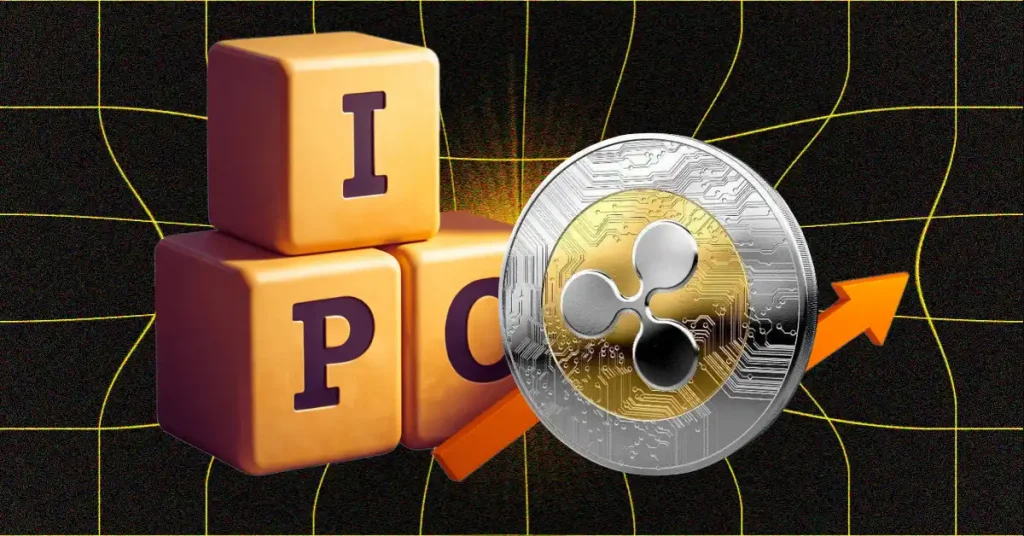
Ripple IPO Back in Spotlight as Valuation Hits $50B

Ripple IPO Back in Spotlight as Valuation Hits $50B

The post Ripple IPO Back in Spotlight as Valuation Hits $50B appeared first on Coinpedia Fintech News Ripple, the blockchain payments company behind XRP, is once
Share
CoinPedia2025/12/27 14:24
Solana co-founder predicts that by 2026: the stablecoin market will exceed one trillion US dollars, and 100,000 humanoid robots will be shipped.

Solana co-founder predicts that by 2026: the stablecoin market will exceed one trillion US dollars, and 100,000 humanoid robots will be shipped.

PANews reported on December 27th that Anatoly Yakovenko, co-founder of Solana, released some predictions about 2026 on X, as follows: The total size of stablecoins
Share
PANews2025/12/27 15:04