The fee hike follows an executive order Trump signed in July that said additional revenue generated from foreign tourists would be used for conservation and deferred maintenance projects to improve national parksThe fee hike follows an executive order Trump signed in July that said additional revenue generated from foreign tourists would be used for conservation and deferred maintenance projects to improve national parks

Visiting the Grand Canyon? US park fees to jump for foreign tourists

2025/11/26 14:34
2 min read
For feedback or concerns regarding this content, please contact us at crypto.news@mexc.com

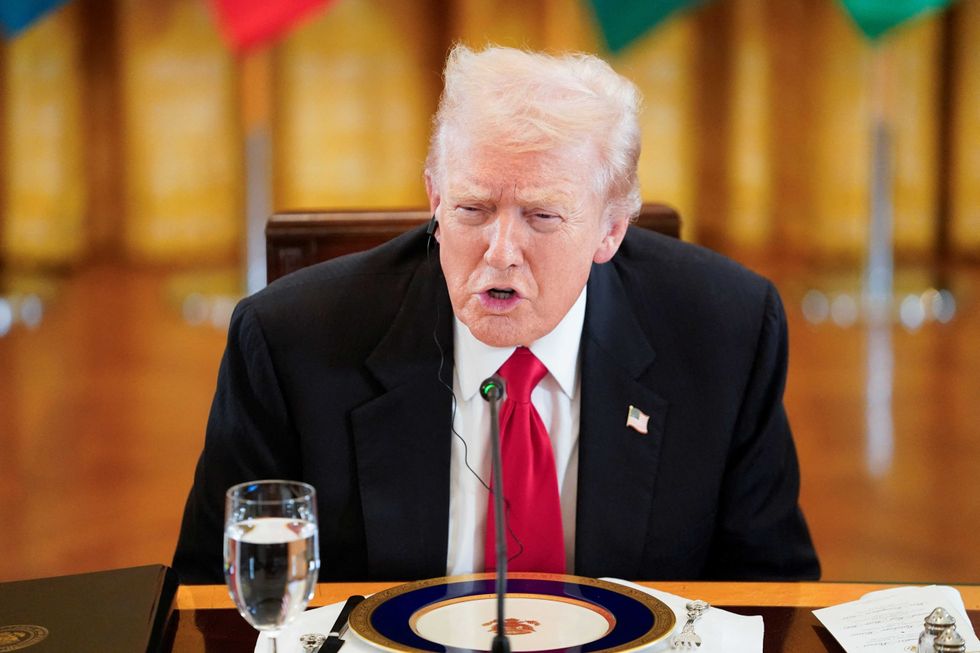
Foreign visitors to the Grand Canyon, Yellowstone, and other US national parks will pay higher entrance fees than Americans starting in January, President Donald Trump’s administration said on Tuesday, November 25.

The fee hike follows an executive order Trump signed in July that said additional revenue generated from foreign tourists would be used for conservation and deferred maintenance projects to improve national parks, even as his administration seeks to cut national park spending by more than a third.

The order had also directed the Park Service to ensure that US residents receive priority access over foreign visitors in any of its permitting or reservation systems.

The Interior Department said on Tuesday, November 25, that visitors from other countries will be charged $250 for an annual pass to the parks starting January 1, while US citizens and permanent residents will continue to pay $80.

Foreign tourists without an annual pass will pay a new $100-per-person fee at 11 of the most visited national parks, the department said in a statement. The list of most visited parks includes the Everglades in Florida, Yosemite in California, and the Rocky Mountains in Colorado.

Visitors have flocked to national parks in record numbers in recent years, with admissions soaring to a new high of 331 million in 2024, up 6 million from 2023.

Reduced personnel levels at some national parks, including Yosemite and Big Bend in Texas, have forced closures, reduced programming and impeded emergency response operations, according to the National Parks Conservation Association, a watchdog-advocacy group.

The Trump administration has proposed cutting more than $1 billion from the Park Service budget in fiscal 2026, which would represent a reduction of more than a third of the agency’s budget from the prior year. – Rappler.com

Disclaimer: The articles reposted on this site are sourced from public platforms and are provided for informational purposes only. They do not necessarily reflect the views of MEXC. All rights remain with the original authors. If you believe any content infringes on third-party rights, please contact crypto.news@mexc.com for removal. MEXC makes no guarantees regarding the accuracy, completeness, or timeliness of the content and is not responsible for any actions taken based on the information provided. The content does not constitute financial, legal, or other professional advice, nor should it be considered a recommendation or endorsement by MEXC.

You May Also Like

Scaling the Local Brand: How modular fintech tools allow neighborhood startups to compete with global giants
Scaling the Local Brand: How modular fintech tools allow neighborhood startups to compete with global giants

As technology continues to break down barriers like never before, local IT brands in the financial sector have a unique opportunity to compete with global giants
Share
Fintechzoom2026/03/11 17:13
Trump’s enablers are 'colluding with his insanity': assessment

Trump’s enablers are 'colluding with his insanity': assessment

Irish Times writer Fintan O’Tool says there are gentle ways to deal with madness. Dealing with the all-powerful malignance of Trump’s madness, however, is something
Share
Alternet2026/03/11 17:01
Curve Finance votes on revenue-sharing model for CRV holders

Curve Finance votes on revenue-sharing model for CRV holders

The post Curve Finance votes on revenue-sharing model for CRV holders appeared on BitcoinEthereumNews.com. Curve Finance has proposed a new protocol called Yield Basis that would share revenue directly with CRV holders, marking a shift from one-off incentives to sustainable income. Summary Curve Finance has put forward a revenue-sharing protocol to give CRV holders sustainable income beyond emissions and fees. The plan would mint $60M in crvUSD to seed three Bitcoin liquidity pools (WBTC, cbBTC, tBTC), with 35–65% of revenue distributed to veCRV stakers. The DAO vote runs from up to Sept. 24, with the proposal seen as a major step to strengthen CRV tokenomics after past liquidity and governance challenges. Curve Finance founder Michael Egorov has introduced a proposal to give CRV token holders a more direct way to earn income, launching a system called Yield Basis that aims to turn the governance token into a sustainable, yield-bearing asset.  The proposal has been published on the Curve DAO (CRV) governance forum, with voting open until Sept. 24. A new model for CRV rewards Yield Basis is designed to distribute transparent and consistent returns to CRV holders who lock their tokens for veCRV governance rights. Unlike past incentive programs, which relied heavily on airdrops and emissions, the protocol channels income from Bitcoin-focused liquidity pools directly back to token holders. To start, Curve would mint $60 million worth of crvUSD, its over-collateralized stablecoin, with proceeds allocated across three pools — WBTC, cbBTC, and tBTC — each capped at $10 million. 25% of Yield Basis tokens would be reserved for the Curve ecosystem, and between 35% and 65% of Yield Basis’s revenue would be given to veCRV holders. By emphasizing Bitcoin (BTC) liquidity and offering yields without the short-term loss risks associated with automated market makers, the protocol hopes to draw in professional traders and institutions. Context and potential impact on Curve Finance The proposal comes as Curve continues to modify…
Share
BitcoinEthereumNews2025/09/18 14:37