

Space Technology & Research Program 2026: ISRO Launches Flagship Education Initiative
India’s Space Future Takes Flight: ISRO Launches Flagship Education Program
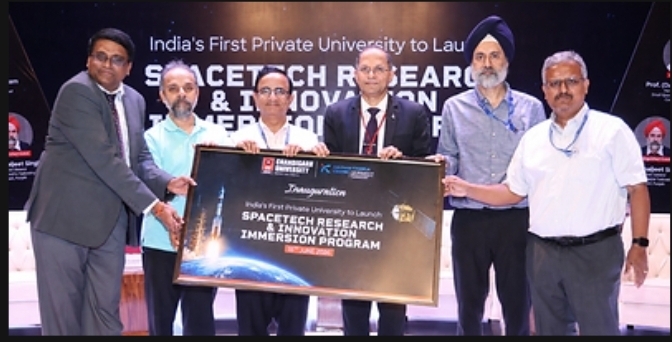
In a transformative move for India’s space technology landscape, Chandigarh University has launched the Space Technology & Research Program 2026 in collaboration with premier scientific institutions including ISRO and IIST. This pioneering initiative addresses the critical challenge of developing indigenous space technology talent while positioning India for leadership in the global space economy.
The month-long program, running from June 15 to July 11, brings together nearly 15 eminent scientists from ISRO, IIST, Semiconductor Laboratory, and other leading institutions to mentor the next generation of space innovators. This strategic partnership directly tackles the talent gap that has constrained India’s space ambitions, creating a pipeline of skilled professionals equipped with hands-on experience in cutting-edge technologies.
Bridging the Talent Gap in India’s Space Sector
The collaboration represents a watershed moment in addressing the chronic shortage of specialized space technology professionals in India. For years, the country has faced a significant challenge in producing graduates with the practical skills and domain expertise required by ISRO and the growing private space sector. Traditional engineering education has struggled to keep pace with the rapid evolution of space technologies, leaving students inadequately prepared for the complex, multidisciplinary challenges of modern space exploration and commercial applications.
This program directly addresses this disconnect by bringing academic learning into direct alignment with industry requirements. Students no longer need to bridge the gap between theoretical knowledge and practical application after graduation – they receive both simultaneously, creating a more effective and efficient talent development model. The hands-on approach ensures that graduates enter the workforce with confidence, competence, and the ability to contribute meaningfully from day one.
Strategic Imperatives Behind the Initiative
The launch of this program aligns perfectly with India’s broader strategic objectives for space technology development. As Dr. S Sudhakar, Deputy Director, U R Rao Satellite Centre (URSC), ISRO, emphasized: “As India works towards becoming a developed nation by 2047, science and technology will play a defining role in shaping the future. Science is going to govern the world and space technology will be one of the most important drivers of that transformation.”
This statement encapsulates the strategic thinking behind the program. India’s space ambitions extend far beyond scientific curiosity – they are integral to national security, economic development, and technological sovereignty. The country’s roadmap includes ambitious exploration missions, increased satellite deployment for communication and navigation, and growing commercial space activities. Each of these initiatives requires a steady stream of highly skilled professionals who understand both the technical complexities and strategic implications of space technology.
“One of the most important lessons young engineers and researchers can learn from ISRO’s journey is the value of developing indigenous technologies,” Dr. Sudhakar continued. “We have achieved world-class results by building our own capabilities and relying on the talent of our people. Technology does not come free and acquiring it from elsewhere often comes at a significant cost. When we develop technologies ourselves, we not only reduce costs but also gain strategic advantages and self-reliance.”
This philosophy of indigenous development has been the cornerstone of ISRO’s success for decades. From the Aryabhata satellite to the Mars Orbiter Mission, India has demonstrated that with the right talent and approach, it can achieve world-class results even with limited resources. The Space Technology & Research Program 2026 is designed to perpetuate this legacy by ensuring that the next generation inherits both the technical skills and the strategic mindset needed to continue this tradition of innovation.
The Frugal Innovation Advantage
What sets ISRO apart from many other space agencies is its mastery of frugal innovation – achieving maximum results with minimum resources. This approach has been crucial to India’s success in space technology, allowing the country to punch above its weight in the global space arena. The Space Technology & Research Program 2026 is designed to instill this philosophy in the next generation of Indian space professionals.
“ISRO has always been at the forefront of achieving maximum impact with limited resources,” said Prof. Priyadarshnam, Head & Project Director, SSPACE, Indian Institute of Space Science and Technology (IIST). “One of the key lessons from its journey is the importance of precision, rigorous testing and human expertise. While automation has its place, mission success ultimately depends on meticulous development, validation and the dedication of scientists and engineers. This culture of frugal innovation and uncompromising testing has been central to ISRO’s achievements over the years.”
This emphasis on human expertise and rigorous procedures might seem old-fashioned in an era of artificial intelligence and automation, but it reflects a deep understanding of what actually makes space missions successful. The harsh environment of space, the critical nature of satellite operations, and the security implications of space-based systems all demand human oversight, careful planning, and attention to detail that cannot be fully automated.
The program teaches students not just how to use existing technologies, but how to develop new ones under constraints. This includes working with limited budgets, using locally available materials, and finding creative solutions to complex problems. These skills are increasingly valuable as India seeks to expand its space capabilities while maintaining cost efficiency.
Quantum Technology and Future Security Challenges
Looking ahead, the program addresses emerging technological challenges that will define the next generation of space systems. Prof. Priyadarshnam highlighted the growing importance of quantum technology: “Quantum technology will be a major thrust area in the future. If we do not adapt to quantum systems, many of the present security mechanisms could eventually become vulnerable. Research organizations across India, including ISRO, are already working on quantum technologies, particularly quantum cryptography and quantum communications.”
This forward-looking approach ensures that students are prepared for the technological challenges of tomorrow, not just today. Quantum communications promise unhackable communication channels for satellite systems, while quantum sensors could enable more precise measurements for Earth observation and scientific missions. By introducing these concepts early, the program positions India to maintain its technological edge in an increasingly competitive global environment.
The security implications are particularly significant. As more critical infrastructure – from banking systems to military communications – becomes dependent on satellite systems, the need for secure communication channels becomes paramount. Quantum cryptography offers a potential solution, but only if countries develop the expertise to implement and maintain these systems effectively. The program ensures that India has the talent pool needed to address these challenges proactively.
Semiconductor Technology: The Foundation of Modern Space Systems
No discussion of space technology is complete without addressing the critical role of semiconductors. Dr. Kamaljeet Singh, Director General, Semiconductor Laboratory (SCL), emphasized this fundamental connection: “Semiconductors are the foundation of the digital economy and will play a crucial role in India’s journey towards becoming a developed nation by 2047. Under the India Semiconductor Mission, significant progress is already being made with multiple manufacturing and assembly plants being established across the country.”
Space systems rely heavily on advanced semiconductors for everything from satellite processing units to ground station equipment. The reliability and radiation resistance requirements of space applications demand specialized semiconductor technologies that differ significantly from commercial applications. By integrating semiconductor expertise into the program, Chandigarh University is addressing a critical component of India’s space technology ecosystem.
The partnership with Semiconductor Laboratory ensures that students gain exposure to the specific challenges and opportunities in space-grade semiconductors. This includes understanding thermal management in extreme environments, radiation hardening techniques, and the integration of multiple functions onto single chips. These are highly specialized skills that are essential for developing sophisticated space systems but are rarely taught in traditional engineering programs.
Creating a Sustainable Talent Ecosystem
The success of the Space Technology & Research Program 2026 lies in its holistic approach to talent development. Rather than focusing on a single aspect of space technology, the program creates an integrated ecosystem where students can explore multiple domains and find their areas of interest and expertise. This approach ensures that graduates have both broad understanding and deep specialization in their chosen areas.
“Semiconductors are critical for strategic sectors including space, telecommunications, defence, artificial intelligence and advanced computing,” Dr. Singh noted. “The next step is to strengthen manufacturing, deployment and application ecosystems. As artificial intelligence becomes a key driver of future growth, India must leverage its vast data resources to develop indigenous technologies and sovereign AI models.”
The program’s structure reflects this comprehensive approach. Students engage with multiple technologies – satellites, quantum communications, semiconductors, artificial intelligence – and learn how these systems integrate into comprehensive space solutions. They work on real projects, contribute to ongoing research, and receive mentorship from scientists who are actively shaping India’s space future.
This ecosystem approach also addresses the shortage of diverse talent in the space sector. Rather than producing only satellite engineers or only ground station specialists, the program creates professionals who understand the entire space value chain from development to deployment to operation. This broader perspective is increasingly valuable as the space sector becomes more integrated with other industries and applications.
Transforming the Student Experience
From a CX perspective, this initiative fundamentally transforms the traditional student experience. Participants gain unprecedented access to cutting-edge research, industry mentorship, and collaborative opportunities that prepare them for leadership roles in the space sector. The program creates a virtuous cycle where students contribute fresh perspectives to ongoing projects while building the capabilities needed for future challenges.
The experiential learning model ensures that students don’t just learn about space technology – they practice it. They work with real satellite systems, participate in actual mission planning, and contribute to ongoing research projects. This hands-on approach, combined with direct mentorship from leading scientists, creates a learning experience that is both transformative and practical.
The program also addresses the critical need for diversity in the space sector. By bringing together students from different backgrounds, disciplines, and regions, it creates a more inclusive ecosystem that reflects India’s diversity. This diversity of perspective is essential for innovation and for ensuring that India’s space programs address the needs of all its citizens.
Strategic Investment in Technological Sovereignty
The Space Technology & Research Program 2026 represents more than just an educational initiative; it’s a strategic investment in India’s technological sovereignty and future competitiveness. By combining world-class expertise with hands-on learning, the program ensures that India’s space sector will have the talent foundation needed to achieve its ambitious 2047 goals while maintaining its position as a global space power.
“Space technology is going to play a major role in India’s future development,” Prof. Priyadarshnam stated. “Unless we are quick enough to adopt and integrate space technologies across the domains, the pace of development will not be sufficient. There is certainly a threat perception arising from the growing role of space-based technologies in security and strategic affairs. However, India has the capability to overcome such challenges through indigenous innovation and technological self-reliance.”
This strategic vision positions space technology not just as an area of scientific interest, but as a critical component of India’s development strategy. The program ensures that India has the human capital needed to leverage space technology for economic growth, national security, and scientific advancement. It creates a sustainable pipeline of talent that will support India’s space ambitions for decades to come.
Building for the Future
As India looks toward its 2047 vision of becoming a developed nation, the Space Technology & Research Program 2026 provides the foundation for achieving that goal through space technology. The program creates a talent ecosystem that supports India’s ambitious space roadmap, including advanced exploration missions, increased satellite deployment, and growing commercial space activities.
The students who participate in this program will become the leaders, innovators, and decision-makers who shape India’s space future. They will work on missions to Mars and beyond, develop new satellite technologies, and create applications that improve life on Earth. More importantly, they will carry forward ISRO’s tradition of frugal innovation, indigenous development, and strategic excellence.
This program demonstrates how education, research, and industry can work together to address national challenges and opportunities. It creates a model for how other critical technology sectors can develop their talent pipelines while advancing strategic objectives. Most importantly, it ensures that India has the human capital needed to achieve its space ambitions and maintain its position as a global space power.
The launch of this program marks not just the beginning of a summer training initiative, but the start of a new era in Indian space technology education – one that combines cutting-edge research, practical experience, and strategic vision to prepare the next generation of space leaders.
The post Space Technology & Research Program 2026: ISRO Launches Flagship Education Initiative appeared first on CX Quest.


You May Also Like

Daily XRP transfer volume surpasses 500 million! What does this mean during the latest price drop?

Ethereum koers toont zeldzaam dubbel koopsignaal en richt zich op $4.550

UK Gilt Yields Spike As Burnham Win Opens Door To Oust Starmer



