Gold Rebounds as Iran-US Deal Hopes Drive Upside: Expert Analysis
BitcoinWorld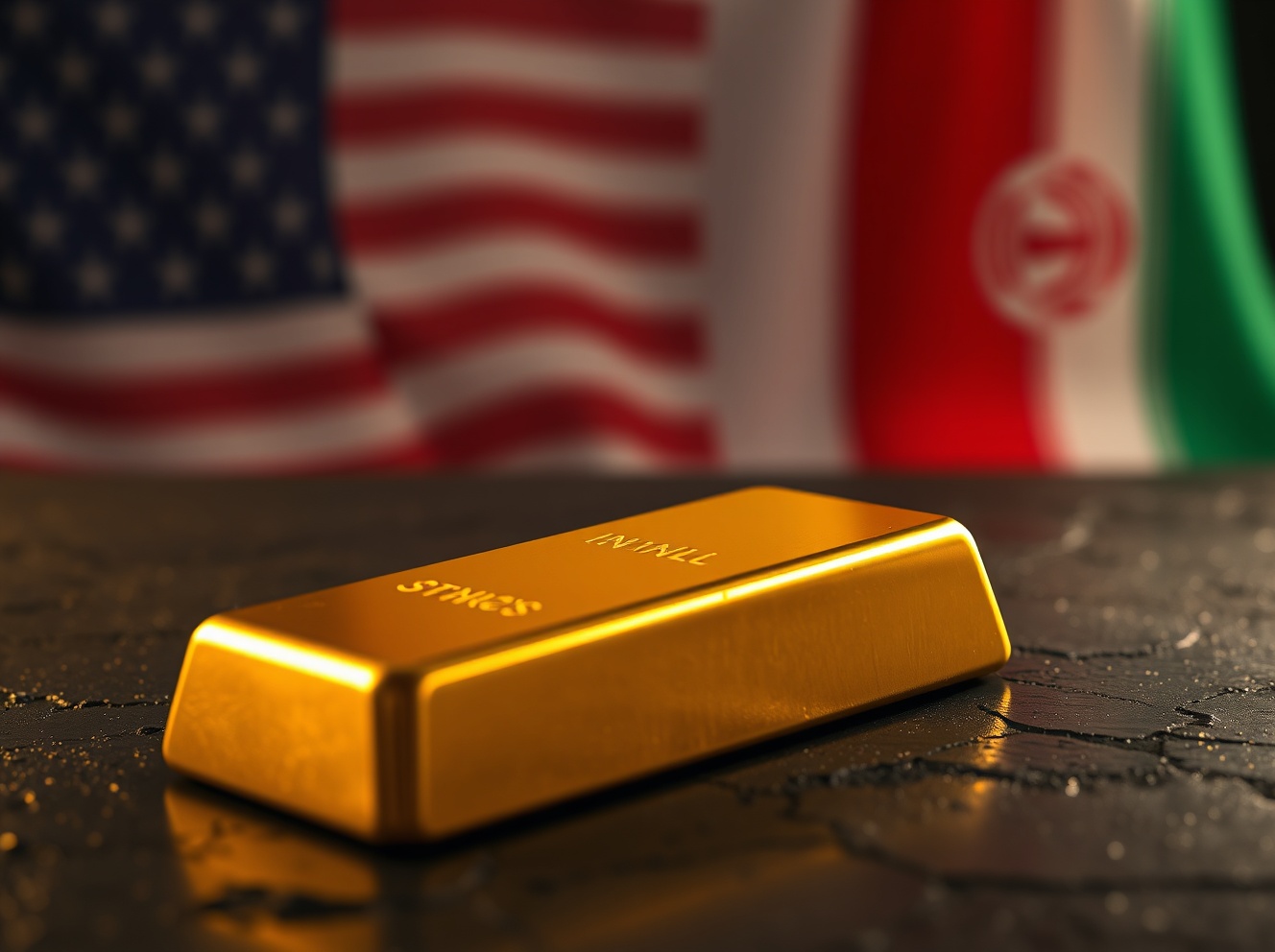
Gold Rebounds as Iran-US Deal Hopes Drive Upside: Expert Analysis
Gold rebounds as Iran-US deal hopes drive upside in global commodity markets. The precious metal, often a barometer of geopolitical stability, has surged in recent trading sessions. This move follows renewed diplomatic signals between Tehran and Washington. Investors now reassess risk exposure and safe-haven allocations. The shift marks a critical juncture for gold traders worldwide.
Gold Rebounds Amid Geopolitical Shifts
Gold prices climbed sharply on Monday. Spot gold rose over 2% to $2,450 per ounce. This rally stems from reports of indirect talks between Iranian and US officials. The discussions focus on nuclear program limitations and sanctions relief. Markets interpret this as a potential de-escalation in Middle East tensions. Lower geopolitical risk typically reduces gold’s safe-haven appeal. Yet, the current price action tells a different story. Analysts attribute this to short-covering and repositioning by hedge funds. The rebound follows a 5% decline last week. Traders now watch for concrete outcomes from the negotiations.
Several factors drive this upside. First, the US dollar weakened against major currencies. A softer dollar makes gold cheaper for foreign buyers. Second, US Treasury yields fell. Lower yields reduce the opportunity cost of holding non-yielding assets like gold. Third, central bank buying continues. The People’s Bank of China added gold to its reserves for the 18th consecutive month. These fundamentals support the rally. The chart pattern shows a clear breakout above the 50-day moving average. Technical traders view this as a bullish signal.
Market Reaction and Trading Volume
Trading volume spiked 40% above the 20-day average. Open interest in gold futures rose by 15,000 contracts. This indicates fresh buying, not just short-covering. The rally also lifted gold mining stocks. The NYSE Arca Gold Miners Index gained 3.5%. Silver followed gold’s lead, rising 3%. The gold-silver ratio narrowed to 80:1. This suggests broader precious metals demand. The rebound occurs despite a generally hawkish Federal Reserve. Fed Chair Jerome Powell recently signaled no immediate rate cuts. Higher rates usually pressure gold. Yet, geopolitical factors override monetary policy for now.
Iran-US Deal Hopes: Background and Timeline
The current diplomatic push has deep roots. The Joint Comprehensive Plan of Action (JCPOA) collapsed in 2018. The US withdrew under President Trump. Iran then accelerated its nuclear program. Talks resumed in 2021 but stalled repeatedly. The latest round began in late 2024. Mediators from Oman and Qatar facilitate indirect communications. Key sticking points include enrichment levels and sanctions relief. Iran demands full removal of oil and banking sanctions. The US insists on verifiable compliance. A breakthrough could unlock significant Iranian oil exports. This would increase global supply and lower energy prices. Lower oil prices reduce inflation pressures. That could allow central banks to ease monetary policy. Such a scenario benefits gold as a hedge against currency debasement.
Historical data shows gold’s sensitivity to US-Iran tensions. In January 2020, gold hit a seven-year high after a US drone strike killed Iranian General Qasem Soleimani. Prices then corrected as tensions eased. The current situation mirrors that pattern. However, the stakes are higher now. Iran’s nuclear enrichment is closer to weapons-grade. The International Atomic Energy Agency (IAEA) reports Iran has 60% enriched uranium. This shortens the breakout time to produce a bomb. Any credible deal would require significant rollback. Markets price in a 60% probability of a partial agreement within six months. A full deal seems less likely.
Expert Insights on Gold’s Trajectory
Industry analysts offer mixed views. John Reade, chief market strategist at the World Gold Council, notes that gold’s rebound reflects “a complex interplay of factors.” He highlights that central bank demand remains structural. “Central banks bought over 1,000 tonnes in 2023. This trend continues in 2024. It provides a price floor,” Reade says. Other experts focus on technical levels. “Gold must hold above $2,400 to sustain the rally,” says David Meger, director of metals trading at High Ridge Futures. “A close below that level could trigger profit-taking.” The $2,500 level acts as psychological resistance. A breakout above that could target the all-time high near $2,480.
Geopolitical risk premiums are hard to quantify. The chart shows a volatility spike in the CBOE Gold Volatility Index (GVZ). The GVZ rose to 18 from 14 last week. This indicates higher options premiums. Options traders bet on continued price swings. The put-call ratio for gold ETFs fell to 0.7. This suggests bullish sentiment. However, retail investors should exercise caution. Geopolitical events are unpredictable. A breakdown in talks could send gold sharply higher. A deal could trigger a sharp sell-off. The best approach is to focus on long-term fundamentals.
Impact on Other Asset Classes
The Iran-US deal hopes ripple across markets. Oil prices fell 3% on the news. Brent crude dropped below $80 per barrel. Lower oil prices benefit importing nations like India and Japan. They also reduce inflation expectations. This supports bond markets. The US 10-year Treasury yield fell 5 basis points to 4.15%. Equity markets reacted positively. The S&P 500 rose 0.8%. Energy stocks lagged, while consumer discretionary stocks gained. The US dollar index (DXY) fell 0.4%. Emerging market currencies strengthened. The Turkish lira and Indian rupee gained. Gold’s rally also boosted cryptocurrencies. Bitcoin rose 2% to $67,000. Some investors view crypto as a digital gold alternative.
A table summarizing asset class performance:
| Asset | Price Change | Key Driver |
|---|---|---|
| Gold (Spot) | +2.1% | Geopolitical de-escalation hopes |
| Silver | +3.0% | Industrial and safe-haven demand |
| WTI Crude Oil | -3.2% | Potential Iranian supply increase |
| US Dollar Index | -0.4% | Risk-on sentiment |
| S&P 500 | +0.8% | Lower geopolitical risk premium |
Central Bank Gold Reserves Trends
Central bank gold buying remains a key theme. The World Gold Council reports that central banks added 290 tonnes in Q1 2024. This is slightly below Q1 2023 but still elevated. China leads with 225 tonnes of purchases in 2024. Poland, India, and Turkey also increased reserves. These purchases diversify away from US dollar reserves. The trend reflects de-dollarization efforts. It also shows a hedge against Western sanctions. Russia’s gold reserves grew after 2014 sanctions. Central banks now view gold as a strategic asset. This structural demand supports prices even during geopolitical calm.
Technical Analysis and Price Targets
Chart patterns provide additional clues. Gold formed a bullish flag pattern on the daily chart. The flagpole represents the rally from $2,300 to $2,450. The flag is a consolidation between $2,400 and $2,450. A breakout above $2,450 targets $2,500. The relative strength index (RSI) stands at 62. This is neutral, not overbought. The MACD line crossed above the signal line. This is a bullish crossover. Volume confirms the move. The 200-day moving average slopes upward at $2,200. This supports the long-term uptrend. Fibonacci retracement levels show support at $2,380 (38.2%) and $2,350 (50%). Resistance lies at $2,480 (previous high) and $2,500 (psychological).
Seasonal patterns also favor gold. Historically, gold performs well in August and September. These months see strong physical demand from India’s wedding season and festival purchases. Indian gold imports rose 15% year-on-year in July. This trend likely continues. The US election cycle adds uncertainty. Elections historically increase gold demand. Investors hedge against policy changes. The combination of geopolitical, seasonal, and election factors creates a supportive environment.
Risks to the Gold Rebound
Several risks could derail the rally. First, a rapid US-Iran deal could remove the geopolitical premium. Gold could drop to $2,300. Second, the Fed could delay rate cuts further. Higher rates strengthen the dollar and pressure gold. Third, a stock market crash could force margin selling. Investors sell gold to cover losses. Fourth, physical demand from China could weaken. The Chinese economy faces deflationary pressures. Lower demand reduces gold imports. Fifth, speculative positioning is already elevated. The CFTC report shows net long positions near record highs. This increases the risk of a sharp correction. Traders should use stop-losses and position sizing.
Conclusion
Gold rebounds as Iran-US deal hopes drive upside, but the path forward remains uncertain. The rally reflects a complex mix of geopolitical optimism, technical factors, and structural demand. Investors should monitor diplomatic developments closely. A successful deal could cap gold’s gains. A failure could propel prices to new highs. The key takeaway is to focus on long-term trends. Central bank buying, de-dollarization, and fiscal deficits support gold over the next 12 months. Diversification remains essential. Gold should form part of a balanced portfolio. As always, consult a financial advisor before making investment decisions.
FAQs
Q1: Why did gold rebound despite hopes of a US-Iran deal?
Gold rebounded due to short-covering, a weaker US dollar, lower Treasury yields, and continued central bank buying. The market also prices in a partial deal, not a full resolution of tensions.
Q2: How does a US-Iran deal affect gold prices?
A deal could reduce geopolitical risk premiums, potentially lowering gold prices. However, it could also increase global liquidity and inflation expectations, which are positive for gold.
Q3: What is the key technical level to watch for gold?
The key resistance is $2,480 (all-time high) and $2,500 (psychological). Support is at $2,380 and $2,350. A break below $2,300 would signal a trend reversal.
Q4: Are central banks still buying gold?
Yes. Central banks bought 290 tonnes in Q1 2024. China, Poland, India, and Turkey lead purchases. This trend supports gold prices structurally.
Q5: Should I invest in gold now?
Gold can serve as a hedge against geopolitical risk and inflation. However, timing the market is difficult. Consider a long-term allocation of 5-10% of your portfolio. Consult a financial advisor.
This post Gold Rebounds as Iran-US Deal Hopes Drive Upside: Expert Analysis first appeared on BitcoinWorld.


You May Also Like

China Nabs Another Huione Group Core Member in Cambodia Extradition

Trump TRUMP Memecoin Gala at Mar-a-Lago