Trump NATO Statement: A Stark Shift in Transatlantic Security Policy

BitcoinWorld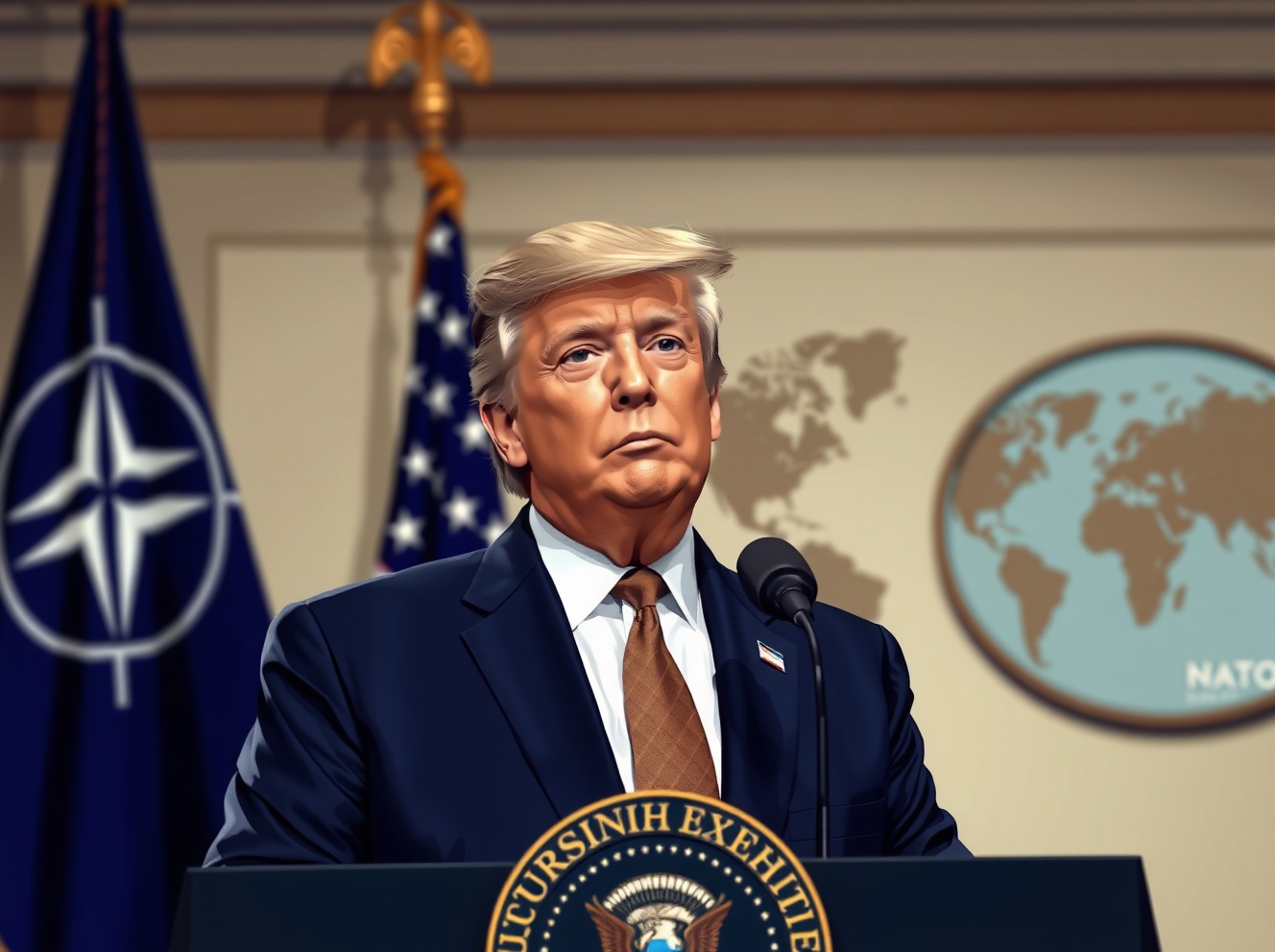
Trump NATO Statement: A Stark Shift in Transatlantic Security Policy
WASHINGTON, D.C. — A recent declaration by former President Donald Trump regarding the North Atlantic Treaty Organization has ignited significant analysis among foreign policy experts and security analysts. The statement, suggesting the United States no longer “needs” or desires assistance from NATO allies, represents a potential inflection point for the 76-year-old military alliance. This analysis examines the context, immediate reactions, and long-term implications of this position for global security architecture in 2025.
Analyzing the Trump NATO Statement and Its Historical Context
President Trump’s comments continue a longstanding critique of alliance burden-sharing. Historically, the United States has contributed the largest share of NATO’s collective defense budget. Consequently, debates about equitable financial contributions have persisted for decades. The 2025 statement, however, frames the issue not merely as a financial concern but as a fundamental question of strategic necessity.
NATO operates on the principle of collective defense, articulated in Article 5 of its founding treaty. This principle states that an attack against one ally is considered an attack against all. Therefore, the alliance’s strength relies on mutual commitment. Experts from institutions like the Brookings Institution and the Atlantic Council note that previous administrations, while urging increased European defense spending, consistently reaffirmed the alliance’s core value.
Immediate Reactions from NATO Member States
Reactions from European capitals ranged from concerned to cautiously diplomatic. German Chancellor Olaf Scholz emphasized NATO’s “irreplaceable role” in Euro-Atlantic security. Similarly, French President Emmanuel Macron called for “strategic clarity and continued solidarity.” Meanwhile, Eastern European members, particularly Poland and the Baltic states, expressed stronger apprehension given their geographic proximity to ongoing regional tensions.
The NATO Secretary General issued a formal response highlighting the alliance’s recent adaptations. These include enhanced forward presence in the Baltics and increased readiness forces. Furthermore, the statement pointed to rising European defense expenditures since 2014. Many allies now meet or exceed the guideline of spending 2% of GDP on defense.
Expert Analysis on Alliance Cohesion and Deterrence
Security analysts provide critical perspective on the statement’s potential impacts. Dr. Angela Schmidt, a senior fellow at the Center for Strategic and International Studies, explains the concept of deterrence. “Deterrence credibility depends on an adversary’s perception of unified resolve,” Schmidt notes. “Any public questioning of commitment, regardless of underlying policy, can inadvertently weaken that perception.”
Other experts reference historical precedents. For instance, the 1966 French withdrawal from NATO’s integrated military command did not break the alliance. Instead, it led to restructuring. Modern challenges, however, differ significantly. Today’s security environment includes cyber warfare, hybrid threats, and strategic competition beyond Europe’s borders.
The Operational and Strategic Landscape in 2025
Current NATO operations and strategic posture provide essential context. The alliance maintains several critical missions:
- Enhanced Forward Presence (eFP): Multinational battlegroups in Estonia, Latvia, Lithuania, and Poland.
- KFOR: The ongoing peacekeeping mission in Kosovo.
- Maritime Security: Patrols in the Baltic Sea, Mediterranean, and North Atlantic.
- Cybersecurity: A coordinated policy and response framework for member states.
These operations rely on integrated command structures, shared intelligence, and joint logistics. A reduction in U.S. participation would necessitate complex realignments. European allies have made progress through initiatives like the European Defence Fund and Permanent Structured Cooperation (PESCO). Nevertheless, key capabilities—such as strategic airlift, intelligence surveillance, and missile defense—still feature heavy U.S. involvement.
Potential Global Security Implications and Shifting Alliances
The geopolitical ramifications extend beyond Europe. Asian allies like Japan and South Korea watch NATO dynamics closely. They have partnerships with the alliance and rely on similar U.S. security guarantees. Perceptions of American reliability can influence decision-making worldwide.
Adversarial states may perceive division as an opportunity. Consequently, the statement could test alliance cohesion during a crisis. The fundamental purpose of NATO is to prevent conflict through strength and unity. Therefore, public debates about its utility can have unintended consequences.
Table: Comparative Defense Spending Trends (Select NATO Members)
| Country | 2020 Defense Spending (% of GDP) | 2024 Defense Spending (% of GDP) | Change |
|---|---|---|---|
| United States | 3.7% | 3.5% | -0.2% |
| Germany | 1.4% | 2.1% | +0.7% |
| Poland | 2.2% | 3.9% | +1.7% |
| France | 2.1% | 2.1% | 0.0% |
| United Kingdom | 2.3% | 2.3% | 0.0% |
Data sourced from NATO annual reports shows increased European investment, a direct response to earlier calls for burden-sharing.
Conclusion
The Trump NATO statement highlights enduring tensions within the transatlantic partnership. It underscores debates about cost-sharing, strategic autonomy, and evolving global threats. While European defense capabilities have grown, the alliance’s integrated structure remains a cornerstone of Euro-Atlantic security. The coming months will reveal how this rhetoric translates into policy and whether NATO can navigate this period of public scrutiny while maintaining its core deterrent function. The ultimate impact on the Trump NATO statement will depend on subsequent actions by all member states, not just words from any single capital.
FAQs
Q1: What did President Trump actually say about NATO?
In a recent public address, former President Trump stated that the United States no longer “needs” or desires assistance from NATO countries, framing it as a question of strategic necessity rather than just financial burden-sharing.
Q2: How has NATO changed since 2020?
NATO has enhanced its forward presence in Eastern Europe, adopted new strategic concepts addressing cyber and hybrid threats, and seen increased defense spending from many European members, with more nations meeting the 2% of GDP guideline.
Q3: What is Article 5 of the NATO treaty?
Article 5 is the collective defense clause stating that an armed attack against one ally shall be considered an attack against all allies, committing members to take necessary action to assist the attacked ally.
Q4: How do European NATO members view this statement?
Reactions vary, with Eastern European members expressing greater concern due to their security situation, while Western European leaders have issued more diplomatic responses emphasizing continued alliance solidarity and value.
Q5: Could the US actually leave NATO?
While a president cannot unilaterally withdraw the US from NATO without congressional approval, the statement raises questions about future US commitment levels and participation in alliance initiatives and operations.
This post Trump NATO Statement: A Stark Shift in Transatlantic Security Policy first appeared on BitcoinWorld.
You May Also Like

Trading time: Tonight, the US GDP and the upcoming non-farm data will become the market focus. Institutions are bullish on BTC to $120,000 in the second quarter.

CME Group to Launch Solana and XRP Futures Options