

Vitalik Buterin Vows Full Push Into Decentralised Social Media in 2026
- Ethereum co-founder Vitalik Buterin intends to recommit to decentralised social media in 2026, saying that if society is to improve, we need to develop better “mass communication tools.”
- Buterin said any new decentralised social platform needs to do more than simply add a speculative token, arguing the entire system needs to meet users’ long-term interests, rather than incentivise short-term engagement.
Everyone knows the internet is a swamp filled with misinformation and malicious actors. But Vitalik Buterin plans to change that by making “new and better forms of interaction” possible through decentralised technology.
The co-founder of Ethereum said he’ll recommit to decentralised social media in 2026, driven by a belief that the key to improving society is better mass communication tools that reward high-quality content catering to a “user’s long-term interest” rather than click-bait designed to maximise “short-term engagement.”
Posting on X, Buterin said that there’s no easy solution to the problem of creating a system that supports this kind of higher-quality social media content. However, he suggested that more competition, driven by a decentralised social data layer, would lay a firm foundation.
“There is one important place to start: more competition. Decentralization is the way to enable that: a shared data layer, with anyone being able to build their own client on top,” Buterin explained.
Buterin explained that when he talks about decentralised social media, he doesn’t simply mean something like Twitter with a speculative token attached. “Crypto social projects has often gone the wrong way,” Buterin said.
Too often, we in crypto think that if you insert a speculative coin into something, that counts as ‘innovating’, and moves the world forward.
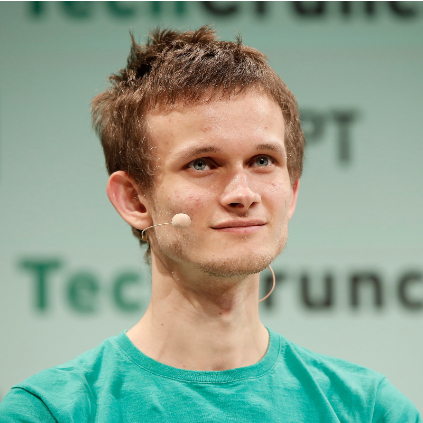 Vitalik Buterin, Co-founder of Ethereum
The Ethereum co-founder said he isn’t against monetising social content, pointing to the subscription-based social platform, Substack, as an example of how it can be done in a way that incentivises high-quality content.
He cautioned that market-based models involving tokens have repeatedly failed to reward quality content and have instead rewarded creators with “pre-existing social capital,” creating bubbles around these creators, which almost inevitably crash back to zero.
Over the past decade, we have seen many many attempts at incentivizing creators by creating price bubbles around them, and all fail by (i) rewarding not content quality, but pre-existing social capital, and (ii) the tokens all going to zero after one or two years anyway.
Vitalik Buterin, Co-founder of Ethereum
Buterin also lashed out at people making what he described as “galaxy-brained arguments” that a market-based approach is inherently good because it “elicits information” when those same people create social media products clearly intended to co-opt people’s attention and algorithmically manipulate them.
“That is not Hayekian info-utopia,” Buterin said (referring to the liberalist theories of economist Friedrich Hayek), “that is corposlop.”
Decentralised social media, Buterin argued, should be run by people who care deeply about the “social” component and “are motivated first and foremost by solving the problems of social,” rather than those more focussed on the monetisation component.
We need to move beyond everyone constantly tweeting inside a single global info warzone, and into a reopened frontier, where new and better forms of interaction become possible.
Vitalik Buterin, Co-founder of Ethereum
Related: Yakovenko vs. Buterin: Solana’s Constant Evolution Meets Ethereum’s “Walkaway” Ideal
Shake-Ups at Leading SocialFi Platforms Coincide with Buterin Post
Two leading SocialFi platforms have seen major shake-ups in the past few days, with one being acquired and the other having a major leadership change.
On January 21, Dan Romero, the co-founder of Farcaster, announced on X that the platform had been acquired by ecosystem infrastructure provider, Neynar. Farcaster had been widely hyped as the future of decentralised social media a few years ago and is one of the few decentralised SocialFi apps to have seen solid adoption so far.
In his announcement, Romero explained that “after five years, it’s clear Farcaster needs a new approach and leadership to reach its full potential.”
Meanwhile Lens, a decentralised SocialFi protocol and layer 2 network, announced January 20 that leadership will transition from the decentralised finance protocol, Aave (which also created Lens), to the Mask Network. The announcement characterised the leadership makeover as a change in “stewardship” rather than a sale or acquisition.
Related: Vitalik Buterin: Ethereum DApps Can Shield Internet From Outages and Centralised Failures
In a statement, the founder of Aave and Lens, Stani Kulechov, said the new Mask Network leadership team will focus on “advancing Lens at the application layer,” while he and others at Aave will remain active as “technical advisors.”
The post Vitalik Buterin Vows Full Push Into Decentralised Social Media in 2026 appeared first on Crypto News Australia.
You May Also Like

Republic Europe Offers Indirect Kraken Stake via SPV

cpwrt Limited Positions Customer Support as a Strategic Growth Function
