The post The FTC’s Case Against Meta Is Discredited Not Just By The AI Present appeared on BitcoinEthereumNews.com. WASHINGTON, DC – JULY 09: The Federal Trade The post The FTC’s Case Against Meta Is Discredited Not Just By The AI Present appeared on BitcoinEthereumNews.com. WASHINGTON, DC – JULY 09: The Federal Trade

The FTC’s Case Against Meta Is Discredited Not Just By The AI Present

WASHINGTON, DC – JULY 09: The Federal Trade Commission entrance is seen on July 09, 2025 in Washington, DC. (Leigh Vogel/Getty Images for Ian Madrigal)

Leigh Vogel/Getty Images for Ian Madrigal

To bolster its appeal of a previously dismissed antitrust lawsuit against Meta, the FTC is looking far back to a deeply unrecognizable commercial past. The problem for the FTC is that it’s not just the present that wholly discredits the FTC’s case, and its appeal.

For background, it was in 2012 and 2014 that Facebook purchased Instagram and WhatsApp for $1 billion and $19 billion respectively. In its appeal, the FTC charges “that for over a decade Meta has illegally maintained a monopoly in personal social networking services through anticompetitive conduct – by buying the significant competitive threats it identified in Instagram and WhatsApp.” The charge itself discredits the revival of an already-dismissed lawsuit.

To see why, simply consider the $20 billion expended to make the purchases that presently have the FTC so up in arms. $20 billion to acquire monopoly power? Crucial here is that the markets confirm the flippancy found in the previous question, and much more importantly, would have confirmed it then if anyone had been asking.

It’s not just that Facebook paid a relatively slim $1 billion for Instagram (a screaming sign that it was buying many things in 2012, none of them a monopoly), it’s that Facebook’s shares declined following the acquisition. What was true about Instagram was similarly true for WhatsApp.

It’s a reminder that it wasn’t just investors who were less than enthused by Facebook’s allegedly offending acquisitions. Neither was the FTC taken aback. Why would it have been? Investors saw many things in the purchases of Instagram and WhatsApp, but as the price action of Facebook’s shares once again confirms, “monopoly” status never passed the lips of investors or antitrust officials at the FTC.

Fast forward to the present, and 2026 specifically, it’s essential to point out that in 2025 Meta spent over $70 billion on data centers alone. Please stop and consider the expenditures with the FTC’s appeal in mind. It’s no insight to point out that a corporation with monopoly power wouldn’t and couldn’t put such a substantial amount of money to work.

The wouldn’t part is informed by the simple truth that “monopolies” don’t need to expend enormous sums to protect a business that, for being a monopoly, experiences no competition. Which explains couldn’t: if Meta had ever been a monopoly, there’s no way its shareholders would have ever allowed $70 billion in new spending meant to expand an already impregnable moat.

All of which speaks to how very much the FTC’s initial 2020 lawsuit, along with the 2026 appeal of its dismissal, were and are a look backwards. In appealing in 2026, it’s as though antitrust officials are blind not just to a constantly evolving social media sector, but also to what happened on November 30, 2022. It almost wastes words to point out that the technology sector was profoundly changed by the rollout of ChatGPT, so much so that the leading lights of technology have spent hundreds of billions since November 30, 2022 in a feverish effort to discover a present and future of technology that won’t remotely look like the past.

Which is just a comment that weak as the FTC’s case was in 2020, its appeal of what the courts dismissed is exponentially weaker in 2026. See ChatGPT and what’s followed it, including gargantuan amounts of spending by Meta and others. It seems they know more than any of us that they’re many things, none of them a “monopoly.”

Source: https://www.forbes.com/sites/johntamny/2026/01/21/the-ftcs-case-against-meta-is-discredited-not-just-by-the-ai-present/
Disclaimer: The articles reposted on this site are sourced from public platforms and are provided for informational purposes only. They do not necessarily reflect the views of MEXC. All rights remain with the original authors. If you believe any content infringes on third-party rights, please contact service@support.mexc.com for removal. MEXC makes no guarantees regarding the accuracy, completeness, or timeliness of the content and is not responsible for any actions taken based on the information provided. The content does not constitute financial, legal, or other professional advice, nor should it be considered a recommendation or endorsement by MEXC.

You May Also Like

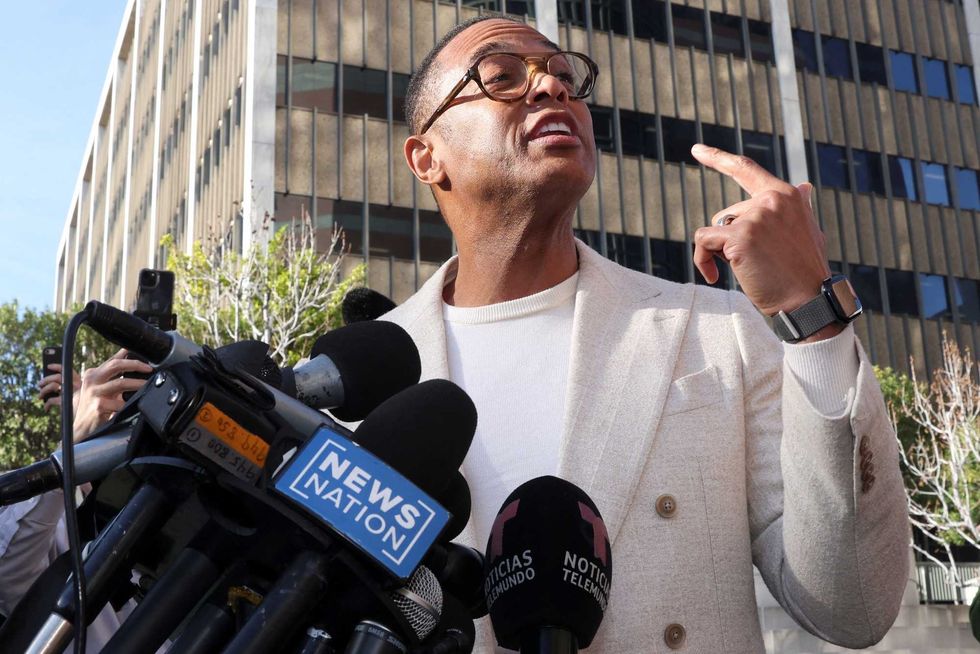
Red state gov candidate claims Don Lemon 'lucky' he wasn't lynched

Red state gov candidate claims Don Lemon 'lucky' he wasn't lynched

Journalist Don Lemon's arrest and indictment by the Trump administration promoted howls of outrage from press figures around the country on Friday — but as far
Share
Rawstory2026/01/31 10:44
The GENIUS Act Is Already Law. Banks Shouldn’t Try to Rewrite It Now

The GENIUS Act Is Already Law. Banks Shouldn’t Try to Rewrite It Now

The post The GENIUS Act Is Already Law. Banks Shouldn’t Try to Rewrite It Now appeared on BitcoinEthereumNews.com. Healthy competition drives innovation and better products for consumers; it is at the center of American economic leadership. Unfortunately, now that the bipartisan GENIUS Act has been signed into law, major legacy financial institutions seem to be having second thoughts about the innovations that stablecoins can bring to financial markets. Bank lobbying groups and public affairs teams have been peppering Congress with complaints about the law, urging members to reopen debate and introduce changes to the legislation that will ensure the stablecoin market doesn’t grow too quickly, protecting banks’ profits and stifling consumer choice. This reactionary response is both overblown and unnecessary. What legacy financial firms should do instead is embrace competition and offer exciting new products and services that consumers want, not try to kneecap emerging players through anti-innovation rules and regulations. The GENIUS Act was carefully designed with a thorough bipartisan process to strengthen consumer safeguards, ensure regulatory oversight, and preserve financial stability. Efforts to roll back its provisions are less about protecting families and more about protecting entrenched banking interests from the competition that helps ensure the U.S. banking system stays the strongest and most innovative in the world. Critics warn that allowing stablecoins to provide rewards could lead to massive deposit outflows from community banks, with figures as high as $6.6 trillion cited. But closer examination shows this fear is unfounded. A July 2025 analysis by consulting firm Charles River Associates found no statistically significant relationship between stablecoin adoption and community bank deposit outflows. In fact, the overwhelming majority of stablecoin reserves remain in the traditional financial system — either in commercial bank accounts or in short-term Treasuries — where they continue to support liquidity and credit in the broader U.S. economy. The dire estimates rely on unrealistic assumptions that every dollar of stablecoin issuance permanently…
Share
BitcoinEthereumNews2025/09/18 09:39
Tumbling market sets giants into ‘plunge protection’ mode: Crypto Daybook Americas

Tumbling market sets giants into ‘plunge protection’ mode: Crypto Daybook Americas

The post Tumbling market sets giants into ‘plunge protection’ mode: Crypto Daybook Americas appeared on BitcoinEthereumNews.com. :Crypto Daybook Americas By Omkar
Share
BitcoinEthereumNews2026/01/31 10:18