KOSPI Triggers Critical Buy-Side Trading Curb After Dramatic Surge
BitcoinWorld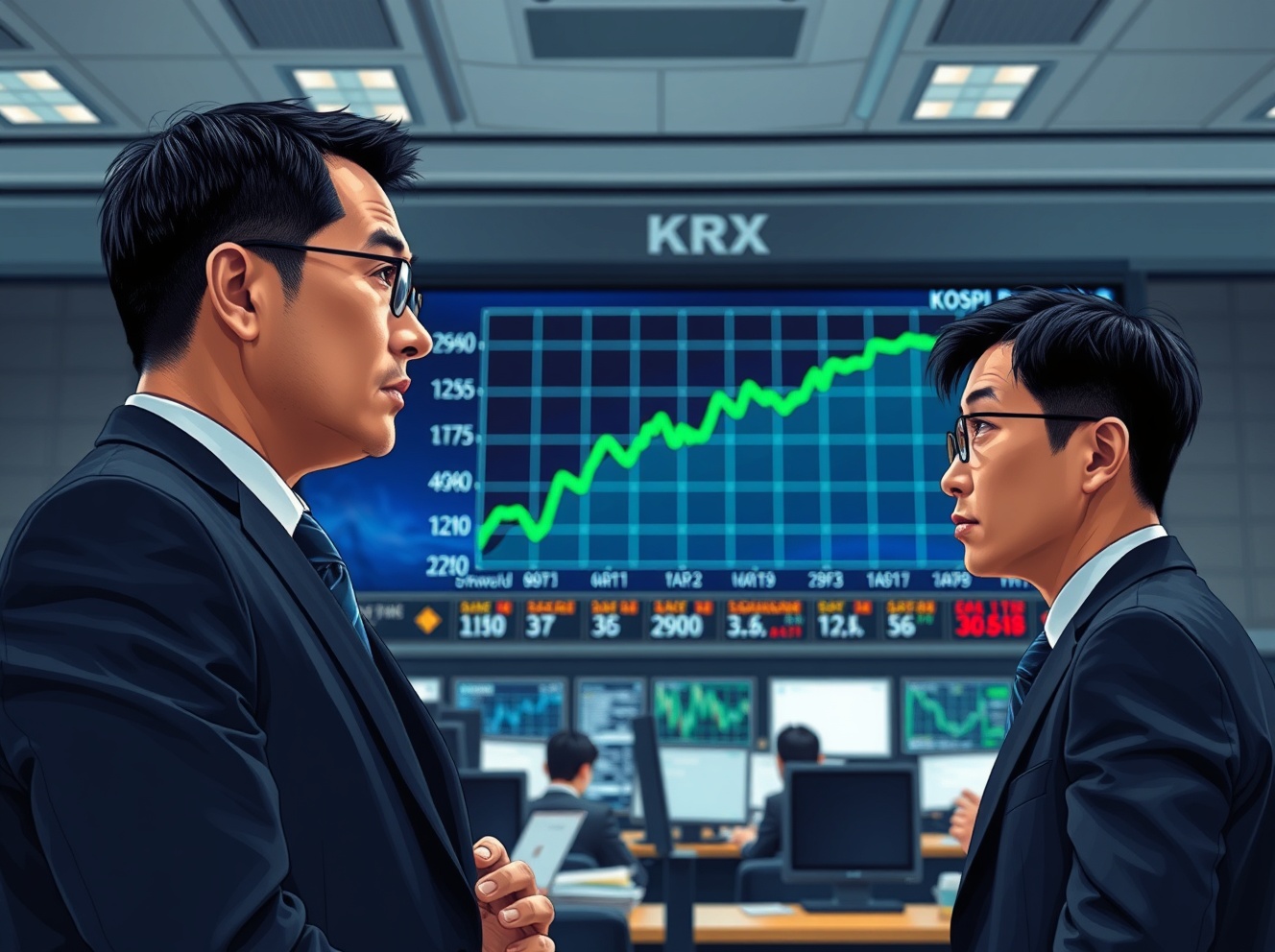
KOSPI Triggers Critical Buy-Side Trading Curb After Dramatic Surge
In a significant market event on March 21, 2025, the Korea Composite Stock Price Index (KOSPI) triggered a critical buy-side trading curb following a dramatic surge in early trading, highlighting the sophisticated volatility controls embedded in South Korea’s premier financial marketplace.
KOSPI Buy-Side Trading Curb Mechanism Explained
The Korea Exchange (KRX) activated its buy-side trading curb, a specific market stabilization tool. This mechanism automatically engages when the KOSPI index rises by a predetermined percentage within a single trading session. Consequently, the curb imposes a temporary restriction on certain buy orders. The system aims to prevent excessive speculation and allow for a market cooling-off period. Market regulators designed this tool to maintain orderly trading conditions.
South Korea implemented its current circuit breaker system in June 2015, enhancing previous frameworks. The system features multiple tiers of intervention:
- Side Car (Trading Curb): An 8% move triggers a 5-minute trading pause for KOSPI and KOSDAQ stocks.
- Market Wide Halt: A 15% move halts all trading for 20 minutes.
- Market Close: A 20% move suspends trading for the remainder of the session.
Today’s event specifically involved the side car mechanism on the buy side. This activation followed a rapid upward price movement driven by substantial institutional inflows. The curb successfully moderated the pace of the rally, according to exchange data.
Historical Context of Market Interventions
The KOSPI has a documented history of volatility necessitating regulatory action. For instance, during the global financial crisis of 2008, the index experienced extreme swings. More recently, the COVID-19 pandemic in March 2020 triggered multiple circuit breaker events globally, including in South Korea. The current system represents an evolution from simpler price limits used in the 1990s.
Comparatively, other major global exchanges employ similar safeguards. The U.S. markets use Limit Up-Limit Down (LULD) rules and market-wide circuit breakers. Japan’s exchanges have price fluctuation limits. However, the KRX system is notable for its distinct treatment of buy-side versus sell-side volatility, a feature not universally adopted.
| Date | Trigger | Movement | Duration |
|---|---|---|---|
| March 13, 2020 | Global Pandemic Sell-off | -8.39% | Side Car (5 min) |
| March 16, 2020 | Continued Volatility | -8.00% | Side Car (5 min) |
| March 19, 2020 | Market Bottoming | +8.02% | Side Car (5 min) |
| October 2022 | Currency & Inflation Fears | -7.5% | Near Trigger |
Expert Analysis on Market Structure
Financial analysts point to several structural factors behind today’s surge. First, a weaker Korean Won often boosts the attractiveness of export-heavy KOSPI constituents like Samsung Electronics and Hyundai Motor. Second, relative valuation discounts compared to other Asian markets attracted foreign capital. Third, anticipatory buying ahead of expected corporate earnings revisions contributed to momentum.
Market microstructure experts emphasize the curb’s role in preventing “fat finger” errors and algorithmic trading feedback loops. By mandating a brief pause, the system allows human traders and risk systems to reassess positions. This intervention is particularly crucial in a market where program trading accounts for a significant portion of daily volume.
Immediate Market Impact and Trader Response
The activation of the buy-side curb had immediate, observable effects on market dynamics. Trading volume spiked in the minutes preceding the trigger as algorithms reacted to the approaching threshold. Following the 5-minute pause, volatility, as measured by the KOSPI 200 Volatility Index (VKOSPI), declined by approximately 15% from its intraday high. The index continued to trade higher post-curb but at a markedly reduced rate of ascent.
Market participants reported orderly conditions during the event. Institutional desks executed pre-planned contingency protocols. Retail trading platforms displayed official notifications to users, explaining the temporary restriction. This transparency is a key component of the system’s design, maintaining investor confidence during unusual events.
- Liquidity Impact: Order book depth on the buy side temporarily thinned but recovered quickly.
- Sector Performance: Technology and semiconductor stocks led the initial surge.
- Derivatives Market: KOSPI 200 futures and options trading mirrored the cash market curb.
Regulatory Framework and Investor Protection
The Financial Services Commission (FSC) and the Korea Exchange jointly oversee the circuit breaker system. Their mandate explicitly includes protecting investors, especially retail participants, from extreme short-term volatility. The rules are publicly available in the KRX Market Regulation Handbook, ensuring all participants operate with clear guidelines.
Academic research on market quality, cited in the Journal of Financial Markets, suggests such curbs can reduce temporary mispricing. However, they may also delay price discovery. The Korean authorities continuously back-test their parameters against historical data to balance these competing objectives. A 2024 KRX white paper confirmed the system’s effectiveness in reducing panic during stress events.
Global Comparisons and Economic Signals
A buy-side curb activation, while less common than sell-side halts, often signals strong underlying bullish sentiment. It indicates that buying pressure is concentrated and overwhelming natural selling interest. Economists sometimes interpret such events as indicators of pent-up demand or a reaction to a significant positive catalyst.
In the broader Asian context, South Korea’s market is often a bellwether for regional technology and export trends. Therefore, today’s event attracted attention from international fund managers. The sustained buying interest, even after the curb, suggests confidence in the fundamental outlook for Korean corporations.
Conclusion
The activation of the KOSPI buy-side trading curb on March 21, 2025, demonstrates the robust functioning of South Korea’s market safety mechanisms. This event provided a real-time stress test for the exchange’s volatility controls, which operated as designed to ensure orderly trading. The curb successfully moderated an intense surge, allowing the market to absorb new information without disruptive price gaps. For global investors, the incident underscores the sophistication and transparency of the Korean capital market infrastructure, designed to function efficiently under significant pressure. The KOSPI trading curb remains a critical tool for maintaining market integrity during periods of exceptional volatility.
FAQs
Q1: What exactly is a buy-side trading curb?
A buy-side trading curb is a temporary restriction placed on certain purchase orders when a stock index rises too quickly. The Korea Exchange implements this rule to cool excessive bullish speculation and allow the market to process information.
Q2: How often does the KOSPI trigger these circuit breakers?
Full market halts are rare, occurring only during extreme crises. However, the side car trading curb (5-minute pause) triggers several times a year during periods of high volatility, with sell-side triggers being more frequent than buy-side ones.
Q3: Can investors sell during a buy-side curb?
Yes. A buy-side curb specifically restricts the types or prices of buy orders that can be placed. Sell orders and certain limit buy orders typically continue to be accepted, maintaining market liquidity on the sell side.
Q4: Does this mean the market is in a bubble?
Not necessarily. A single trigger event does not define a bubble. It indicates a period of intense, concentrated buying pressure which can have various causes, including positive earnings news, macroeconomic shifts, or technical trading factors.
Q5: What should a retail investor do when a curb is triggered?
Remain calm and avoid panic decisions. Use the pause to review your investment thesis. The curb is a designed safety feature, not a malfunction. Most trading platforms provide clear notifications, and normal trading resumes automatically after the brief halt.
This post KOSPI Triggers Critical Buy-Side Trading Curb After Dramatic Surge first appeared on BitcoinWorld.


You May Also Like

Digital Asset Titans Poised for a Comeback?

Marcos names trade diplomat Dita Angara-Mathay as new tourism chief