Overview
Global equity markets and semiconductor supply chains are experiencing a pronounced valuation repricing as index inclusion mechanics intersect with transformative hardware demand. The formal announcement by S&P Dow Jones Indices designating
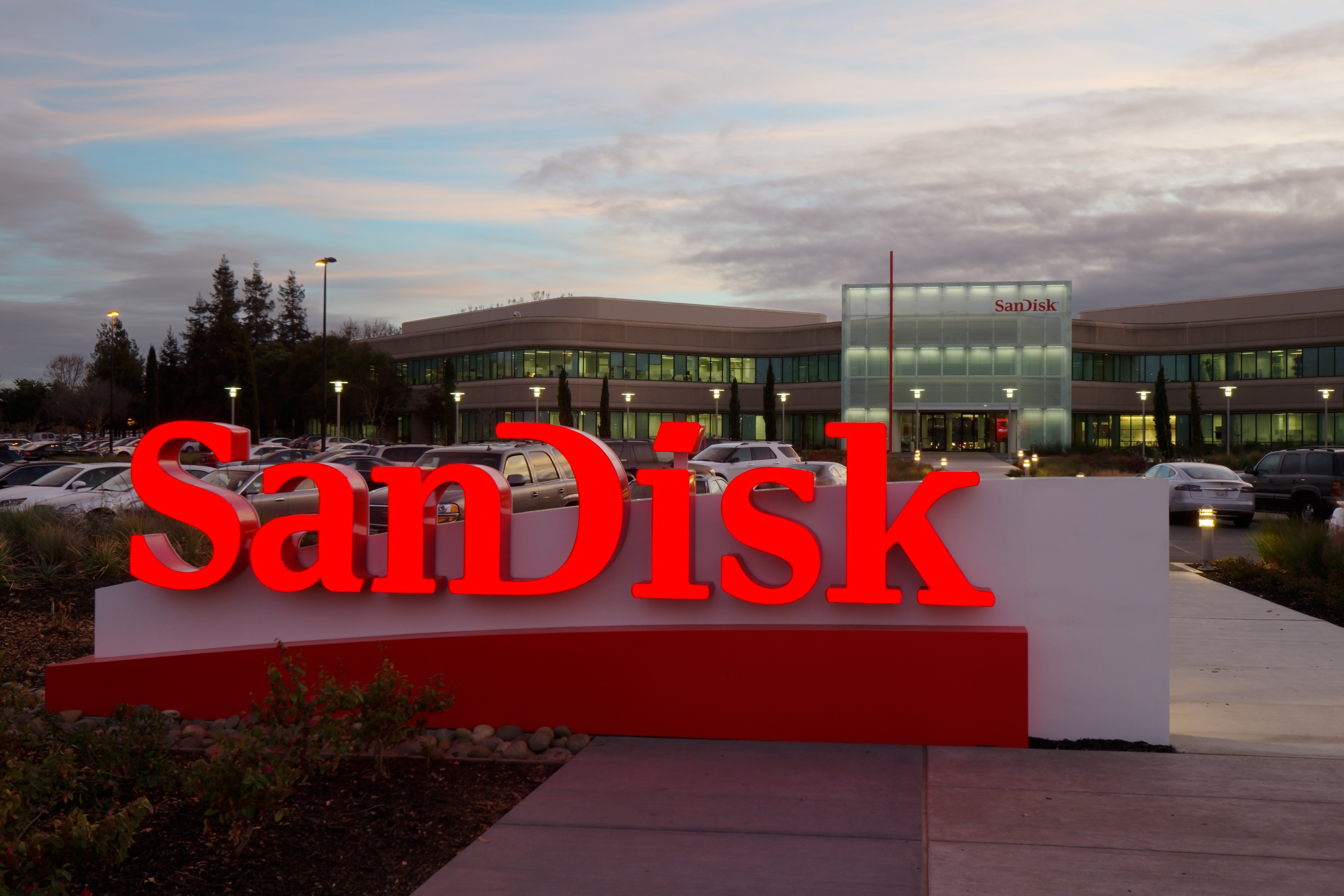
Sandisk as a constituent of the prestigious S&P 100 index has ignited aggressive institutional positioning across Sandisk stock (SNDK stock). This benchmark elevation initiates an obligatory capital reallocation process, requiring multi-billion-dollar passive funds tracking the index to mechanically absorb shares regardless of prevailing price levels. Simultaneously, the computational architecture of generative artificial intelligence is undergoing a critical pivot away from pure processor density toward addressing acute input and output bottlenecks across data storage fabrics. The convergence of mechanical index tracking flows and a structural enterprise storage supercycle provides the direct empirical explanation for why Sandisk stock is moving with outsized momentum.
Key Takeaways
S&P 100 inclusion triggers a massive wave of mandatory passive capital inflows. Benchmark-tracking exchange-traded funds, index mutual funds, and institutional pension mandates are bound by strict tracking mandates, creating a substantial volume of non-discretionary buying pressure across the secondary market.
Enterprise storage has transitioned from an auxiliary peripheral into an indispensable operational prerequisite for artificial intelligence infrastructure. As distributed clusters scale to thousands of accelerators, high-density enterprise solid-state drives are required to sustain multi-terabyte model checkpointing and real-time retrieval-augmented generation workloads.
The broader memory and flash storage industry has decisively exited its cyclical downturn, entering a structural phase characterized by elevated gross margins. Disciplined wafer fab production, combined with high-value enterprise product mixes, is driving sustained quarter-over-quarter expansion in average selling prices and corporate profitability.
Long-term share performance will depend on the fundamental conversion of hyperscale capital expenditures following the index rebalancing event. Once mechanical benchmark purchases conclude, investor scrutiny will pivot toward sequential growth in enterprise backlog volumes, production yields, and customer contract renewals.
Structural Index Dynamics: Mandatory Rebalancing Inflows from the S&P 100
Multi-Billion Benchmark Reallocation and Inelastic Institutional Buying
Index additions execute a powerful mechanical influence over equity liquidity. According to index governance documentation maintained by
S&P Dow Jones Indices, the S&P 100 represents the definitive cohort of mega-cap corporate leadership within the broader S&P 500 universe. Gaining entry into this concentrated benchmark elevates an equity into an asset class tracked by the largest institutional pools of capital globally.
Investment managers operating passive index strategies governed by
SEC disclosure guidelines do not possess the discretion to decline asset inclusion. To minimize tracking error relative to their benchmarks, these institutional entities must acquire the newly added constituent in exact proportion to its assigned index weighting. This dynamic generates an influx of price-inelastic buy orders that systematically absorbs market liquidity during the designated rebalancing window.
Market Maker Pre-Positioning and the Contraction of Free-Float Shares
In the interim between the public announcement and the official effective date of the index modification, professional market participants aggressively position ahead of passive fund reallocations. Quantitative proprietary desks, arbitrageurs, and broker-dealers systematically model projected share demand, establishing long inventory positions in anticipation of institutional closing-cross volume.
According to transaction tracking analytics reported by
Bloomberg, the announcement of Sandisk S&P 100 inclusion prompted an immediate surge in institutional block trades and daily turnover velocity. As market makers accumulate shares to fulfill forward delivery obligations, the available free float of SNDK stock experiences rapid contraction, creating a supply-demand imbalance that accelerates upward price action across primary trading venues.
Computational Architecture Shifts: AI Storage Bottlenecks Drive Enterprise SSD Adoption
Model Checkpointing and Vector Retrieval Mandate High-Throughput Storage
While the initial waves of artificial intelligence capital expenditure focused almost exclusively on parallel graphics computing engines, infrastructure architects now face acute performance degradation stemming from storage throughput limitations. In distributed large language model training runs, high-performance clusters must write full parameter checkpoints to persistent storage at regular intervals to safeguard training state against single-node hardware failures.
When enterprise solid-state drives lack sufficient sequential write bandwidth, clusters costing tens of millions of dollars must pause computational tasks, incurring substantial capital efficiency losses. Consequently, hyperscalers such as Microsoft, Amazon Web Services, and Google Cloud are accelerating procurements of next-generation enterprise drives running on PCIe 5.0 architectures. Sandisk advanced multi-plane flash memory configurations and specialized controller designs position the company as a tier-one supplier, translating directly into surging enterprise segment revenue.
High-Density QLC Architectures and System Efficiency Drive Margin Expansion
Beyond foundational model training, the proliferation of inference engines and retrieval-augmented generation architectures requires vast repositories of nearline, high-speed storage. Legacy hard disk drives are increasingly unable to satisfy the IOPS per terabyte and power-efficiency metrics demanded by modern data center power envelopes, accelerating the transition to high-capacity quad-level cell enterprise drives.
Market data published by semiconductor research authority
TrendForce indicates that enterprise flash storage contract pricing has demonstrated sustained resilience across recent quarters, commanding significant price premiums over commodity consumer memory. By focusing advanced node production on high-capacity enterprise configurations, Sandisk has successfully optimized its average selling price matrix, delivering expanding operational leverage across its financial results.
Cyclical Recovery Meets Structural Expansion: Evaluating Fundamental Resilience
Wafer Fab Production Discipline and Emerging Supply Constraints
From a broader cyclical perspective, the global NAND flash memory ecosystem has emerged from its historic inventory correction into a disciplined supply environment. Leading wafer fabrication facilities continue to prioritize high-layer 3D NAND transitions while exercising capital expenditure restraint, preventing unwarranted capacity overshoots.
This measured supply cadence has converged with an unexpected acceleration in enterprise data center buildouts. As highlighted in specialized industry reports by
Reuters, enterprise server manufacturers are actively securing long-term memory allocation contracts to guarantee continuity for their artificial intelligence rack systems, shifting pricing leverage firmly into the hands of integrated flash manufacturers.
Free Cash Flow Trajectory and Balance Sheet De-Leveraging
The expansion in corporate profitability is manifesting in a pronounced strengthening of enterprise cash generation. Recent regulatory filings demonstrate substantial improvements in free cash flow, enabling the company to rapidly amortize legacy debt obligations, invest in next-generation research programs, and evaluate accretive shareholder return mechanisms.
Institutional allocators evaluating technology hardware providers increasingly prioritize structural cash conversion over gross revenue expansion. The simultaneous occurrence of balance sheet de-leveraging and index inclusion provides a dual catalyst, attracting both growth-oriented technology funds and conservative institutional value mandates seeking high-quality free cash flow yields.
Derivatives Mechanics: Options Volatility and Cross-Market Liquidity Transmission
Call Open Interest Surges and the Emergence of Gamma Squeezes
The upward price trajectory of the underlying equity has been significantly reinforced by derivative positioning. Following the S&P 100 inclusion confirmation, options trading volumes expanded dramatically, characterized by concentrated purchasing of out-of-the-money call contracts across near-term expiration cycles.
Options market makers that sell these call options are obligated to hedge their directional delta exposure by continuously purchasing shares in the cash equity market. As the share price ascends toward the strike prices of accumulated call open interest, market makers must dynamically scale up their equity hedges, producing a reflexive gamma squeeze that intensifies the momentum of the underlying stock.
Multi-Asset Spillover and Synthetic Risk Management
The modern institutional landscape functions as an interconnected multi-asset liquidity matrix. Professional capital allocators increasingly deploy dynamic hedging strategies across specialized trading platforms like
MEXC, utilizing stock-linked futures and perpetual contracts to manage equity risk premiums without disrupting core balance sheet holdings.
Financial market reporting by
CNBC notes that capital inflows into Sandisk have produced broader sympathy rallies across the semiconductor testing, advanced packaging, and memory controller ecosystem on the
Nasdaq and the
New York Stock Exchange. This systemic spillover demonstrates that institutional markets interpret this index inclusion event as structural validation for the entire artificial intelligence storage supply chain.
Strategic Scenarios and Critical Monitoring Variables for Allocators
Post-Rebalancing Liquidity Consolidation and Mean-Reversion Risks
For institutional allocators executing tactical event-driven strategies, the effective rebalancing date often marks a localized inflection point. Once mandatory index purchases are fully cleared on the designated closing cross, the non-discretionary bid temporarily subsides, occasionally leading to a consolidation phase as short-term arbitrageurs realize profits.
Under this scenario, the asset may experience a technical retracement toward primary volume-weighted support levels. Market participants must monitor daily trading volume post-effective date to gauge whether organic fundamental accumulation is sufficiently robust to absorb post-event profit-taking without significant multiple degradation.
Hyperscale Capital Expenditure Trajectories and Capacity Expansion Risks
Over the medium term, the trajectory of Sandisk valuation multiples remains tethered to the capital deployment velocity of major cloud service providers. Any macro-induced deceleration in data center buildouts or unexpected optimization of enterprise storage architectures could temper procurement growth rates.
Additionally, production decisions across competing memory fabrication complexes warrant close observation. While developing advanced high-density NAND nodes involves substantial technological complexity and lengthy lead times, disciplined industry-wide capacity management remains crucial for preserving the favorable pricing environment that underpins current equity valuations.
Exclusive View from James Mitchell
Assessing the price dynamics of Sandisk through the combined lenses of market microstructure, multi-asset macro cycles, and liquidity flow analysis reveals that this expansion represents more than a transient index inclusion pop. The market is engaging in a long-overdue valuation catch-up, recognizing that computational power is useless if data ingestion cannot keep pace with accelerator throughput.
From a technical chart and volume profile perspective, SNDK stock broke out from a multi-month consolidation base with an undeniable expansion in volume, clearing overhead resistance bands on institutional accumulation. The daily relative strength index has reached technical overbought territory, but within structural momentum regimes, elevated indicator readings reflect persistent institutional urgency to build exposure rather than an immediate reversal signal. Synthetic derivatives order books across alternative venues corroborate this strength, displaying minimal borrow availability and sustained long positioning.
For multi-asset traders and professional allocators, the primary tactical objective is to avoid initiating high-leverage positions during the climax of passive index flows. Instead, focus should be directed toward post-rebalancing consolidation ranges around historical breakout levels. Provided that enterprise demand for high-capacity solid-state drives remains intact, any localized volatility following the index rebalancing event offers a compelling risk-adjusted entry point for trend-following strategies.
FAQ
Why did Sandisk stock surge following its addition to the S&P 100?
The primary catalyst for the stock price surge is the mandatory capital allocation required by passive index-tracking funds. The S&P 100 serves as a core benchmark for institutional exchange-traded funds, pension systems, and mutual funds. Upon inclusion, portfolio managers must acquire the asset in proportion to its index weighting to prevent tracking error, generating an immense volume of non-discretionary buying pressure that rapidly absorbs secondary market share supply.
What is the structural difference between the S&P 100 and the S&P 500?
While the S&P 500 tracks 500 large-cap corporate entities across the United States economy, the S&P 100 represents a concentrated sub-index comprising the 100 largest and most liquid market leaders within the S&P 500. Constituting over half of the aggregate market capitalization of the entire S&P 500, the S&P 100 enforces far stricter governance, market valuation, and liquidity thresholds, concentrating institutional trading attention and derivative liquidity.
How does artificial intelligence storage demand differ from consumer storage cycles?
Consumer storage demand is driven by cyclical personal computer and mobile device upgrade trends, which are highly price-sensitive and carry modest gross margins. Artificial intelligence enterprise storage, by contrast, demands extreme continuous throughput, ultra-low latency, and severe power efficiency. Hyperscalers require high-capacity, high-layer enterprise solid-state drives to support large language model checkpointing and real-time retrieval-augmented generation, providing suppliers with robust pricing power and superior operational margins.
Is there a risk of a stock pullback after the index rebalancing date passes?
Yes, technical pullbacks are frequent occurrences following the completion of index rebalancing events. Once passive institutional funds conclude their mandatory purchasing program on the effective date, the mechanical buying support recedes. Short-term arbitrageurs and quantitative hedge funds that accumulated inventory prior to the event may unwind positions to crystallize gains, resulting in temporary consolidation as the stock transitions to fundamental price discovery.
How do options market dynamics amplify Sandisk stock price movement?
The sudden influx of institutional call option purchases creates hedging obligations for options market makers. To neutralize their short delta risk, market makers must purchase the underlying equity in the cash market. As the share price increases and approaches out-of-the-money strike levels, the required hedge ratio expands, forcing market makers to buy more shares at progressively higher prices, generating a self-reinforcing gamma squeeze.
How can institutional traders navigate index rebalancing volatility?
Professional participants typically utilize multi-asset derivatives to isolate alpha while mitigating volatility risk. Common strategies include collar setups, where out-of-the-money calls are sold to finance the purchase of downside protective puts, or cross-market pairs trading, where an investor goes long the newly added constituent while shorting a corresponding industry peer or broader benchmark index to extract relative performance while hedging systemic market risk.
Disclaimer
The information, analysis, perspectives, and market data presented in this article are prepared strictly for informational, educational, and research purposes and do not constitute financial advice, investment counsel, legal guidance, tax planning recommendations, or a formal solicitation to trade any security, derivative, or financial product. Equity securities and financial derivatives involve substantial investment risks, including the potential for high price volatility and the permanent loss of invested capital, driven by shifting macroeconomic policies, corporate fundamentals, and market liquidity shocks. Historical asset performance, technical indicators, and quantitative backtests provide no guarantee of future returns. Readers must perform independent due diligence and evaluate their specific financial circumstances, investment objectives, and risk capacity before engaging in capital allocation. The MEXC Crypto Pulse editorial team and its associated corporate entities assume no liability for any direct or indirect financial losses arising from reliance on the contents of this publication.
About the Author
James Mitchell specializes in technical analysis, market trends, and trading strategies for both Bitcoin and altcoins. Based in London, he has over 10 years of experience in financial markets. Before joining MEXC Learn, James worked as a senior analyst at a leading European investment firm, where he developed expertise in risk management and quantitative trading. His transition to cryptocurrency markets began in 2017, and he has since become recognized for his data-driven approach. He holds a Master's degree in Financial Economics from the London School of Economics. His analytical approach combines traditional technical analysis with on-chain metrics to provide readers with actionable insights. His areas of expertise encompass technical analysis, market trends and cycles, trading strategies, Bitcoin and altcoin analysis, and risk management.
Research References